


For a long time, maritime connectivity was defined by distance. Once a vessel left the harbor, satellite internet became the only realstic option. While satellites enable basic communication at sea, they often come with high latency, limited bandwidth, and high costs. Today, that model is changing rapidly.
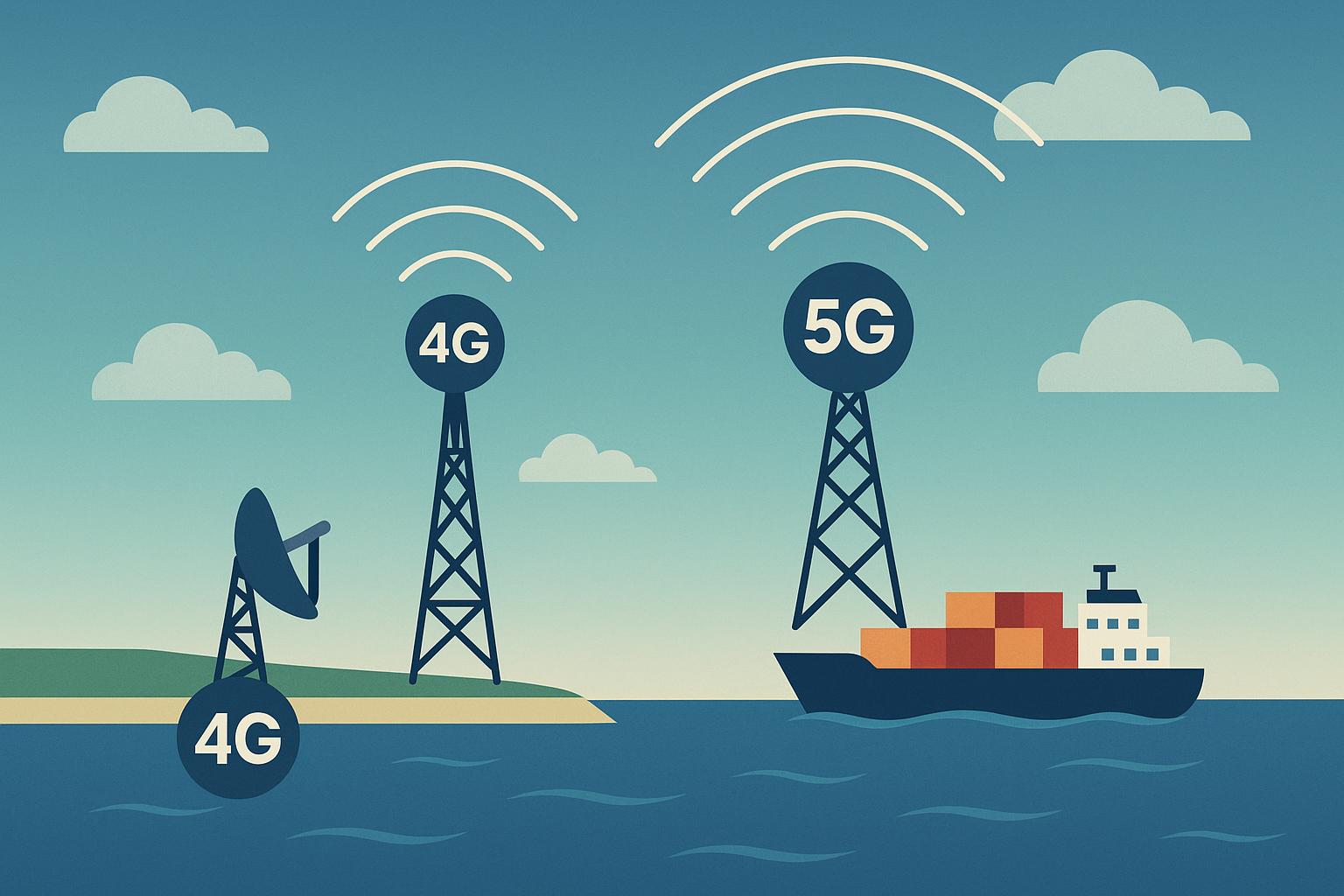
With the expansion of coastal 4G and 5G networks, vessels operating near shore are gaining access to fast, low latency connectivity that closely matches land based internet performance. This shift is transforming how ships, yachts, and workboats operate.
The Growing Demand for Real Time Connectivity at Sea
Contents
Real time data is becoming more important for modern maritime operations. Different applications, such as for onboard and navigation, all depend on fast and stable connections. Near shore, the expectation for connectivity has risen significantly.
Changing Expectations for Maritime Internet
For passengers, but also crews and operators, high level connectivity as sea is expected, just like on land. Things like video calls and live monitoring are becoming standard requirements.
Operational Pressure in Coastal Areas
Ports and coastal zones are among the busiest and most complex maritime environments. Vessels need to coordinate closely with port authorities, logistics systems, and onshore teams. Delays in data exchange can impact efficiency, safety, and turnaround times.
Why 4G and 5G Are Ideal for Near Shore Connectivity
A power alternative to satellite connectivity is created in zones where coastal infrastructures are improving and where the 4G and 5G coverage now extends several kilometers offshore.
High Speed and Low Latency Performance
5G networks deliver ultra fast speeds and very low latency. This enables real time communication, smooth video streaming, and rapid data transfers between vessels and shore based systems. Even 4G networks provide a significant performance improvement compared to traditional satellite links.
Cost Efficiency Compared to Satellite
While satellite connectivity is reliable and very important for deep sea operations, it can be expensive for high bandwidth usage. Near shore, cellular connectivity allows vessels to reduce reliance on satellite links and manage costs more efficiently by using 4G and 5G where available.
Use Cases for 4G and 5G Maritime Internet
The impact of cellular maritime connectivity is especially visible in specific vessel types and operational scenarios.
Coastal and Inland Vessels
Ferries, inland cargo vessels, and coastal service ships often remain within cellular coverage for most of their routes. For these vessels, 4G and 5G can serve as the primary internet connection, delivering reliable performance without satellite dependency.
Yachts and Passenger Vessels
Yacht owners and passenger operators benefit from fast and consistent internet for navigation, entertainment, and onboard services. Near shore connectivity enables streaming, real time communication, and digital guest experiences without performance limitations.
Workboats and Port Operations
Tugboats, pilot vessels, and maintenance crews operating around ports depend on constant communication. 4G and 5G maritime connectivity supports live coordination, digital reporting, and remote monitoring in high traffic areas.
Extending Coverage with Smart Network Switching
Cellular internet performs very well when near shore, however, naturally, the coverage decreases further offshore. When offshore, it’s possible to combine multiple technologies for uninterrupted connectivity.
Seamless Transitions Between Networks
Modern maritime routers can automatically switch between 4G, 5G, and satellite connections depending on availability. Near shore, traffic is routed over cellular networks. When vessels move beyond coverage, the system transitions smoothly to satellite without manual intervention.
Maintaining Performance and Reliability
This intelligent switching ensures that critical systems always remain online. High priority traffic can be routed over the fastest available link, while less time sensitive data can be handled more efficiently to optimize performance and cost.
A New Connectivity Model for Coastal Waters
It’s no longer needed to only rely on satellite internet. Cellular networks are expanding and reshaping maritime connectivity.
4G and 5G maritime internet solutions enable maritime operators to achieve land-level performance in coastal waters while maintaining seamless connectivity further offshore. By combining modern cellular technology with intelligent network management, vessels gain the flexibility, efficiency, and reliability needed to operate in today’s connected maritime environment.