


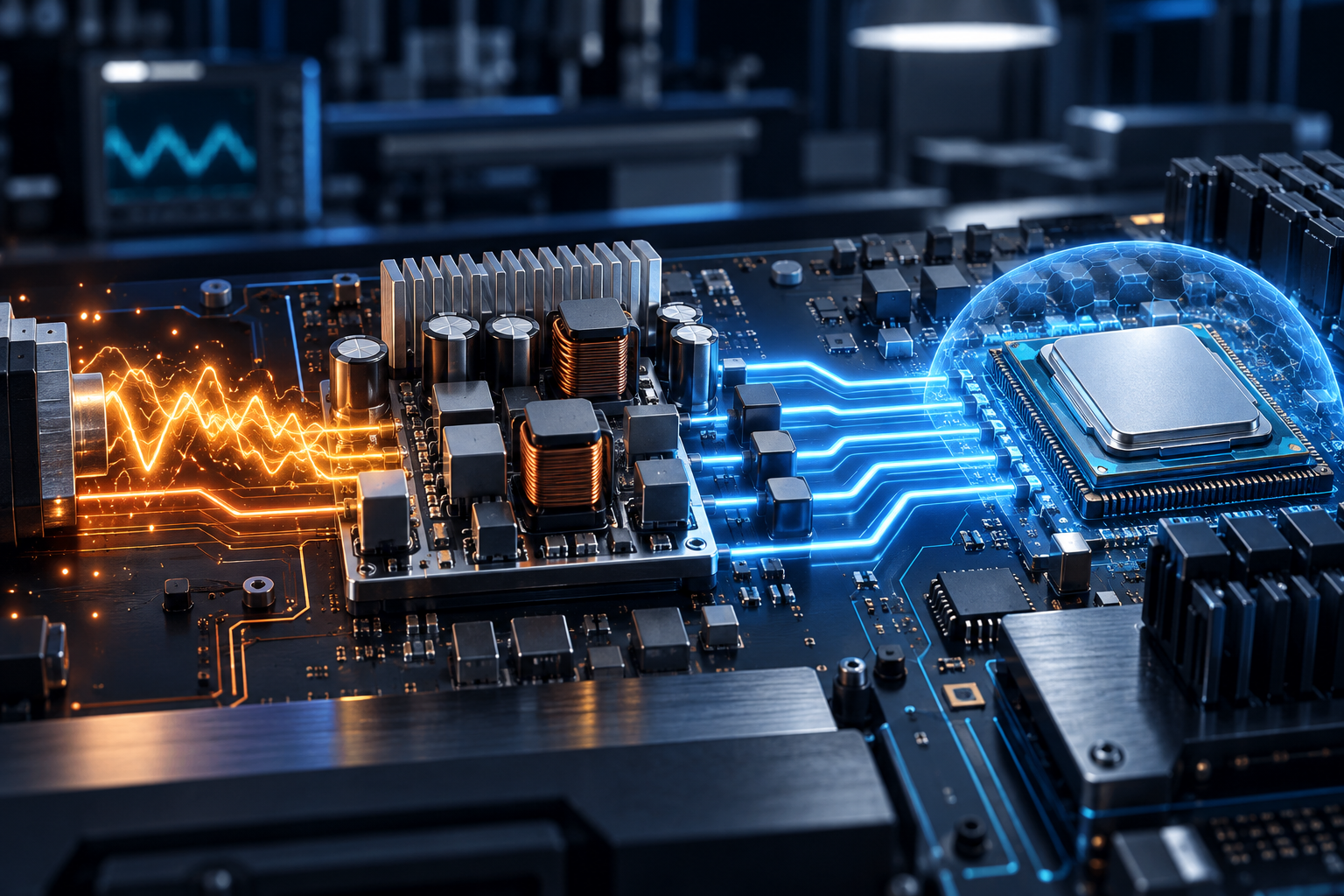
Electronic products keep gaining capabilities that would have seemed excessive only a few years ago. Cars process information from cameras and sensors in real time. Factory equipment communicates across connected networks. Portable devices handle increasingly demanding software while consumers still expect long battery life. These advances depend on faster processors and better components, but they also create a less visible challenge. Every part of an electronic system needs the right voltage, delivered reliably under changing conditions. As products become more powerful, voltage regulation has become an increasingly important part of their design.
Power Needs Keep Changing
Contents
Modern electronics rarely operate at a single, consistent level of demand. A processor may draw considerably more power while handling an intensive workload than it does while waiting for input. Motors, displays, wireless radios, sensors and other components can also switch between operating states throughout the day. The power system has to respond without allowing those changes to interfere with performance.
A DC DC controller can help engineers manage voltage conversion within these systems. Depending on the architecture, DC-DC technology can step voltage down, step it up or accommodate input conditions that move above and below the required output. Controllers can work with external switching components, which gives designers flexibility when developing systems with specific current, efficiency or thermal requirements.
That flexibility becomes valuable as electronics gain more power-hungry features. It is not enough to provide plenty of electricity. Engineers have to deliver electricity in a form each component can use while minimizing unnecessary losses. Poor voltage regulation can undermine the performance of expensive hardware, making the supporting power architecture an important part of the overall product.
Batteries Create New Challenges
Battery-powered products make efficient voltage regulation particularly important because stored energy is finite. Consumers want devices that are lighter and more capable, but few are eager to accept dramatically larger batteries or spend more time waiting for products to recharge. Engineers therefore have to extract as much practical performance as possible from the energy available.
Consider electric bikes, power tools, portable medical equipment and other products that combine batteries with motors, processors, displays, sensors or communications hardware. The battery may provide one voltage while individual electronic components require entirely different levels. Battery voltage can also change as the battery moves through its charge cycle.
Effective conversion allows designers to provide appropriate voltage to individual parts of the system without wasting excessive energy in the process. That can help manufacturers pursue longer operating times while keeping size and weight within reasonable limits. Better batteries will remain part of the answer, but improving the way electronics use available energy matters just as much.
Heat Limits Electronic Performance
Energy that does not reach its intended destination efficiently often becomes heat, and heat can quickly turn into an engineering headache. This problem has become harder as manufacturers place increasingly powerful components into smaller enclosures.
Smartphones provide a familiar example. A modern phone can perform demanding computing tasks despite having no room for the elaborate cooling equipment found in a desktop computer. Similar constraints affect cameras, drones, industrial sensors, automotive electronics and compact computing systems. Designers have to manage heat without allowing cooling requirements to overwhelm the size, weight or cost of the product.
Efficient voltage regulation can help reduce power losses within the electrical system. Engineers can also select power components based on the expected current, operating environment and thermal requirements of a particular design. These choices may never appear on a product’s marketing page, but they can influence how reliably the device performs when pushed beyond light everyday use.
More Components Mean More Voltages
The number of electronic components inside ordinary products continues to grow. A modern vehicle, for example, may contain cameras, radar equipment, infotainment systems, processors, communication modules and numerous electronic control systems. Industrial machines increasingly incorporate sensors and network connections. Even household products that once relied on basic electrical controls now include processors and connected features.
Those components do not necessarily share identical power requirements. One part of a system might need a relatively high voltage while a processor or sensor requires a much lower one. Engineers may therefore have to create several voltage rails from the same original power source.
The challenge grows as products become more integrated. Designers have limited circuit board space and must consider electromagnetic interference, heat, component placement and cost alongside electrical performance. Voltage regulation cannot simply be added at the end of development. Power architecture increasingly needs attention early in the design process because decisions about processors, batteries and other major components affect the requirements of everything around them.
Efficiency Is Part of Performance
Consumers usually judge electronics by visible results. They notice speed, battery life, responsiveness and whether a device becomes uncomfortably hot. Businesses evaluating industrial or commercial equipment may also care about reliability, maintenance requirements and energy consumption. Many of those outcomes depend partly on engineering decisions users never see.
That changes what performance means for electronics manufacturers. Raw computing capability still matters, but adding a faster processor is not automatically an improvement if the surrounding system cannot power it efficiently. The same applies to advanced sensors, wireless technology and other demanding components. More powerful electronics need more than additional electricity. They need better control over how that power gets used.