


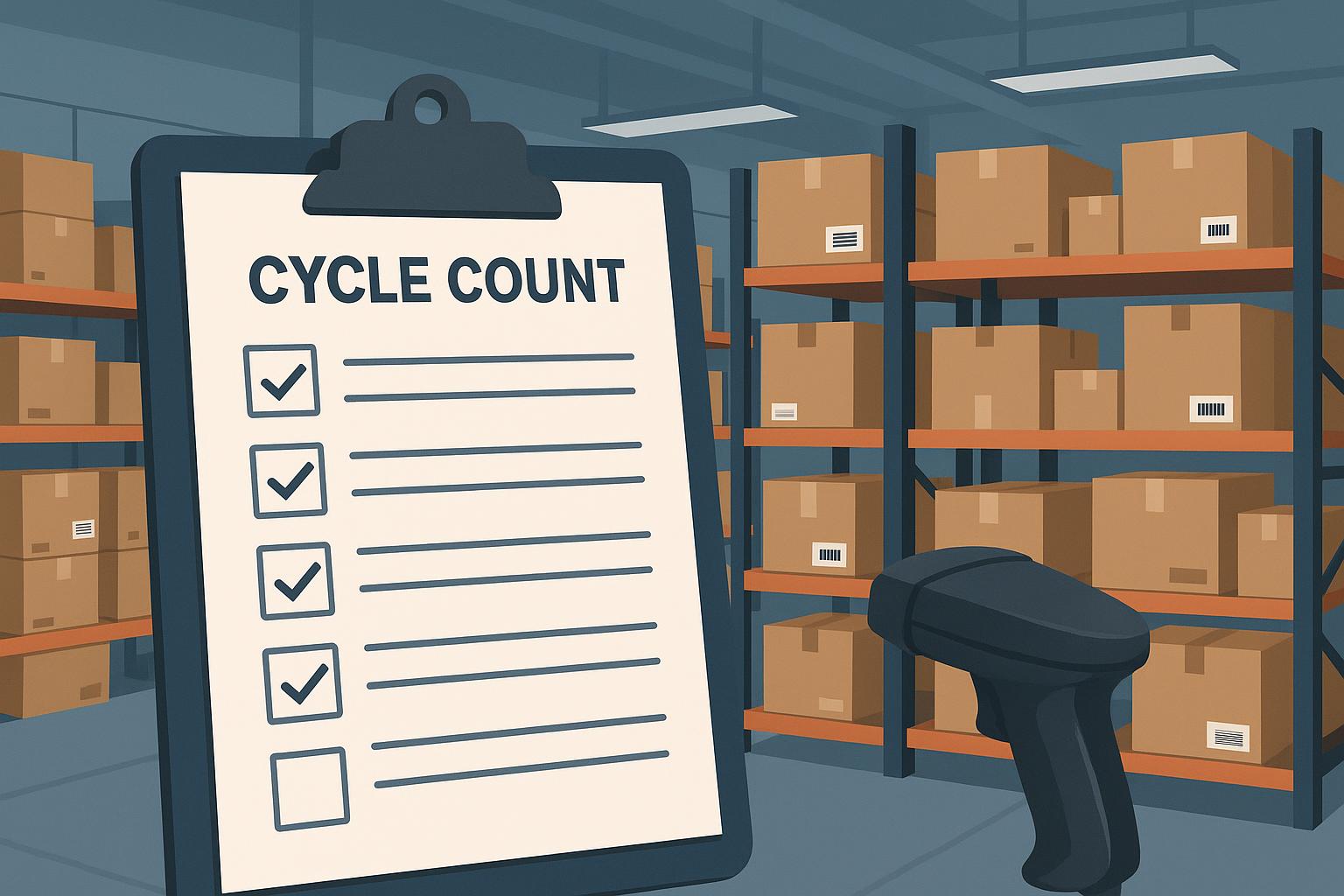
Working in a warehouse gives you a front-row seat to the daily complexities of inventory management. One of the most important practices for maintaining accuracy and efficiency is the cycle count. Unlike annual physical inventories, cycle counts are ongoing checks of specific inventory items, product categories, or designated warehouse sections. From my perspective as a warehouse employee, they are the lifeblood of accurate inventory management.
Inventory cycle counts ensure that our records match what is physically in the warehouse, which is critical for meeting customer demands, minimizing stockouts, and reducing overstock situations. In my experience, maintaining accurate inventory is a continuous challenge, particularly when staffing is limited or when the volume of SKUs grows rapidly. This is why a systematic approach, whether executed internally or with the support of specialized personnel, is essential for operational success.
Understanding Cycle Counts
Contents
- Understanding Cycle Counts
- Challenges in Cycle Counting
- Benefits of Regular Cycle Counts
- Integrating Specialized Personnel
- Cycle Counts and Operational Efficiency
- Training and Standardization
- Technology’s Role in Cycle Counting
- Overcoming Common Pitfalls
- Benefits Beyond Inventory Accuracy
- My Personal Experience
- Best Practices for Effective Cycle Counts
- Conclusion
Cycle counting is the practice of counting a subset of inventory on a regular schedule rather than conducting a full physical inventory once or twice a year. The main objective is to maintain ongoing inventory accuracy without interrupting the daily flow of warehouse operations. In our warehouse, we organize cycle counts strategically, breaking them down by product category, storage section, or SKU priority. High-value items, fast-moving products, or critical SKUs may be counted on a more frequent basis, while slower-moving or lower-priority items are scheduled less often. This structured approach allows us to focus resources where they are most needed while keeping the rest of the warehouse running smoothly.
From my perspective on the warehouse floor, the importance of cycle counts cannot be overstated. Each time we reconcile the physical inventory with the system records, we often uncover discrepancies that could have serious operational consequences if ignored. These mismatches can arise from a variety of sources, including human error during picking or receiving, misplacement of items, inaccurate data entry, or inventory that has been damaged or deteriorated over time. Even small inaccuracies, if left unresolved, can compound into larger problems, leading to stockouts, excess inventory, delays in order fulfillment, and errors in financial reporting. Maintaining consistent cycle counts helps prevent these issues, giving us confidence that the inventory data we rely on is accurate and actionable.
Additionally, cycle counting provides insight into patterns of inventory movement and handling. By regularly examining specific sections or categories, we can identify items that are frequently misplaced, highlight bottlenecks in storage or picking processes, and address recurring issues before they escalate. Over time, this proactive approach not only safeguards inventory accuracy but also improves overall efficiency, reduces operational costs, and strengthens the reliability of the supply chain. For employees like me, it creates a sense of control and accountability, knowing that each item is accounted for and discrepancies are caught before they impact operations.
Challenges in Cycle Counting
While the idea of cycle counts may seem simple at first glance, putting them into practice effectively is far from easy. One of the biggest obstacles we face in the warehouse is staffing. Many facilities operate with lean teams, which makes it challenging to carry out regular cycle counts without overloading employees. On particularly busy days, our primary responsibilities—shipping, receiving, and restocking—take precedence, leaving little time for thorough, accurate counting. Finding a balance between daily operations and maintaining inventory accuracy often feels like walking a tightrope.
Consistency is another significant challenge. Cycle counts must be conducted systematically to produce reliable results. Skipping scheduled counts, recording numbers incorrectly, or using inconsistent methods can quickly introduce errors into the inventory system. From my experience handling inventory on a daily basis, even minor inconsistencies can snowball into larger issues. Misplaced items, delayed shipments, and inaccurate management reports are just a few of the consequences that arise when cycle counts are not performed correctly.
The complexity grows exponentially in high-volume warehouses. With thousands of SKUs spread across multiple aisles, racks, and storage zones, keeping track of every item and counting it correctly requires meticulous attention to detail. Each count demands knowledge of proper storage practices, awareness of recent inventory movements, and a careful approach to ensure nothing is overlooked. Without a structured system and disciplined execution, the chances of error increase dramatically, making it clear why cycle counting is as much an art as it is a process.
Benefits of Regular Cycle Counts
Despite the challenges, the benefits of cycle counting make the effort more than worthwhile. Accurate inventory records have a direct impact on daily warehouse operations. When the numbers in the system match the items on the shelves, picking and shipping run much more smoothly. Fewer errors occur, shipments leave on time, and delays are minimized. This efficiency not only streamlines our workflow but also boosts customer satisfaction because orders arrive complete and on schedule.
Cycle counts also reduce the need for disruptive full physical inventories. Conducting a complete inventory often requires halting warehouse operations for hours or even days, which can create bottlenecks and slow down the entire supply chain. Regular cycle counts allow inventory to be monitored and reconciled continuously. From my perspective on the warehouse floor, this approach keeps operations moving and reduces the stress of trying to manage both daily tasks and a massive once-a-year inventory.
Another key advantage is the reliability of data. Accurate inventory records give management a clear view of stock levels, making it easier to forecast demand, plan reorders, and identify slow-moving or excess items. Regular counts also help reduce shrinkage caused by misplaced or unaccounted-for products, protecting the company’s bottom line. Knowing that the inventory data is dependable makes everyone’s job easier, from warehouse staff handling daily operations to managers making strategic decisions.
Integrating Specialized Personnel
One effective way to address staffing challenges and improve cycle count accuracy is to bring trained inventory professionals into the warehouse process. From my experience, having personnel who focus solely on cycle counts can completely change how smoothly the operation runs. These specialists are trained to conduct scheduled, ongoing counts efficiently, often concentrating on specific SKUs, product categories, or designated sections of the warehouse.
When these experts join our workflow, they allow the core warehouse team to continue daily operations without taking on extra counting responsibilities. I have seen firsthand how outsourcing this function can lead to faster, more accurate counts. Their expertise and attention to detail ensure fewer items are overlooked and that procedures are followed consistently. They bring a fresh perspective to the process, which helps identify potential errors that might be missed by a team juggling multiple responsibilities.
In addition, integrating external inventory teams supports proactive inventory management. By concentrating on accurate counting and reconciliation, these specialists catch discrepancies sooner, enabling quicker corrective actions. This early intervention helps prevent larger operational problems, such as stockouts or excess inventory, which can have ripple effects throughout the supply chain. From the warehouse floor, it is clear that having dedicated cycle count personnel makes the entire inventory process more reliable, efficient, and less stressful for the internal team.
Cycle Counts and Operational Efficiency
Cycle counts play a critical role in maintaining operational efficiency. From my perspective on the warehouse floor, the process is not just about tallying items, it is a tool for improving overall workflow. By regularly reconciling inventory, we spend less time searching for misplaced items, reduce picking errors, and ensure that system records accurately reflect what is physically in the warehouse. This improved accuracy translates into smoother shipping and receiving operations, more efficient use of storage space, and better overall organization of the warehouse.
Accurate cycle counts also help us make smarter decisions about resource allocation. High-value or fast-moving items can be monitored more closely, ensuring they are always accounted for and properly managed. Slower-moving or lower-priority items, on the other hand, can be scheduled for counting less frequently. This prioritization allows labor and time to be directed where they are most needed, improving productivity and ensuring that the team focuses on the areas that have the greatest operational impact.
Over time, the benefits compound. Consistent cycle counting creates a predictable rhythm in warehouse operations. Staff become more familiar with inventory patterns, storage locations, and handling procedures. This familiarity reduces mistakes and increases efficiency in day-to-day tasks. From my experience, a warehouse that takes cycle counts seriously operates more smoothly, experiences fewer disruptions, and can respond quickly to unexpected demands or issues.
Training and Standardization
For cycle counts to be effective, consistent training and standardization are essential. In my warehouse, all employees involved in counting receive detailed instructions on proper counting procedures, handling of assets, and documentation practices. We also use standardized forms and inventory management software to log counts in real time. This reduces the risk of errors and ensures that everyone follows the same process.
Standardization also helps when discrepancies arise. When everyone is following the same methodology, it is easier to identify where mistakes may have occurred and to correct them promptly. From my perspective, this clarity reduces stress on the warehouse team and fosters confidence in the accuracy of the inventory system.
Technology’s Role in Cycle Counting
Technology has transformed how cycle counts are conducted. Barcode scanners, RFID systems, and mobile inventory management applications allow us to record counts in real time, minimizing data entry errors and speeding up the process. In my experience, these tools not only make counting more efficient but also provide immediate feedback, allowing us to reconcile discrepancies quickly.
Integration with warehouse management systems ensures that cycle count data flows seamlessly into inventory records, providing management with up-to-date information. From the warehouse floor, having technology at our disposal makes the cycle counting process less cumbersome and more accurate.
Overcoming Common Pitfalls
Even with technology and specialized personnel, cycle counts can face pitfalls. Miscounts, misplaced items, and communication gaps are always risks. From my experience, one of the most effective ways to mitigate these issues is to schedule counts strategically. By counting smaller sections or prioritizing high-impact SKUs, we reduce the chances of errors and maintain operational continuity.
Additionally, regular audits of cycle count data help identify trends and potential issues. For example, if a particular product consistently shows discrepancies, it may indicate problems in handling, storage, or documentation. Addressing these underlying issues improves both accuracy and workflow efficiency.
Benefits Beyond Inventory Accuracy
The impact of cycle counts extends beyond accurate inventory records. From my perspective, they contribute to a culture of accountability and professionalism within the warehouse. Employees become more aware of the importance of proper handling, documentation, and organization. This awareness reduces shrinkage, improves workplace safety, and ensures that warehouse operations run more smoothly.
Cycle counts also support broader supply chain performance. Accurate inventory data allows for better forecasting, reduces lead times, and improves supplier relationships. When management can trust inventory records, they can make more informed decisions about purchasing, production, and distribution.
My Personal Experience
Having worked in warehouses for several years, I’ve seen firsthand the impact that consistent cycle counts can have on operations. When our team implemented regular, scheduled counts, picking errors dropped, stockouts became less frequent, and our financial reporting grew more accurate. Daily operations also became less stressful because we could rely on the inventory data, reducing the time spent searching for misplaced items and streamlining workflows.
Regular cycle counts also revealed patterns in inventory movement. We could identify high-turnover SKUs, frequently misplaced items, and areas that needed better organization. This information helped us optimize storage layouts and allocate staff time more effectively, improving overall warehouse efficiency.
Integrating specialized cycle count personnel added another layer of benefit. Their focus allowed our core team to handle shipping and receiving without interruption. These specialists followed procedures meticulously and caught discrepancies early, demonstrating that outsourcing cycle counts complements internal operations rather than replacing them. For the warehouse team, it meant less stress, greater confidence in the inventory system, and smoother day-to-day operations.
Best Practices for Effective Cycle Counts
Based on my experience, several best practices can help ensure successful cycle counts:
- Schedule Counts Strategically: Focus on high-value, fast-moving, or error-prone items more frequently.
- Use Technology: Leverage barcode scanners, RFID, and inventory management software for real-time data entry.
- Train Staff Consistently: Ensure all team members understand procedures and standards.
- Document Thoroughly: Record all counts and discrepancies clearly to support reconciliation and audits.
- Integrate Specialized Personnel: When internal resources are limited, trained professionals can improve accuracy and efficiency.
- Review and Analyze Data: Regularly examine discrepancies to identify root causes and address systemic issues.
By following these practices, warehouses can maintain accurate records, optimize operations, and reduce the risk of costly errors.
Conclusion
From the perspective of a warehouse employee, cycle counts are a crucial part of maintaining smooth, efficient, and reliable operations. They allow us to ensure that inventory matches what is physically on hand, prevent costly errors, and support better decision-making across the supply chain. While challenges such as limited staffing, high SKU volumes, and human error exist, strategic planning, the use of technology, and integration of specialized personnel make cycle counting manageable and highly beneficial.
Cycle counts are not just an accounting tool, they are a cornerstone of operational excellence. They improve efficiency, enhance data reliability, and ultimately contribute to a more organized, productive, and professional warehouse environment. From my experience, warehouses that take cycle counts seriously are better positioned to meet customer expectations, optimize resources, and maintain long-term operational success.