


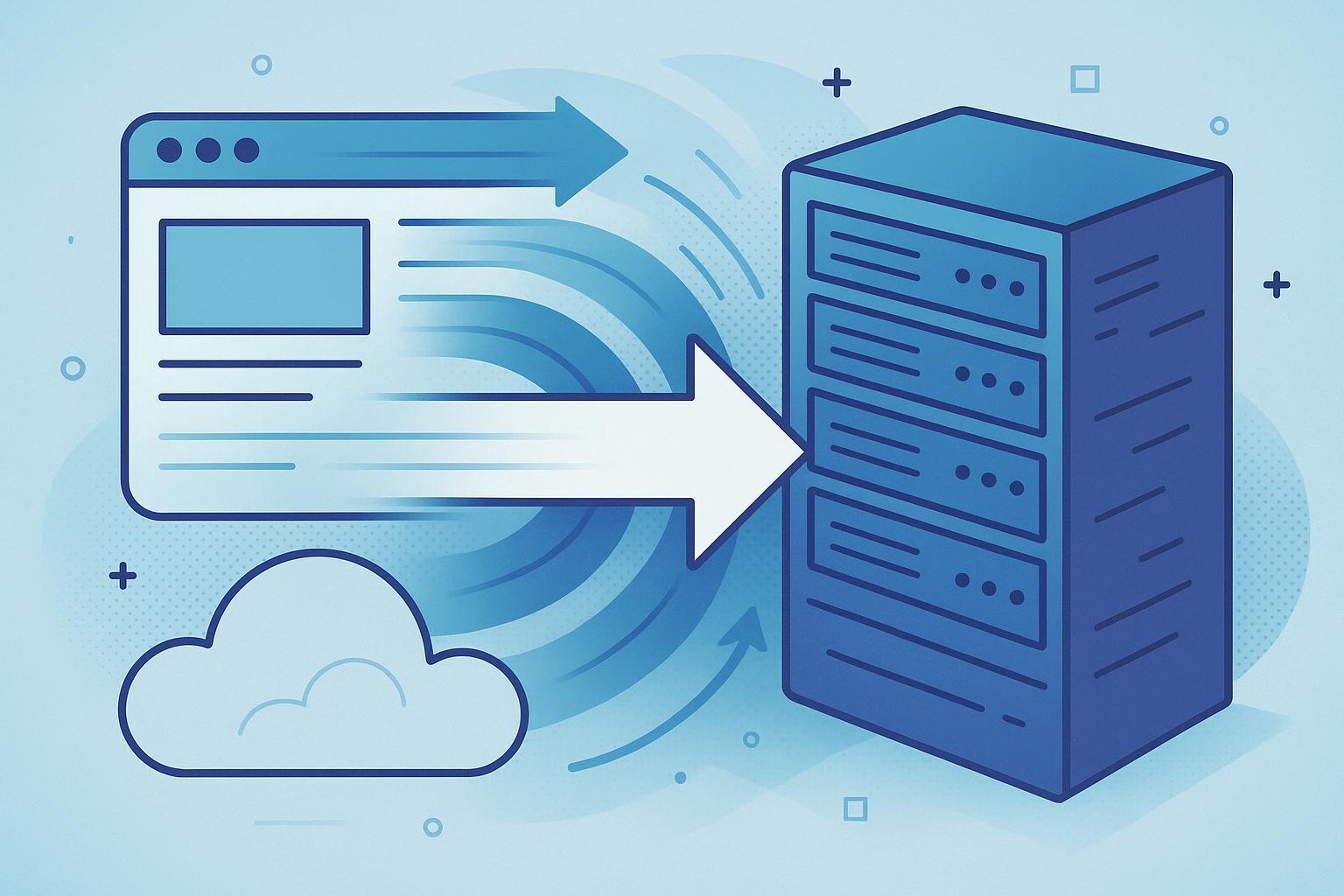
Speed on the web is a hardware and routing problem long before it’s a software one. A request that crosses an ocean pays a physics tax, and no clever code refunds it.
Teams pulling pricing data, testing regional builds, or checking search results at scale figure this out quickly. The difference between a 40ms response and a 400ms one decides whether a job wraps before lunch or runs until Tuesday. And the fix is rarely in the code.
Where the Milliseconds Actually Go
Contents
Every request makes several stops: DNS resolution, a TCP handshake, a TLS negotiation, then the actual transfer. On a clean connection, that’s roughly four round trips before a single byte of content shows up.
Distance multiplies all of it. Light in fiber travels at about 200,000 km per second, so a New York to Frankfurt round trip burns close to 80ms in pure propagation before any server does a thing.
Caching hides most of this during ordinary browsing. Content delivery networks park copies of pages near users, so the average person never feels the distance. Automated data collection usually hits origin servers directly, where nothing is cached and every millisecond is real.
Why Server Farms Win on Raw Speed
Commercial facilities running blade servers on fiber backbones don’t share bandwidth with a household streaming video at 8pm. They sit near the internet’s core, often inside the same buildings where major networks trade traffic.
Routing through a datacenter proxy at MarsProxies.com puts requests on that class of infrastructure, which is why latency holds in double digits where a home connection drifts into the hundreds. Networks that meet directly at an internet exchange point skip several transit hops, and those savings compound across thousands of requests.
Virtualization handles the economics. One physical server hosts hundreds of separate proxy instances, each with its own IP and network identity, which keeps the per-IP cost low enough to buy in bulk.
But visibility is the tradeoff. Hosting IP ranges are published and easy to cross-reference, so sites that care can flag that traffic on sight, and rotation across a large pool is the standard answer.
Uptime is the underrated piece. Redundant power, multiple upstream carriers, and round-the-clock monitoring mean a long-running job doesn’t die at 3am because a router in someone’s living room decided to reboot.
Protocols and the Unglamorous Details
Protocol choice changes what’s possible. HTTP proxies handle web traffic fine, but SOCKS5, defined back in 1996 inRFC 1928, carries any TCP connection: mail, FTP, database queries, whatever the client happens to speak.
Authentication is the next fork. Username and password works everywhere but means managing credentials; IP whitelisting drops the passwords and locks access to fixed origins instead.
Then there’s session behavior. Rotating IPs mid-session breaks logins and shopping carts, so persistence within a task and rotation between tasks is usually the sane split.
Rate limiting deserves more respect than it gets. Firing 1,000 requests a second at one host trips defenses regardless of how clean the IPs are, and backing off gradually beats getting an entire pool flagged.
What Changes Next
Address space is the quiet story. IPv6 offers roughly 340 undecillion addresses against IPv4’s 4.3 billion, and Google’s adoption tracker has shown traffic climbing past the 40% mark, which lets providers hand out far larger pools without the NAT layers that add overhead.
Machine learning is turning up in rotation logic too. Systems now pace requests based on live response codes rather than fixed timers, cutting wasted calls on sites that throttle unpredictably.
Edge computing pushes capacity outward. Smaller facilities in secondary cities attack the distance problem at its source, which matters more than any protocol tweak.
Build for the Geography First
The practical move for anyone assembling a data pipeline: measure before buying. Run traceroutes from candidate locations, check where the target’s servers actually sit, and pick geography before picking features.
Infrastructure decisions made at setup tend to outlive the project that prompted them. A pool chosen for one collection job becomes the default for the next six, and the latency assumptions baked in on day one quietly shape everything after.