


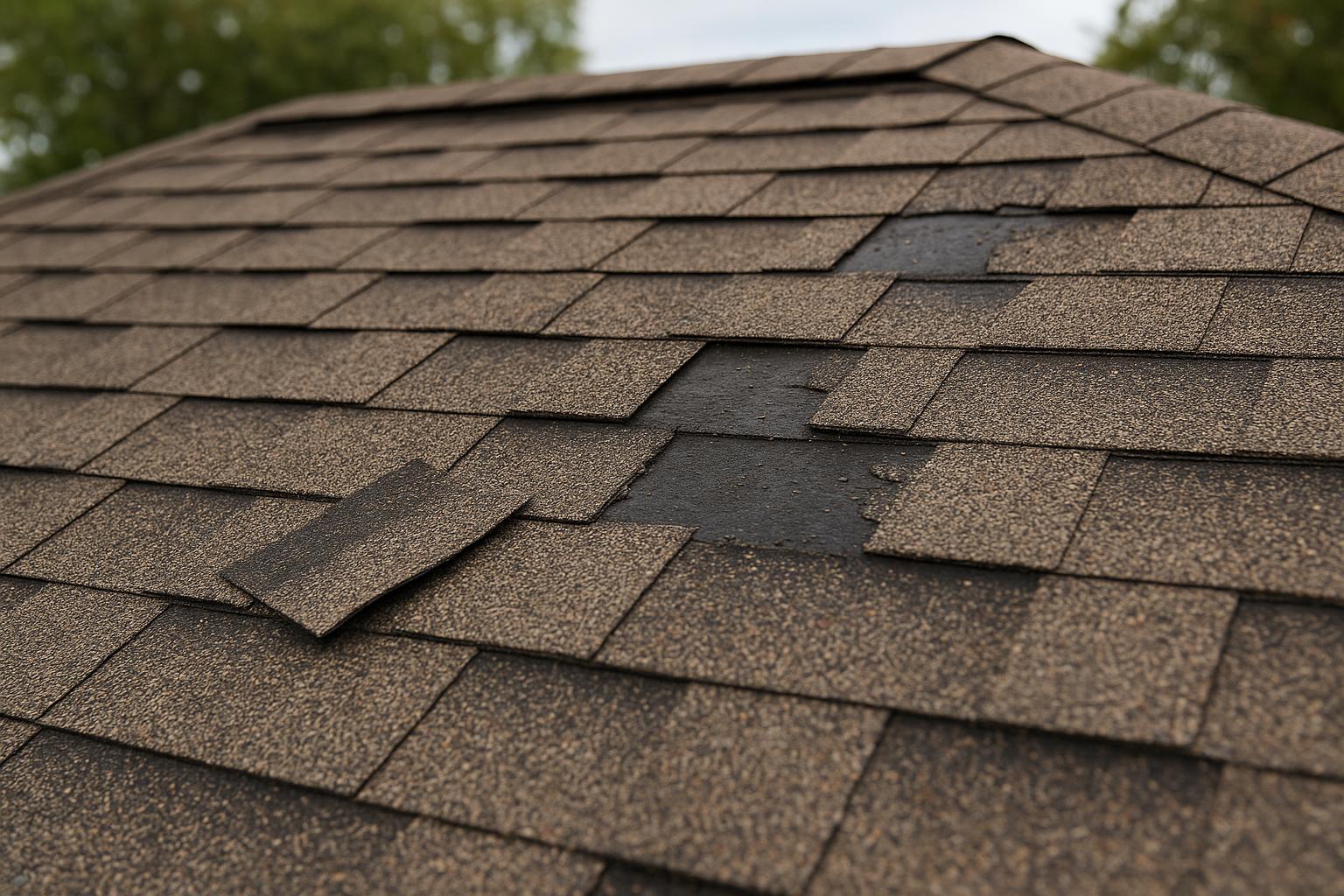
Finding a shingle in the yard after a windy day is more than a cosmetic issue. It’s a sign that something on your roof isn’t holding the way it should, and it’s worth figuring out why before more follow.
Here are the most common reasons shingles come loose or blow off entirely.
Wind lifted the edges
Contents
- Wind lifted the edges
- The adhesive seal never bonded properly
- Aging shingles have lost their flexibility
- Nails were installed incorrectly
- Storm and hail damage weakened the shingles
- Poor attic ventilation is affecting the roof deck
- Debris and tree damage are pulling shingles loose
- What to do if you’re losing shingles
Wind is the most frequent culprit behind lost shingles. Strong gusts can get underneath the edge of a shingle and lift it, breaking the adhesive seal that normally holds it flat against the roof. Once that seal is broken, the shingle becomes far more vulnerable to being torn off completely in the next storm, even if the wind isn’t as strong as the one that first loosened it.
For those in Columbus, Ohio, The Roofing Guys can inspect your roof and identify the cause before a few missing shingles turn into a leak.
The adhesive seal never bonded properly
Shingles rely on a heat activated adhesive strip to seal to the shingle below them, and that bond typically sets over the first few weeks after installation as the sun warms the roof. If a roof was installed during cold weather, or if shingles were installed out of season without proper sealing, that bond may never fully form. Roofs with sealing problems tend to lose shingles more easily than a properly sealed roof would, even in relatively mild wind.
Aging shingles have lost their flexibility
As shingles age, the asphalt becomes more brittle and the granules that protect them wear away. Older shingles are more prone to cracking, curling, and losing their grip, especially at the edges of the roof and around ridges where wind exposure is highest. A roof nearing the end of its expected lifespan will typically start shedding shingles well before the rest of the roofing system fails.
Nails were installed incorrectly
Shingles are meant to be secured with nails placed in a specific pattern and depth. Nails that are underdriven, overdriven, or placed outside the manufacturer’s nailing zone don’t hold shingles as securely, which makes them more likely to work loose over time. This kind of installation issue isn’t always visible from the ground, but it’s one of the more common reasons a relatively new roof loses shingles.
Storm and hail damage weakened the shingles
Hail impacts can crack shingles or knock loose the granules that protect them, even without any visible holes. This kind of damage weakens the shingle’s structure, making it more likely to tear away during a later wind event, even if the storm that caused the initial damage wasn’t strong enough to blow anything off outright.
Poor attic ventilation is affecting the roof deck
When an attic doesn’t ventilate properly, heat and moisture build up underneath the roofing system. Over time, this can cause the roof deck itself to warp slightly, which affects how well shingles are able to lie flat and stay sealed. Ventilation issues often go unnoticed until shingles start lifting or the roof begins to show other signs of premature wear.
Debris and tree damage are pulling shingles loose
Overhanging branches can rub against shingles during windy conditions, gradually wearing away the surface and loosening the edges. Falling branches or heavy debris can also knock shingles loose on impact. Trimming trees back from the roofline reduces this kind of ongoing wear.
What to do if you’re losing shingles
A few missing shingles rarely mean the whole roof needs to be replaced, but the underlying cause matters. An aging roof losing shingles across multiple areas is a different situation than a newer roof shedding a few shingles after one bad storm, and the right next step depends on which one you’re dealing with.
If shingles keep turning up in your yard or you’ve noticed bare spots on the roof, The Roofing Guys can inspect the roof, identify the cause, and let you know whether you’re looking at a simple repair or something more.