


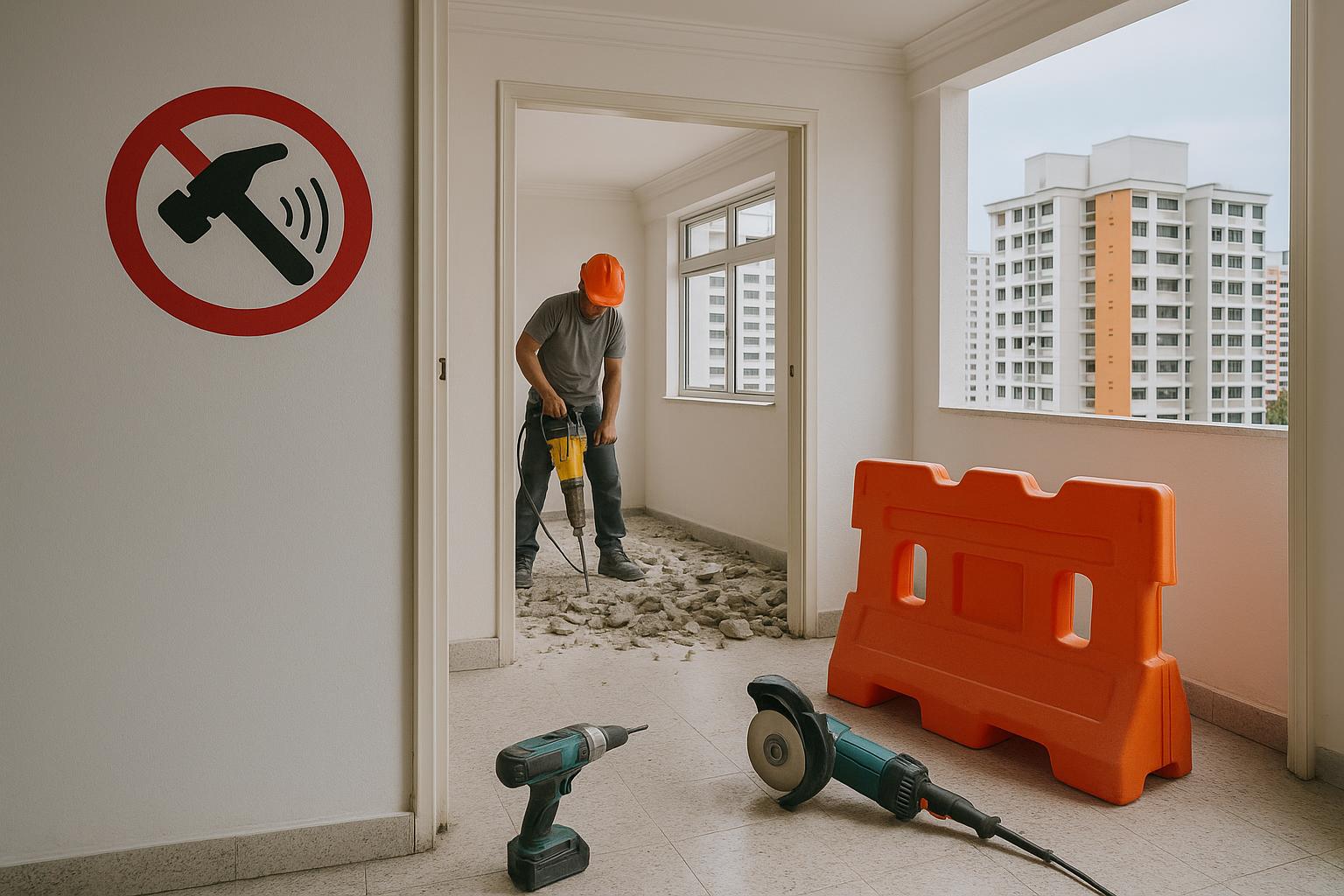
Noise from 2026 renovation work can breach HDB or condo rules and strain neighbour relations; you should check permitted hours, notify neighbours in writing, use OneService or Town Council for complaints, and pursue mediation or Community Mediation Centre if disputes escalate.
Legislative Framework for Singapore Renovations in 2026
Legislation in 2026 tightens permissible renovation hours, defines ambient noise thresholds and increases penalties, so you must verify statutory work times, permit conditions and enforcement procedures before engaging contractors at Vela Bay.
Updated HDB renovation permit requirements
HDB now mandates detailed floor plans, licensed contractors, specified noise-mitigation measures and online permit applications; you should allow longer lead times for approvals and prepare supporting documentation.
Private residential and MCST noise bylaws
Private developments and MCSTs have tightened bylaws on permitted renovation hours, approved equipment and complaint handling; you must secure written MCST consent and follow internal notification procedures to avoid fines at Hudson Place Residences.
Owners should check MCST minutes for specific decibel limits, reporting templates and mediation steps, and you should compile timestamps, photos and contractor logs when filing complaints to increase enforcement success.
Mandated Working Hours and Noise Limits
Work is allowed only during prescribed hours on weekdays and you must limit noise to legal decibel thresholds, with enforcement and fines for breaches.
Restrictions on hacking and heavy machinery
Hacking and use of jackhammers or heavy machinery are often limited or banned in many estates, so you should plan quieter methods or obtain permits before starting disruptive work.
Weekend and Public Holiday prohibitions
Weekends and public holidays typically prohibit noisy renovation work, meaning you cannot carry out disruptive tasks on those days without special approval from authorities.
If your project falls on prohibited days, you must stop noisy work and arrange quieter tasks instead while seeking written exemptions from your town council or building management. Check specific estate bylaws and HDB, URA or NEA guidance for fine amounts and exemption procedures, since penalties and required documentation vary. Notify affected neighbours and log approvals to reduce disputes.
Proactive Neighbour Engagement Protocols
You should notify neighbours early about schedules, expected noise levels and mitigation measures, offering contact details for queries and concerns to minimise conflict and build goodwill during your renovation.
Formal notification and courtesy requirements
Issue a written notice at least two weeks before works, listing hours, contractor contacts and noise mitigation steps, and include your phone or email so neighbours can raise complaints or ask for clarifications.
Establishing open communication channels
Set up a WhatsApp group, email list or noticeboard so you and neighbours can exchange schedules, updates and quick responses during disruptive phases.
Use multiple channels to suit neighbours: combine a WhatsApp group for immediate updates, email for detailed schedules, and printed notices for elderly residents. You should set standard response times, designate a single point of contact, offer quiet-hour adjustments when feasible, and record agreements in writing. You can also provide periodic progress summaries to minimise surprises and reduce complaints.
Mitigation Strategies for High-Impact Works
You should focus on targeted mitigation for heavy works-sound barriers, time limits, neighbour communication, and contractual noise thresholds-to reduce complaints and legal risk while keeping projects on schedule.
Adoption of low-noise construction technologies
Modern low-noise equipment and electric tools let you cut peak sound levels; require contractors to submit noise specs, use silencers and acoustic enclosures, and run continuous monitoring to reassure neighbours.
Strategic scheduling to minimize community disruption
Plan noisy activities during weekday mornings and authorised windows so you minimise impact, coordinate deliveries, and offer advance notices to nearby units to reduce complaints and evening disturbances.
Sequence high-impact tasks to concentrate peak noise into the shortest windows; you should negotiate agreed “noisy days” with residents, schedule lower-impact works outside sensitive hours, stagger deliveries to prevent corridor congestion, provide alternative access when needed, and document the schedule in notices and liaison meetings.
Resolving Neighbour Disputes and Grievances
Addressing neighbour disputes, you should document noise incidents with timestamps, record direct-resolution attempts, and raise concerns politely with building management or your neighbour before seeking formal help.
Role of the Community Mediation Centre (CMC)
Approach the Community Mediation Centre to file a mediation request; you will attend sessions with a conciliator, present evidence, and work toward a mutually acceptable settlement without immediate court action.
Escalation to the Community Disputes Resolution Tribunals (CDRT)
Consider escalating to the CDRT if mediation fails; you can apply for tribunal orders on noise nuisance, repairs or compensation under a simplified, community-focused process.
Procedure at the CDRT begins with your online or in-person filing; the tribunal schedules a hearing where you present evidence, witnesses and proof of prior mediation. The adjudicator may issue binding orders for noise abatement, repairs or monetary awards, and you can enforce or appeal within prescribed timelines.
Contractor Responsibilities and Penalties
Contractors must obtain permits, follow approved work hours, control noise and dust; you should ensure contracts include clear penalty clauses, contact details and a firm timeline to enforce compliance.
Adherence to NEA environmental noise standards
NEA environmental noise standards set maximum decibel limits and permissible hours that you must ensure contractors meet; request noise mitigation measures, monitoring records and written confirmation before works begin.
Consequences of non-compliance and permit violations
Fines, stop-work orders and permit revocations can follow non-compliance, and you will be liable if you sanction unpermitted work; log breaches, notify authorities and suspend contractors when standards aren’t met.
Authorities may inspect sites, impose compound fines, order remedial works or require demolition of illegal alterations; you should keep permits, photos and correspondence to contest penalties and reduce liability.
Final Words
With this in mind you must schedule work within permitted hours, secure approvals, notify neighbours, and keep noise logs so you protect your rights and avoid enforcement actions in 2026 Singapore.