


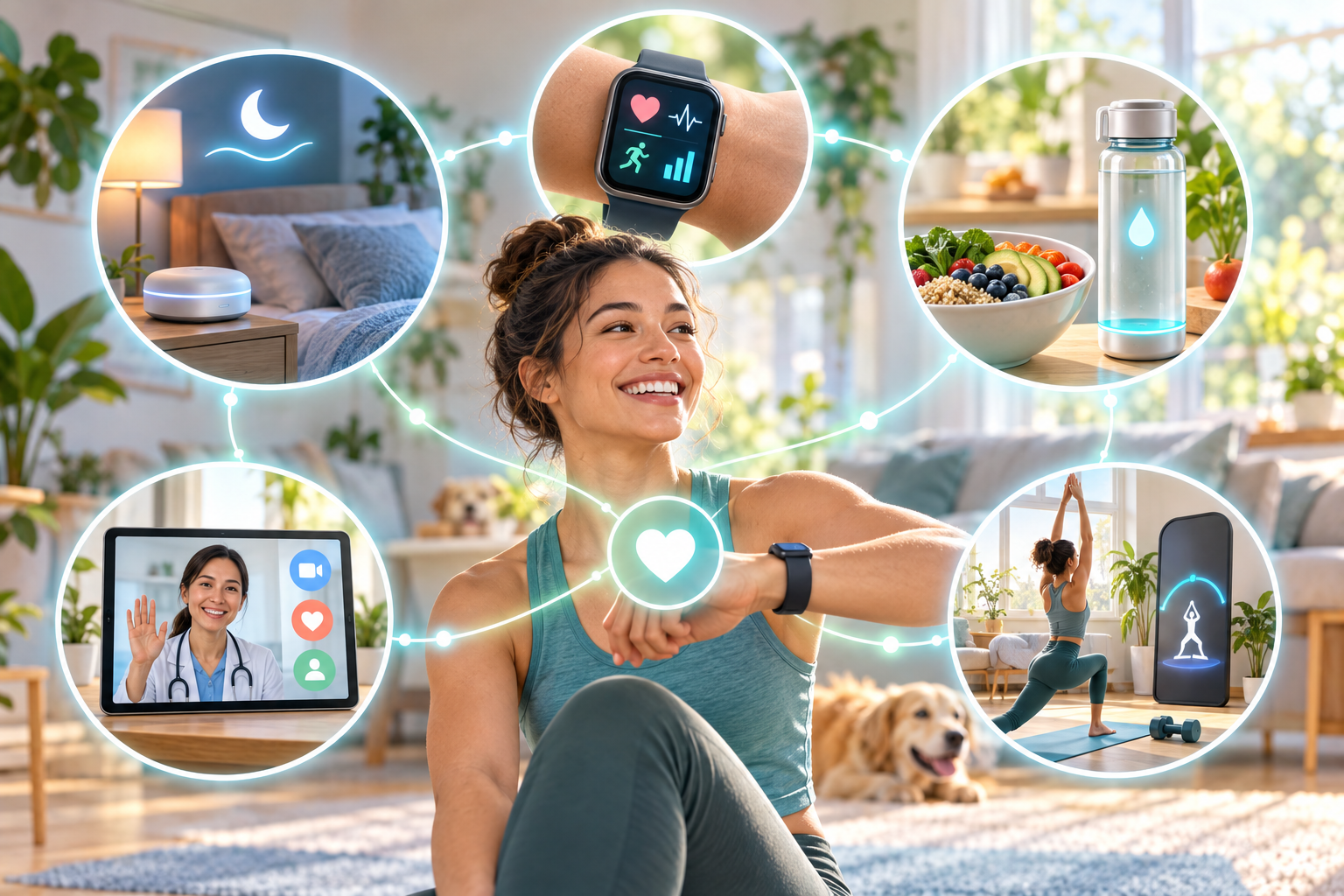
Technology has spent decades making life faster, but the more interesting shift may be how it is starting to make daily life healthier. The newest generation of wellness technology is less concerned with putting another screen in front of people and more focused on movement, sleep, recovery, stress and the small habits that shape how someone feels from morning to night. Some devices collect detailed health information, while others simply make healthy routines easier to follow. The best tools are not necessarily the most complicated ones. They are the ones people can realistically work into their lives without turning personal wellness into another full-time job.
Making Movement Easier at Home
Contents
Finding time to exercise remains one of the biggest barriers to maintaining a consistent fitness routine. Home wellness equipment is addressing that problem by giving people ways to move without driving to a gym or blocking off an hour for a formal workout. A vibration plate, for example, creates rapid mechanical vibrations while a person stands or performs exercises on the platform. These devices have become increasingly common in home fitness setups because they can be paired with squats, lunges and other movements without requiring much floor space.
Technology can also make traditional home exercise more appealing. Connected stationary bikes, rowing machines and treadmills can track workouts, provide instruction and give users a clearer picture of their progress. Even basic equipment has become smarter, with adjustable resistance systems and apps that help people follow structured routines. None of these devices can replace consistency, but they can remove some of the friction that causes exercise plans to disappear after a few enthusiastic weeks.
Building Better Sleep Habits
Sleep technology has expanded well beyond alarm clocks. Smart mattresses, adjustable bed bases, temperature-controlled bedding and sleep-tracking devices are designed to help people understand what happens during the hours they spend in bed. While consumer sleep trackers should not be treated as medical diagnostic tools, they can reveal patterns that might otherwise go unnoticed.
The most useful information is often surprisingly ordinary. Someone may notice that bedtime gradually moves later during the workweek, or that certain evening habits correspond with shorter nights of sleep. Smart lighting can support better routines by reducing brightness as bedtime approaches, while programmable thermostats and temperature-regulating mattress systems can make the bedroom more comfortable. Technology works best here when it encourages healthier behavior instead of creating anxiety about achieving a perfect sleep score every morning.
Taking Stress Management Seriously
Technology often gets blamed for adding stress to modern life, and sometimes it deserves the criticism. Endless notifications, work messages and social feeds can make it difficult to switch off. Yet the same phone that creates distractions can also provide access to tools designed to help people manage them.
Meditation apps, breathing exercises, digital journals and guided relaxation programs have made stress-management practices easier to try at home. Noise-canceling headphones and smart speakers can help create an environment suited to relaxation, while phone settings can limit notifications during meals, family time or the hours before bed. The goal does not have to be abandoning technology. It can be using technology more deliberately. A device becomes more useful when it protects attention rather than constantly demanding it.
Understanding Personal Health Patterns
One of the biggest changes in consumer health technology is the amount of information people can now collect about their own routines. Watches, rings and other forms of wearable tech can monitor metrics such as steps, heart rate, exercise duration and sleep patterns. Some devices offer additional features that help users follow changes over weeks or months instead of relying on how active or rested they think they have been.
The numbers still require perspective. Consumer devices can produce imperfect estimates, and more data does not automatically lead to better health. Checking every measurement repeatedly can become counterproductive, particularly when normal daily fluctuations are interpreted as problems. A better approach is to look for broader trends. If a tracker shows that daily movement has fallen steadily over several months, that information may provide a useful reason to change a routine. The technology serves the person, not the other way around.
Creating a Healthier Digital Home
The next phase of wellness technology may be less about individual gadgets and more about how devices work together inside the home. Air-quality monitors can alert residents to changes in indoor conditions. Smart lighting can follow schedules that support morning wakefulness and evening relaxation. Connected kitchen appliances can make meal preparation easier, while digital assistants can provide reminders for exercise, hydration or bedtime routines.
There is also value in knowing when not to automate. Health and happiness depend on relationships, movement, nutritious food, restorative sleep and time away from screens, none of which can be reduced to a dashboard. Technology is most valuable when it supports those fundamentals rather than attempting to replace them.
A healthier future does not require filling every room with electronics. The better goal is choosing a few tools that solve genuine problems and make beneficial habits easier to maintain. When technology earns a place in everyday life instead of demanding one, it can become a practical partner in feeling better.