


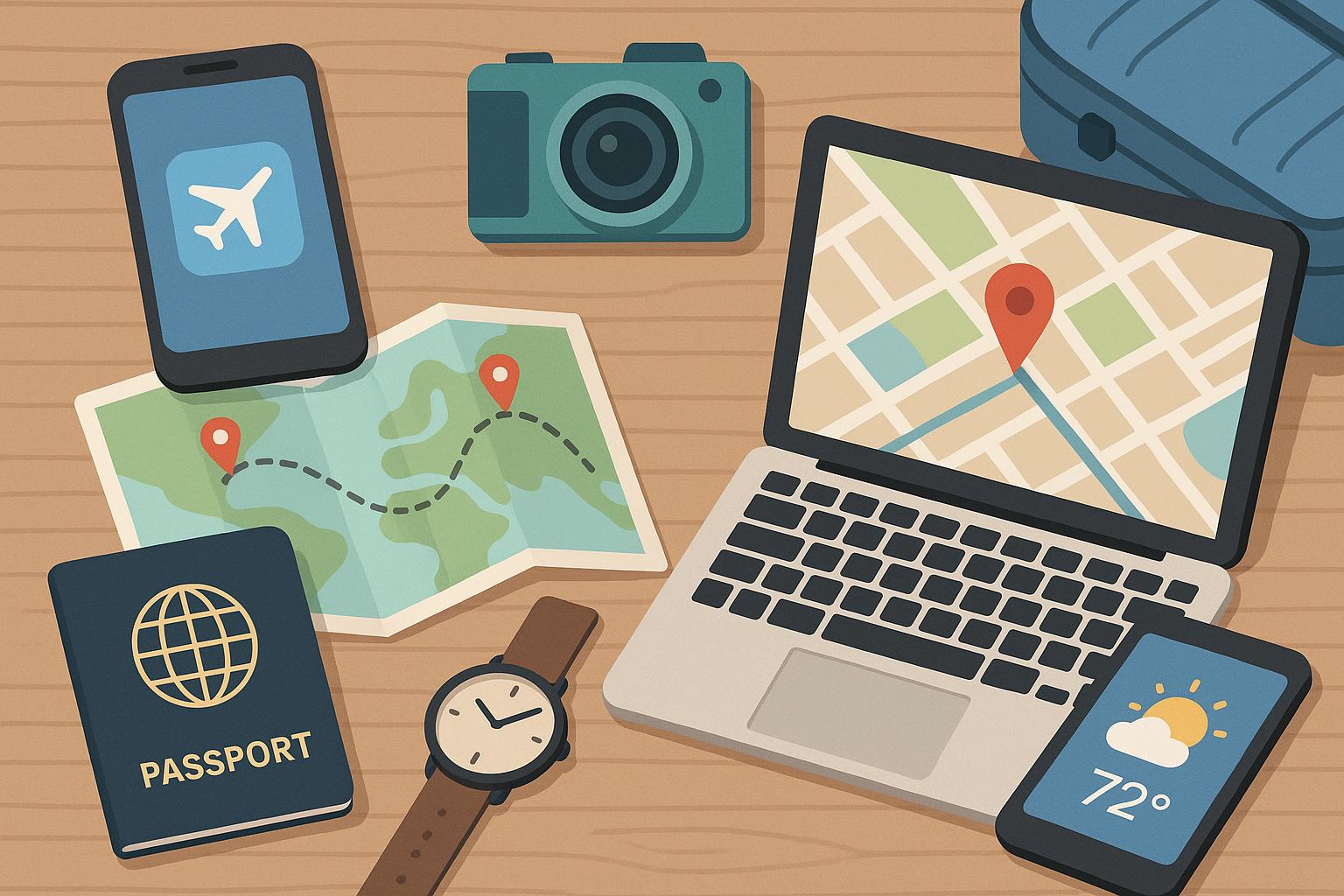
Travel has changed dramatically over the past decade. What used to require printed itineraries, physical maps, and a fair amount of guesswork can now be managed entirely from a single device: your smartphone.
From planning your trip to navigating unfamiliar streets and staying in touch with people back home, your phone has become the central hub of modern travel. But having a smartphone isn’t enough—it’s about having the right tools, set up in the right way, before you even leave.
Think of it as building your “travel tech stack”—a collection of apps and services that work together to make your journey smoother, smarter, and more enjoyable.
Your phone as your travel command center
Contents
- Your phone as your travel command center
- Navigation: never get lost again
- Booking and organization: keep everything in one place
- Translation and communication: breaking language barriers
- Payments and finance: going cashless (when possible)
- Entertainment and downtime
- Why connectivity ties everything together
- Building a stack that works for you
- Preparing before you go
- The future of travel tech
- Final thoughts
Before diving into specific tools, it’s important to understand the role your phone plays when you travel.
It’s your:
- Map and navigation system
- Booking manager
- Translator
- Communication device
- Entertainment center
- Emergency backup
In many ways, your phone replaces multiple physical tools you would have needed in the past.
But this also means one thing: if your setup isn’t optimized, you’ll feel it quickly.
The first and most essential part of any travel tech stack is navigation.
Apps like Google Maps or Apple Maps are obvious choices, but their value goes far beyond simple directions. They provide real-time updates, public transportation routes, estimated travel times, and even recommendations for nearby places.
To get the most out of them:
- Download offline maps for key areas
- Save important locations (hotel, airport, landmarks)
- Use live navigation when moving through complex cities
When navigation works seamlessly, you move with confidence. When it doesn’t, even simple journeys become stressful.
Booking and organization: keep everything in one place
Travel often involves multiple reservations—flights, hotels, activities, transportation.
Managing all of this manually can quickly become overwhelming.
Apps like TripIt, Google Wallet, or even your email app can help centralize this information. Many services automatically detect bookings and organize them into a timeline.
Key tips:
- Keep digital copies of all reservations
- Take screenshots as backups
- Store important documents (IDs, tickets) in an easily accessible folder
The goal is simple: reduce friction when you need information quickly.
Translation and communication: breaking language barriers
Language can be one of the biggest challenges when traveling internationally.
Translation apps like Google Translate or DeepL can instantly convert text, voice, or even images into your preferred language.
Features to use:
- Camera translation for menus and signs
- Offline language packs
- Voice input for quick conversations
These tools don’t just make travel easier—they make it more immersive. You can interact more confidently and understand your surroundings better.
Payments and finance: going cashless (when possible)
While cash is still important in many destinations, digital payments are becoming increasingly common.
Apps like Apple Pay, Google Pay, Revolut, or Wise allow you to make payments, track spending, and manage multiple currencies.
To stay prepared:
- Notify your bank before traveling
- Carry at least one backup payment method
- Use apps that offer low international fees
Having flexible payment options reduces stress and gives you more control over your budget.
One often overlooked aspect of a strong travel tech stack is how it supports flexibility. No matter how well you plan, things will change—flights get delayed, weather shifts, or you simply discover something new you want to explore. When your apps and connectivity are working seamlessly, you can adapt in real time without stress. You can rebook, reroute, or find alternatives within minutes instead of losing hours figuring things out. That ability to pivot effortlessly is what separates a smooth trip from a frustrating one—and it’s where having the right digital setup truly pays off.
Entertainment and downtime
Travel isn’t always constant movement. There are flights, train rides, and waiting periods where having access to entertainment makes a big difference.
Streaming apps, podcasts, and reading platforms allow you to relax and enjoy downtime without relying on external connections—especially if you download content in advance.
This is one of those small details that can significantly improve your overall experience.
Why connectivity ties everything together
All of these tools—navigation, booking, translation, payments—depend on one thing: connectivity.
Without a reliable internet connection, even the best apps lose their effectiveness.
You can’t:
- Check real-time directions
- Access updated travel information
- Translate new content
- Confirm reservations
- Stay in touch with others
That’s why connectivity isn’t just another tool—it’s the foundation of your entire travel tech stack.
Of course, none of these apps work without a reliable connection, which is why many travelers now include solutions like Holafly travel esim as a core part of their setup.
Instead of relying on public Wi-Fi or dealing with roaming limitations, having a ready-to-use data connection ensures everything works as expected from the moment you arrive.
Building a stack that works for you
There’s no single “perfect” travel tech stack. It depends on your destination, your travel style, and your personal preferences.
However, a solid setup usually includes:
- A reliable navigation app
- A booking/organization system
- A translation tool
- A payment solution
- A connectivity solution
The key is not to overload your phone with apps, but to choose a few that you understand well and trust.
Preparing before you go
One of the biggest mistakes travelers make is setting everything up at the last minute—or worse, after they arrive.
Preparation makes all the difference.
Before your trip:
- Install and test your apps
- Log into all necessary accounts
- Download offline resources
- Set up your connectivity
This ensures that when you land, everything is ready to go.
The future of travel tech
As technology continues to evolve, travel will become even more integrated with digital tools.
We’re already seeing the rise of:
- AI-powered travel assistants
- Real-time translation devices
- Smart booking platforms
- Seamless digital identity systems
At the center of all of this is the same principle: reducing friction and improving the overall experience.
Your travel tech stack will only become more important over time.
Final thoughts
Travel today is about more than just the destination—it’s about how smoothly you can navigate the journey.
With the right tech stack, you can eliminate unnecessary stress, save time, and focus on what really matters: the experience itself.
Your phone isn’t just a tool—it’s your travel companion.
And when everything works together—apps, services, connectivity—you don’t just travel.
You travel smarter.