


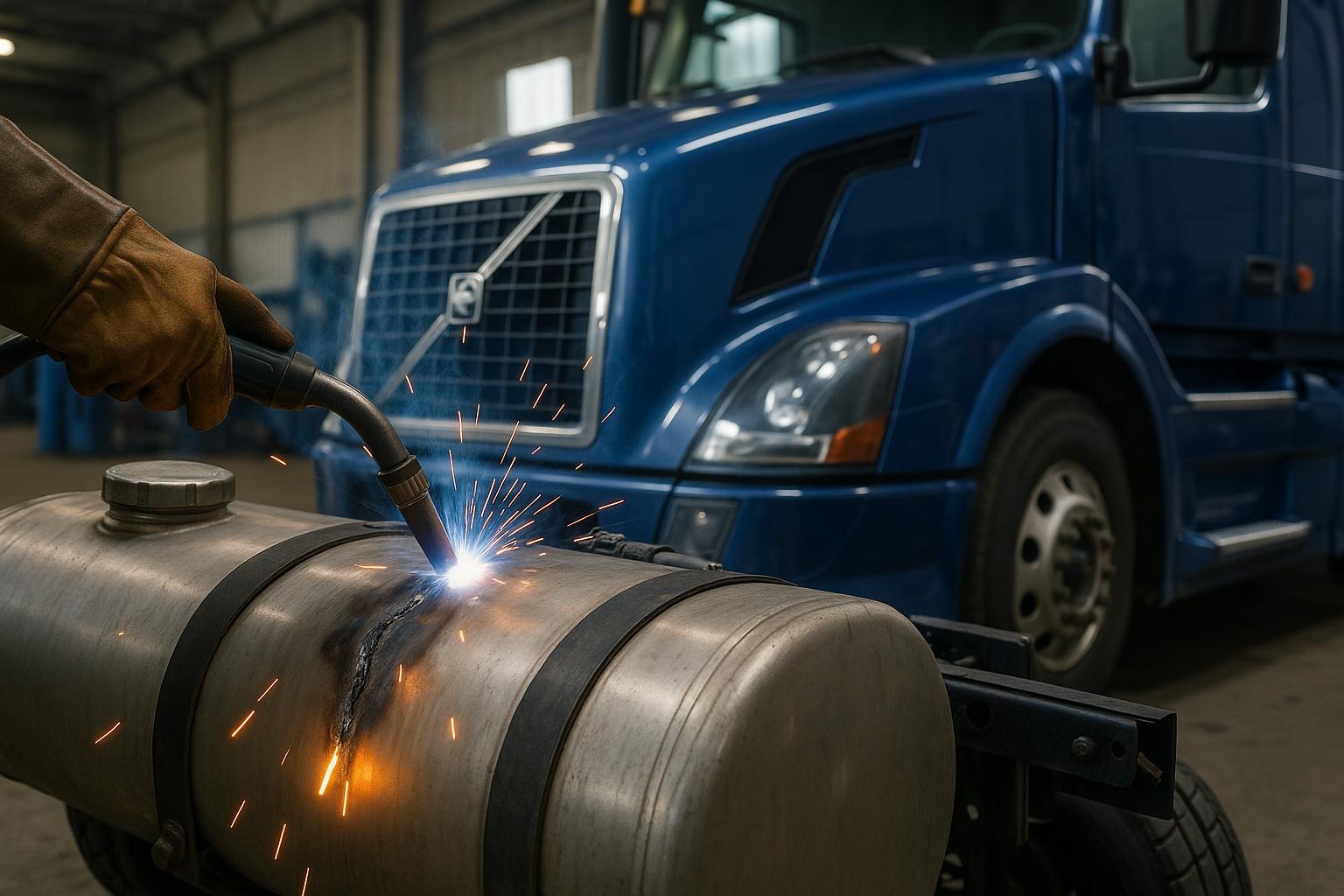
When you’re hauling a load through the I-4 crawl or pushing 70 mph on the Turnpike, the last thing you want to think about is the 100+ gallons of diesel sitting right below your seat. For Volvo drivers in Orlando, a cracked fuel tank isn’t just a mechanical headache—it’s the kind of safety emergency that sends you searching for a diesel repair shop before the situation turns into a disaster.
If you’ve spotted a puddle or a persistent “diesel sweat” on your tank, here is the real-talk guide on how to fix it without blowing yourself (or your budget) up.
The “Boom” Factor: Why This Isn’t a DIY Weekend Project
Contents
You might be a handy welder, but fuel tanks are a different beast. Even a tank that’s bone-dry to the touch is still filled with invisible, highly explosive vapors. One spark at the wrong moment, and that tank becomes a bomb.
In Orlando’s brutal humidity, these tanks take a beating. Between the moisture-heavy air and the constant vibration of Central Florida’s stop-and-go traffic, those tiny stress fractures can turn into major leaks fast.
The Right Way to Do It (The “No Shortcuts” Method)
If you’re going to repair a Volvo tank, you have to do it by the book. Here is the workflow any reputable Orlando shop should be following:
1. Get it Off the Truck
Never, ever weld a tank while it’s still mounted. You need 360-degree access, and you need the heat as far away from the rest of your rig as possible.
2. The Deep Clean
It’s not enough to just dump the fuel. You have to degrease it and, ideally, steam-clean the interior. Most local pros won’t even strike an arc until the tank has been purged with an inert gas like Argon or filled with water to displace those sneaky vapors.
3. Prep Like a Surgeon
For the aluminum tanks common on Volvos, you can’t just start welding. You have to grind down to shiny, bare metal to remove oxidation. If you skip this, your weld won’t “bite,” and you’ll be back in the shop in a month.
4. Precision Welding
- For Aluminum: TIG welding is the gold standard here. It’s precise and clean.
- For Steel: MIG welding works well for thicker walls.
- The Goal: Smooth, even beads that can handle the “flex” of a heavy-duty truck.
5. The “Bubble” Test
Once the metal cools, we don’t just take your word for it. We hit it with low-pressure air and soapy water. If you see bubbles, you’ve still got a problem.
Orlando Realities: Humidity and Heat
We live in a swamp, and that matters for your truck.
- Corrosion: Our salt-heavy air and humidity eat steel for breakfast.
- Expansion: That 95°F Florida sun causes fuel and metal to expand, putting extra pressure on every seam.
- The Result: Repairs in Orlando need to be reinforced more than they might in a drier climate.
Repair or Replace: The Hard Truth
Sometimes, the most “human” advice is telling you to cut your losses. You should probably replace the tank if:
- The crack is on a major structural seam.
- The bottom of the tank looks like Swiss cheese from corrosion.
- It’s already been “patched” three times before.
For a Volvo, sometimes a fresh OEM or high-quality aftermarket tank is actually the cheaper move in the long run when you factor in the cost of a potential hazmat spill or a failed FMCSA inspection.
The Bottom Line
In a logistics hub like Orlando, your truck is your livelihood. We get it—downtime is lost money. But rushing a semi-truck fuel tank repair is the fastest way to lose much more than just a day’s work.
Pro Tip: If you aren’t 100% confident in your aluminum TIG beads or your vapor-purging setup, take it to a specialist. It’s worth the peace of mind when you’re heading out on a long haul.
Stay safe out there and keep the shiny side up!