


Product launches are historically expensive because of the friction between a concept and its final visual execution. Traditionally, if you needed a ten-second clip of a sleek consumer electronics device rotating in a stylized environment, you either hired a CGI studio for a five-figure fee or spent weeks in a physics-based rendering engine. Generative AI promised to collapse this timeline, but for most product teams, the early results were unusable. Jittery textures, melting product silhouettes, and hallucinatory backgrounds often made AI video feel more like a fever dream than a marketing asset.
The industry is moving away from “prompt-to-video” toward a more disciplined “image-to-video” workflow. In this model, the static source image is not just a reference—it is the architectural blueprint. If the blueprint is flawed, the motion will be catastrophic. Achieving commercial-grade output requires treating the generation of that initial seed image as a high-stakes engineering task before a single frame of motion is rendered.
The Fidelity Gap: Why Static Consistency Precedes Motion
Contents
The primary reason AI video fails in a professional context is the lack of structural integrity in the first frame. When you use a generic model to generate a video from a text prompt, the AI is essentially trying to solve two problems at once: what the object looks like and how it moves. For product teams, this is a recipe for brand dilution. If a smartphone’s camera lens shifts its position by three pixels between frames, the viewer’s brain immediately flags the content as “fake” or “low-quality.”
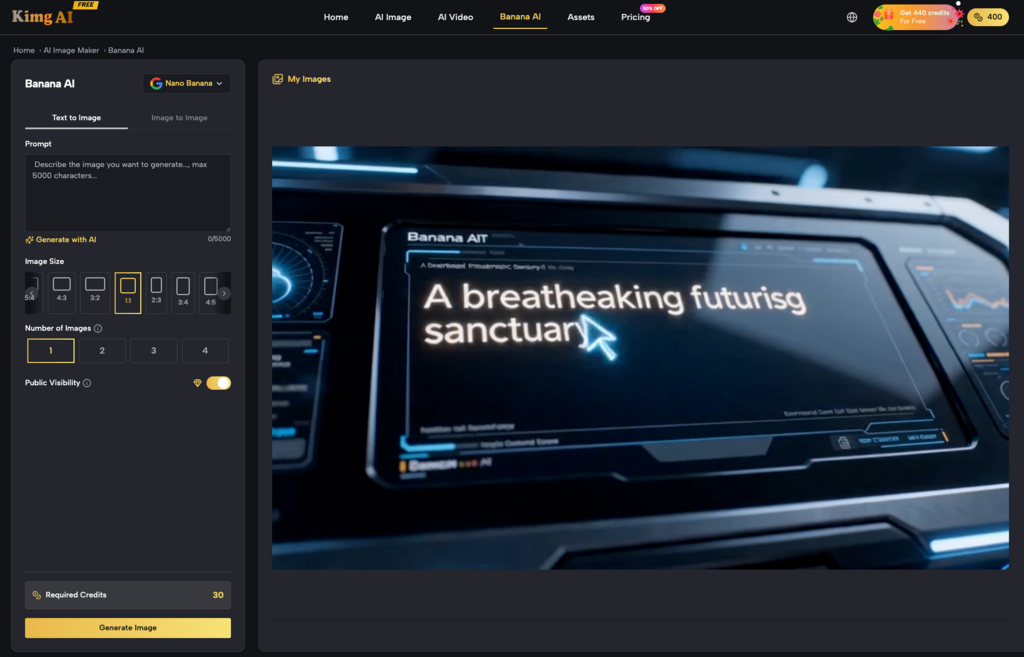
To mitigate this, sophisticated workflows now rely on Nano Banana Pro AI to anchor the visual identity in a high-resolution static state. By generating a “K-level” (ultra-high resolution) image first, you establish the hard edges, material textures, and lighting logic that the motion model must respect. This separation of concerns—geometry first, kinetics second—is what differentiates a professional asset from a social media experiment.
One of the current limitations of this technology is that it cannot yet perfectly “read” the physical weight of an object. For instance, if you generate a static image of a heavy metallic watch, the subsequent motion pass might treat it as if it were made of liquid or plastic. This is where the product team must step in, using the source image to define the “rules” of the scene before the temporal layers are added.
From Architecture to Kineticism: The Image-to-Video Transition
The transition from a 2D image to a 4D temporal sequence involves a process called latent space interpolation. Essentially, the model looks at your static product shot and asks, “What are the most likely next versions of these pixels?” This is where the power of Banana AI becomes evident in a production pipeline. It provides the creator with a base that contains enough detail for the motion engine to track specific features—like the bevel of a button or the grain of a leather strap—throughout the duration of the clip.
Subject permanence is the “holy grail” of this transition. In a controlled workflow, the goal is to ensure the product doesn’t change its fundamental shape as the camera pans or the lighting shifts. While current models are excellent at environmental movement (like clouds passing or water rippling), they still struggle with complex mechanical movements.
Here is a moment of necessary caution: if your product has moving parts—such as a folding hinge or a rotating dial—don’t expect the AI to understand the mechanical constraints of that hinge out of the box. Currently, the motion tends to be fluid rather than mechanical. For product teams, this means focusing AI video on environmental atmosphere and camera movement rather than trying to demonstrate complex product assembly, which still requires traditional 3D rigging for absolute precision.
A Production-Ready Workflow for Launch Assets
For teams looking to integrate this into their launch cycle, the workflow should be iterative rather than linear. You do not simply generate one image and click “animate.” Instead, the process looks more like a traditional VFX pipeline.
Drafting the Master Image
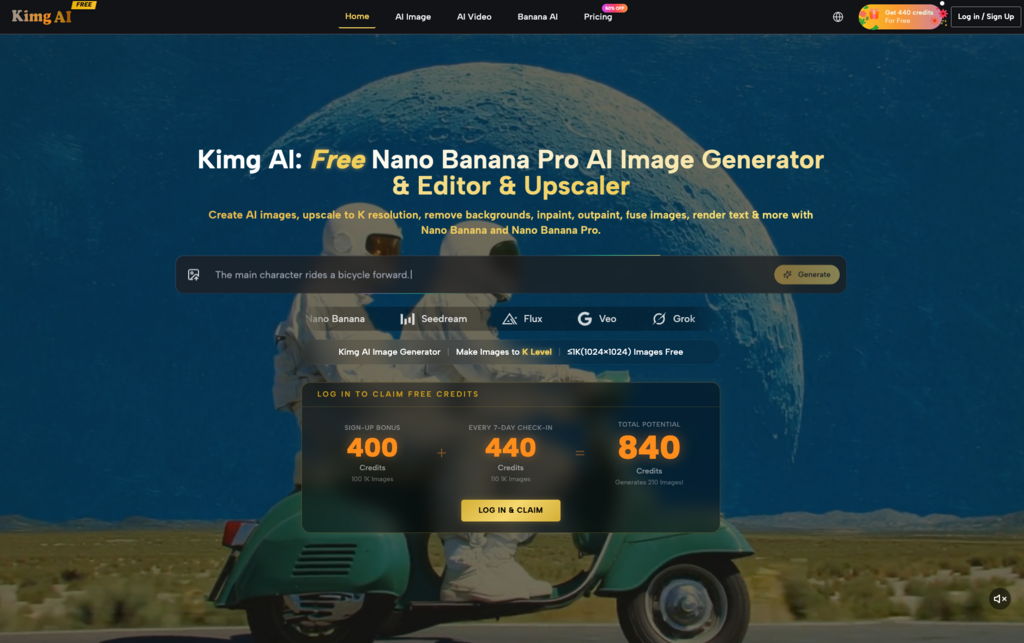
Begin by selecting your aspect ratio. For a landing page hero section, 16:9 is standard, but for social-first campaigns, 9:16 is mandatory. Using Nano Banana Pro AI allows you to generate these specific dimensions without the awkward cropping or “stretching” that occurs in lower-tier models. The goal here is to create a “Hero Shot” that looks perfect as a standalone photo. If the logo is blurry or the lighting is flat in the static image, the video will only amplify those defects.
The Seed-Lock Technique
Once you have a product image that meets brand standards, you can use “Seed-Locking” or image-to-image variations to test different environments. Product teams often need the same device in multiple settings—a kitchen counter, an office desk, or a minimalist studio. By keeping the core product geometry static in Nano Banana Pro while iterating on the background, you create a library of consistent source images. This consistency is vital when you eventually move to the motion phase, as it ensures all your video clips feel like they belong to the same campaign.
Budgeting for Iteration
A common mistake is underestimating the number of “passes” required. Even with high-fidelity models, the first motion output might have a strange light flicker or an unnatural camera swoop. Production teams should manage their credits with the expectation that for every one “hero” clip, they may need to generate five to ten variations. High-resolution upscaling should only be applied to the final selected motion sequence to preserve the production budget.
Recognizing Failure States and Temporal Noise
No tool is perfect, and acknowledging where the technology breaks is essential for maintaining a professional output. In the current landscape of image-to-video generation, “temporal noise” is the primary enemy. This refers to the fine, grain-like shimmering that often appears in shadows or complex textures like wood or fabric.
Another significant hurdle is the “Small Text Problem.” If your product has a label with fine print, the motion model will almost certainly struggle to keep that text legible as the camera moves. The pixels that form the letters often “bleed” into the surrounding surface. For launch assets where the brand name must be crisp, the practical solution is often a hybrid one: generate the atmospheric video using AI, then overlay the high-resolution logo or text in post-production using standard editing software like After Effects or Premiere Pro.
There is also the “Uncanny Valley” of motion. Sometimes, the movement generated is too smooth, making the product look like it’s floating in a vacuum. If a scene feels rubbery or lacks gravitational logic, it can diminish the perceived value of a premium product. Product teams must be willing to discard clips that don’t pass the “weightiness” test, even if the visual fidelity is high.
Beyond the Launch: Building a Scalable Visual System
The shift toward a controlled image-to-video pipeline isn’t just about saving money on a single project; it’s about building a scalable visual system. When you use Nano Banana Pro to define your brand’s visual language—the specific color palettes, lighting styles, and depth-of-field preferences—you are essentially creating a digital style guide that can be invoked at any time.
Internally, this allows product teams to be much more agile. If a marketing lead decides two days before a launch that they need a vertical version of a video for a specific social platform, you no longer have to call a production house. You go back to your source image, adjust the parameters, and generate the new asset.
The economic advantage is clear. Generating high-K level assets internally allows for a level of experimentation that was previously cost-prohibitive. However, the human element remains the most important part of the equation. The AI provides the pixels and the motion, but the product team provides the “eye”—the discernment to know when a clip is a professional representation of the brand and when it’s just a clever piece of software output.
Final verdict: A controlled workflow is the only viable path for brand-conscious teams. By utilizing high-fidelity anchors like Nano Banana Pro and accepting the current limitations of temporal AI, teams can produce cinematic launch assets that feel intentional, stable, and, most importantly, real.