


Wholesale on Amazon does not look anything like private label or arbitrage from the inside, and yet every repricer review article treats all three the same way. The actual reality of running wholesale is that you have eight suppliers, four of whom send cost updates weekly, two of whom send them whenever they feel like it, and a catalog of 40,000 SKUs where every single product has a different margin structure, different return rate, and different competitive landscape.
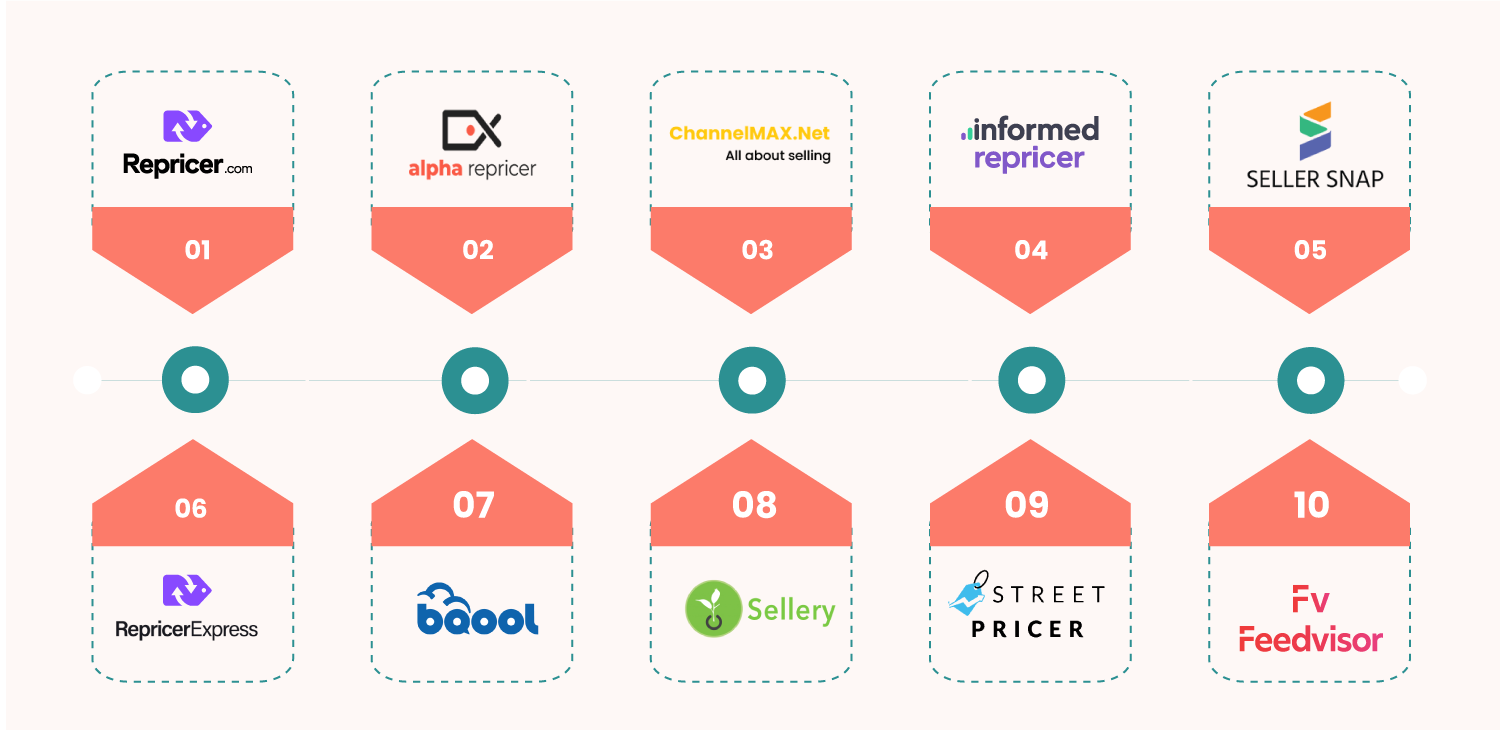
A repricer that does not handle bulk cost imports, formula-based minimums, and supplier-specific rule groups is not a repricer for wholesale. It is a toy. Here are the ten tools that actually do the job for wholesale sellers in 2026, ranked by how well they handle the specific complexity of this business model.
1. Repricer.com
Contents
Repricer.com runs on AWS, reacts to competitor changes within 90 seconds, and supports the kind of multi-channel, multi-supplier complexity that mid-to-large wholesale operations actually need. The platform integrates with Linnworks for inventory sync, which is the kind of plumbing that matters when you are running thousands of SKUs across suppliers.
For wholesale sellers, Net Margin Repricing on higher tiers is the real draw. It factors in your actual FBA fees and fulfillment costs when calculating the minimum price, which means your floors actually reflect your real economics rather than just sticker price. The platform sits in the mid-to-upper pricing tier of the market, which makes sense given the feature set is built for established sellers rather than first-timers.
2. Alpha Repricer
Alpha Repricer earns its position here because it handles wholesale complexity without forcing you into enterprise pricing to access the features that matter. FTP support means you can push inventory updates, cost changes, and min/max prices directly from your supplier files into the platform without manual data entry. For a wholesale seller managing dozens of supplier cost sheets, this is the difference between a tool you can actually use at scale and one you fight with daily.
The formula-based min/max system is the other piece that fits wholesale specifically. You can set rules based on acquisition cost, item shipping, and Amazon fees, then apply those formulas in bulk across your entire catalog. Add separate competitor logic per fulfillment type, smart filters by feedback score and shipping duration, and automated repricing strategies that adjust based on inventory quantity, stock age, and sales velocity, and you get a tool that respects how wholesale actually works.
Pricing-wise, this is one of the most affordable options on this list given the feature depth. Plans start at the entry-level end of the market with no credit card required for the 14-day trial. Coverage spans 23 Amazon marketplaces with local-currency display. For wholesale sellers who need real complexity handling without the enterprise-tier monthly bill, this is the strongest fit on the market.
3. ChannelMAX
ChannelMAX has been in the wholesale repricing space for over a decade and the feature depth shows. The platform supports SKU-level strategy assignment, which is essential when you have 15 different supplier groups that all need different rules, sales velocity logic for slow-moving long-tail inventory, and FTP integration for bulk updates.
Real-time repricing reacts every 2 to 3 minutes on higher tiers, and the platform handles MAP enforcement, FBA versus non-FBA logic, and Amazon Business pricing alongside standard repricing. The interface is older than the newer tools, and there is a real learning curve, but the depth is there for sellers who put in the setup time. Pricing tier is mid-market with plans scaling by SKU count.
4. Informed Repricer
Informed has supported wholesale sellers for over fifteen years and the flat-fee revenue-based pricing model fits the wholesale economics well. Unlike per-SKU pricing structures that punish you for having a large catalog, Informed lets you reprice unlimited listings on most plans, which matters when you carry 80,000 SKUs and most of them are slow movers.
For wholesale specifically, the platform supports cost data sync from external ecommerce tools, so your acquisition cost data does not have to be manually maintained inside the repricer. Different repricing rules per fulfillment type and the Optimal Price algorithm that works even on listings with no competition both matter for wholesale catalogs that span competitive and uncompetitive SKUs. 21 Amazon marketplaces plus Walmart. Pricing scales with revenue rather than catalog size.
5. Seller Snap
Seller Snap takes a different approach that suits wholesale sellers who are tired of writing rules. The game theory algorithm watches how competitors behave and uses cooperative pricing logic to avoid the race-to-the-bottom price wars that destroy wholesale margins on shared listings. Setup is minimal because you do not write rules at all. You set min and max, connect Seller Central, and the AI takes over.
The trade-off for wholesale sellers is that you give up granular control. If your business model relies on running different strategies per supplier or per brand, this is not the right fit. Pricing sits in the mid-to-upper tier and scales by catalog size, with custom enterprise pricing for the largest sellers.
6. RepricerExpress
RepricerExpress is one of the longer-running platforms in the market and is particularly popular with UK and EU wholesale sellers. The platform offers automation triggers that move SKUs between repricing rules based on sales history, Buy Box performance, sales rank, or stock levels, which gives wholesale catalogs a way to handle aging inventory automatically without manual sorting.
Long Term Storage Fee aware rules are another wholesale-relevant feature, since LTSF can quietly destroy margin on wholesale inventory that does not move fast enough. Pricing tiers run from entry-level for smaller catalogs up to enterprise pricing for sellers handling up to a million listings with priority repricing. 14-day free trial.
7. BQool
BQool sits comfortably in the affordable-AI category and the Conditional Repricing feature is the standout for wholesale sellers with mixed catalogs. The system can automatically switch a SKU from one strategy to another based on inventory age or sell-through rate, which fits wholesale workflows where aging stock needs different handling than fresh inventory.
InventoryLab integration syncs your cost data automatically, the built-in ROI calculator auto-sets min and max from your target margin, and the platform supports both rule-based and AI repricing in the same account. The honest trade-off is that the entry-tier plan runs on a 15-minute reprice cycle, which is too slow for competitive wholesale categories. Most serious wholesale sellers will need a mid-tier plan. Pricing scales by listing count and overall sits in the affordable-to-mid range.
8. Sellery
Sellery is built by SellerEngine, one of the oldest names in Amazon repricing, and the platform targets experienced sellers who want real-time algorithmic repricing with deep customization. For wholesale specifically, the Smart Lists feature lets you slice your catalog by sales velocity, stock age, supplier, or any custom field, then apply different pricing rules to each slice.
The dynamic Minimum Price calculator pulls in your cost, shipping, and Amazon fees to auto-set floors so you never sell at a loss across thousands of SKUs. Real-time repricing engine, coverage across eight Amazon marketplaces, and consultations with Amazon experts available. Pricing scales as a percentage of monthly sales rather than a flat fee, which can work for or against wholesale sellers depending on revenue per SKU.
9. StreetPricer
StreetPricer is one of the more recently rebuilt platforms in the category and supports a feature set that fits wholesale: real-time response within roughly 1 second to price changes, brand and tag-based price management so you can group your inventory by supplier and apply different formulas to each group, and multi-fulfillment logic that lets FBA and FBM work together to win the Buy Box.
The platform also supports multiple seller IDs across multiple Amazon and eBay sites without charging extra per store, which is useful for wholesale sellers running separate accounts for different supplier relationships or marketplaces. 20 Amazon marketplaces plus eBay coverage. Pricing sits in the mid-market range and includes a price guarantee for sellers migrating from another tool.
10. Feedvisor
Feedvisor is enterprise software at its core. The platform combines AI repricing with advertising optimization, brand analytics, and inventory intelligence, and the pricing reflects that scope. This is not a tool for wholesale sellers with 5,000 SKUs. It is for established wholesale operations doing seven-figure revenue who want a single intelligence layer across pricing, ads, and inventory rather than three separate tools.
The ProductSphere technology maps competition at the SKU level, the AI considers demand elasticity and seasonal trends, and the platform supports both Amazon and Walmart. Feedvisor has an entry tier plus a full 360 platform at enterprise scale, with the full platform quoted on request. Worth the demo if you are at scale and serious about unifying your Amazon operations.
What Wholesale Sellers Actually Need to Look For
Pricing tiers matter less than feature fit. A cheap repricer that does not handle FTP imports or formula-based min/max becomes expensive fast in manual data entry hours. An expensive repricer with features you will not use is just budget walking out the door.
The features that genuinely matter for wholesale, in order of impact:
Bulk cost management. If you cannot import min/max prices from supplier files or sync acquisition cost from inventory management tools, you are going to spend half your week manually updating prices every time a supplier sends a new cost sheet. FTP, file upload, and integrations with InventoryLab or Linnworks are the dividing line between tools that scale and tools that do not.
Formula-based min/max. Setting floor and ceiling prices on 40,000 SKUs by hand is not a viable workflow. The tools that let you write a formula (acquisition cost plus fees plus target margin equals minimum price) and apply it across your catalog are the ones that survive contact with real wholesale operations.
Supplier or brand-based rule groups. Different suppliers have different margin profiles, return rates, and competitive landscapes. A tool that forces you to apply the same repricing logic across your whole catalog is going to underperform tools that let you group your inventory and run different strategies per group.
Reaction speed. Even slow-moving wholesale categories see Q4 spikes. A 15-minute repricer is fine for a long-tail SKU in July and a problem for the same SKU in November when competition heats up. The tools at the top of this list all run on cycles fast enough to handle Q4 without breaking.
Final Thoughts
Wholesale sellers who pick the wrong repricer usually figure it out within 90 days, but by then they have already eaten the data migration cost and the team training time. So worth being honest about it upfront.
Pick two tools from this list. Run their free trials in parallel on a representative sample of your real catalog (across multiple suppliers, not just one) for two weeks. Track Buy Box minutes won, net margin per unit, and the time your team spends on price management. The tool that holds margin while reducing your team’s manual work is the one paying for itself. Marketing claims do not pay your suppliers. Real numbers do.