


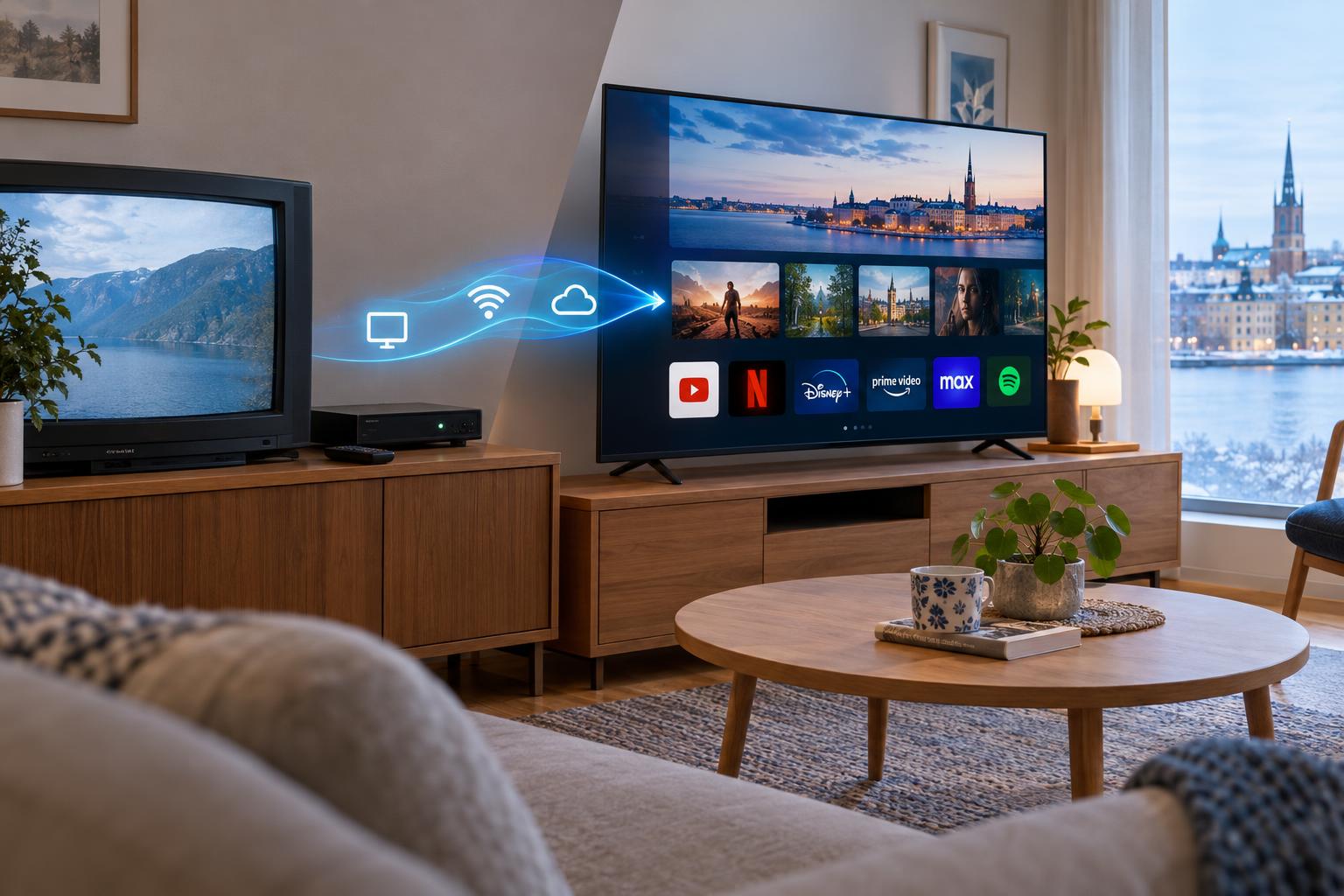
Sweden has one of the most connected populations in the world. Fiber reaches a large share of homes, mobile coverage is excellent even in rural areas, and most households already pay for several digital subscriptions. It is no surprise, then, that the way Swedes watch television has changed faster than in many other countries. The traditional set-top box connected to a cable or antenna is slowly giving way to apps, streaming sticks and smart TVs that receive everything over the internet.
A Country Built for Streaming
Several factors make Sweden an ideal market for internet-based television. Broadband speeds are high and stable, prices for fiber connections have fallen over the past decade, and people are used to paying for digital services rather than relying on free alternatives. Long winters also mean more time indoors, and television remains an important part of evening routines for families across the country, from Malmö to Kiruna.
At the same time, viewing habits have become more personal. One person in the household wants live news, another prefers documentaries, and the children watch on a tablet in another room. A single box under the TV in the living room no longer fits that reality.
What IPTV Actually Means
IPTV stands for Internet Protocol Television. Instead of sending a signal through a coaxial cable or a satellite dish, the provider delivers live channels and on-demand content as data over a normal internet connection. The viewer watches through an app on a smart TV, an Android TV box, a streaming stick, a computer or a phone.
For users, the main advantages are simple:
- Flexibility: the same service works on several screens in the home.
- No installation: there is no dish to mount and no technician visit to book.
- Live and on demand together: live channels sit next to libraries of films and series in one interface.
- Picture quality: many services now offer full HD and 4K streams where the connection allows it.
Choosing a Service: What Swedish Viewers Look At
As the market has grown, so has the number of services competing for attention. Quality varies a lot, and price alone says little about the experience. Comparisons of the best IPTV providers in Sweden tend to focus on the same practical criteria:
- Stability at peak hours. A good service keeps streams smooth in the evening, when the most people are watching at the same time.
- Nordic content. Viewers expect Swedish and other Scandinavian channels, with the language and subtitles they are used to.
- Device support. The service should work on the equipment people already own, without complicated setup.
- Customer support. Quick answers in a familiar language matter when something stops working on a Friday night.
- A trial period. Testing before committing to a longer plan is the easiest way to see how the service performs on your own connection.
Getting the Best Picture at Home
Even the best service depends on the home network. A few simple steps make a noticeable difference:
- For HD viewing, plan for at least 10 Mbps per active screen; for 4K, around 25 Mbps.
- Connect the main TV or streaming box with an Ethernet cable whenever possible.
- If Wi-Fi is the only option, place the router centrally and consider a mesh system in larger homes.
- Keep the TV, the streaming device and the app updated, since updates often improve playback and stability.
- Schedule large downloads and backups outside prime viewing hours.
The Wider Nordic Trend
Sweden is not alone. Norway, Denmark and Finland show similar patterns: strong broadband, high digital spending and a steady move away from traditional pay-TV packages. Younger households in particular are building their own mix of services rather than buying one large bundle. Internet-delivered TV fits that approach, because it can be added, paused or changed without new hardware. Some services are built for the whole region: so-called IPTV Norden packages combine Swedish, Norwegian, Danish and Finnish channels in one subscription, which suits Nordic families living abroad or households that follow programming from neighbouring countries.
Final Thoughts
Television still plays a central role in Swedish homes, but the technology behind it has changed. Fast connections and smart devices have made internet-based TV the natural next step for many households. For viewers, the key is to compare services carefully, test before committing, and make sure the home network is ready. With those basics in place, switching from the old set-top box can bring more choice, better picture quality and far more flexibility.