


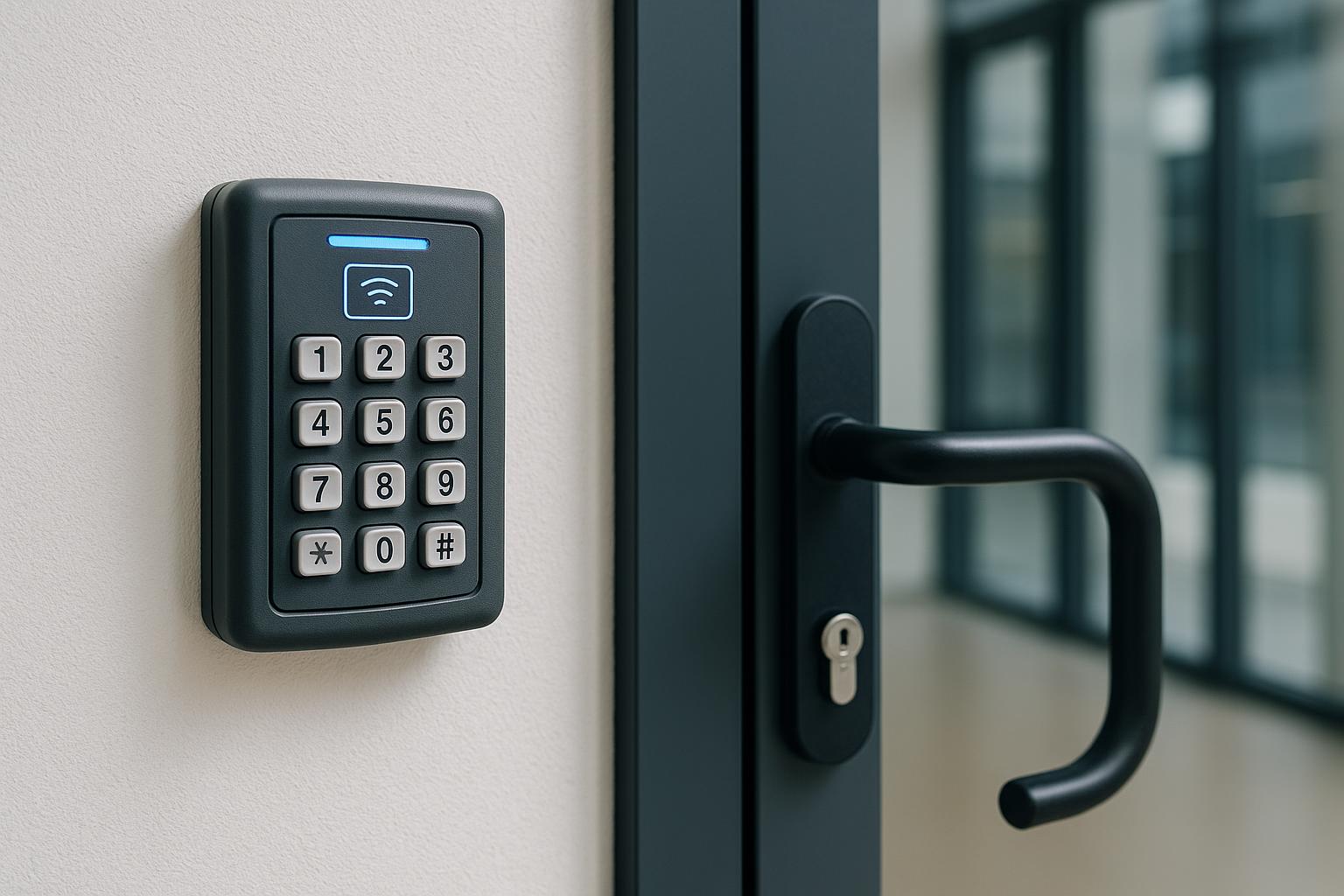
Enterprise software gets most of the attention in commercial technology coverage, but a quieter transformation has been happening in a category that rarely makes headlines: access control. The systems that manage who can enter a building, when, and through which door have shifted from clunky proprietary hardware into cloud-managed platforms that behave more like modern SaaS products than traditional security equipment. That shift has real implications for how businesses think about physical security, and it deserves more attention from a tech-focused audience than it usually gets.
From Proprietary Boxes to Cloud-Managed Platforms
Contents
Traditional access control systems relied on dedicated on-site servers, proprietary card formats, and software that typically required a technician visit for even minor changes. Adding a new employee or revoking access for someone who left the company often meant a support call and a wait time that felt completely out of step with how quickly everything else in a business moves. Cloud-managed access control platforms have flipped that model, letting administrators add, modify, or revoke credentials instantly from a web dashboard or app, with changes propagating to physical door hardware within seconds rather than days. That responsiveness alone has made cloud-based systems the default recommendation for most new commercial installations, and it mirrors the broader trend of physical infrastructure catching up to the flexibility long expected from software. This is not a purely theoretical improvement, either: businesses report that offboarding delays, where a departed employee’s access remains active for days or weeks because updating the old system was inconvenient, are one of the more common and avoidable security gaps in commercial buildings, and cloud platforms largely close that gap by making revocation as easy as clicking a button rather than scheduling a technician visit.
Credentials Are Becoming Software Too
Physical key cards and fobs have not disappeared, but they are increasingly just one option among several rather than the default. Mobile credentials, where a smartphone itself acts as the access key over Bluetooth or NFC, are gaining traction quickly because they eliminate the cost and hassle of managing physical cards while adding capabilities that plastic cards never had, like automatically expiring after a set date or restricting access to specific hours. This mirrors a pattern seen across other categories of hardware that gradually got absorbed into a phone’s capabilities, from car keys to hotel room access, and access control is following the same trajectory with a similar mix of user convenience and administrative simplification. There is a practical cost argument here too: a lost or stolen physical card typically needs to be deactivated and replaced, sometimes at real expense across a large organization, while a lost phone can usually be remotely wiped or have its credential revoked instantly without touching a single piece of hardware at the door.
Integration Is Where the Real Value Shows Up
The most interesting development in access control is not any single feature but how thoroughly these systems now integrate with other business software. Access logs can feed directly into HR platforms to automatically flag when a terminated employee’s badge is still active, video systems can pull footage tied to specific badge-in events for faster incident review, and visitor management tools can issue temporary digital credentials that expire automatically at the end of a scheduled meeting. This kind of integration turns access control from an isolated security tool into a connected part of a broader operations stack, which is exactly the direction most enterprise technology has been heading for years. Some platforms now extend this integration to workplace analytics, aggregating anonymized badge-in patterns to help facilities teams understand which entrances see the heaviest traffic at which times of day, informing everything from staffing decisions at a reception desk to whether an additional entry point would meaningfully reduce congestion during peak hours.
What Businesses Should Actually Evaluate
Businesses shopping for a modern access control system should look past the marketing language and focus on a few concrete questions: how quickly do credential changes take effect, what happens to the system during an internet outage, and how easily does it integrate with existing security cameras or HR software. Vendor lock-in is also worth scrutinizing carefully, since some platforms use proprietary hardware that makes switching providers later expensive and disruptive, while others are built on more open standards that preserve flexibility. Working with experienced commercial access control installers rather than a generic reseller tends to surface these distinctions early, before a business has already committed to hardware that limits its options down the line. It is also worth asking how a system handles battery backup and offline behavior at the door itself, since a well-designed access control system should default to a predictable, documented state, whether that means fail-secure or fail-safe depending on the specific door and local fire code requirements, rather than leaving that decision as an afterthought discovered only during an actual outage. Local firms offering commercial access control installers services in growing markets have had to keep pace with this shift quickly, since businesses increasingly expect the same flexibility from their door hardware that they already expect from their software. Businesses evaluating vendors would do well to ask for references from similarly sized companies in comparable industries, since a platform that works well for a twenty-person office may behave very differently once scaled across a multi-building campus with hundreds of daily badge events, and installers with genuine cross-industry experience are far more likely to flag that kind of scaling concern before it becomes a costly mid-project surprise.
Where the Category Goes Next
Expect the line between access control and general building management software to keep blurring. Systems that already handle door access are natural candidates to absorb adjacent functions like visitor check-in, occupancy tracking, and even basic energy management tied to whether a space is actually occupied. For a category that spent decades as an overlooked back-office concern, access control has quietly become one of the more genuinely modern corners of commercial technology, and businesses that treat it as a strategic decision rather than a box to check are likely to get considerably more value out of it over the next several years. Whether that expansion happens organically within existing platforms or through a new wave of dedicated point solutions remains to be seen, but the underlying direction, treating physical access as just another data-rich layer of a connected business, appears settled.