


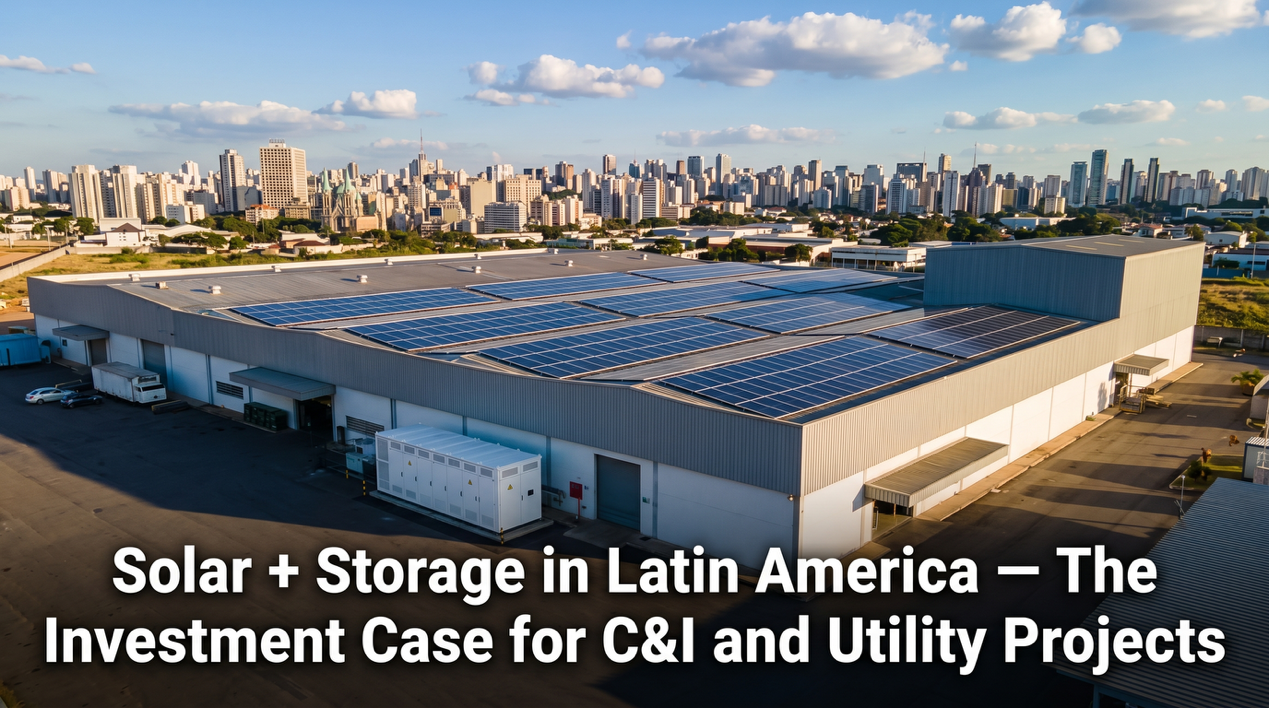
Curtailment of renewable energy is the primary driver behind the rapid adoption of battery energy storage systems (BESS) across Latin America. In Chile, 6 TWh of solar and wind generation was curtailed in 2024.¹ Without operational BESS, that figure would have reached 8 TWh in 2025, according to the Chilean Renewable Energy Association (ACERA).¹ In Brazil, solar curtailment hit 20% of potential output in August 2025, up from 12% in August 2024.² Brazilian solar generators faced an estimated BRL 1.7 billion ($315 million) in curtailment-related losses during 2025.²
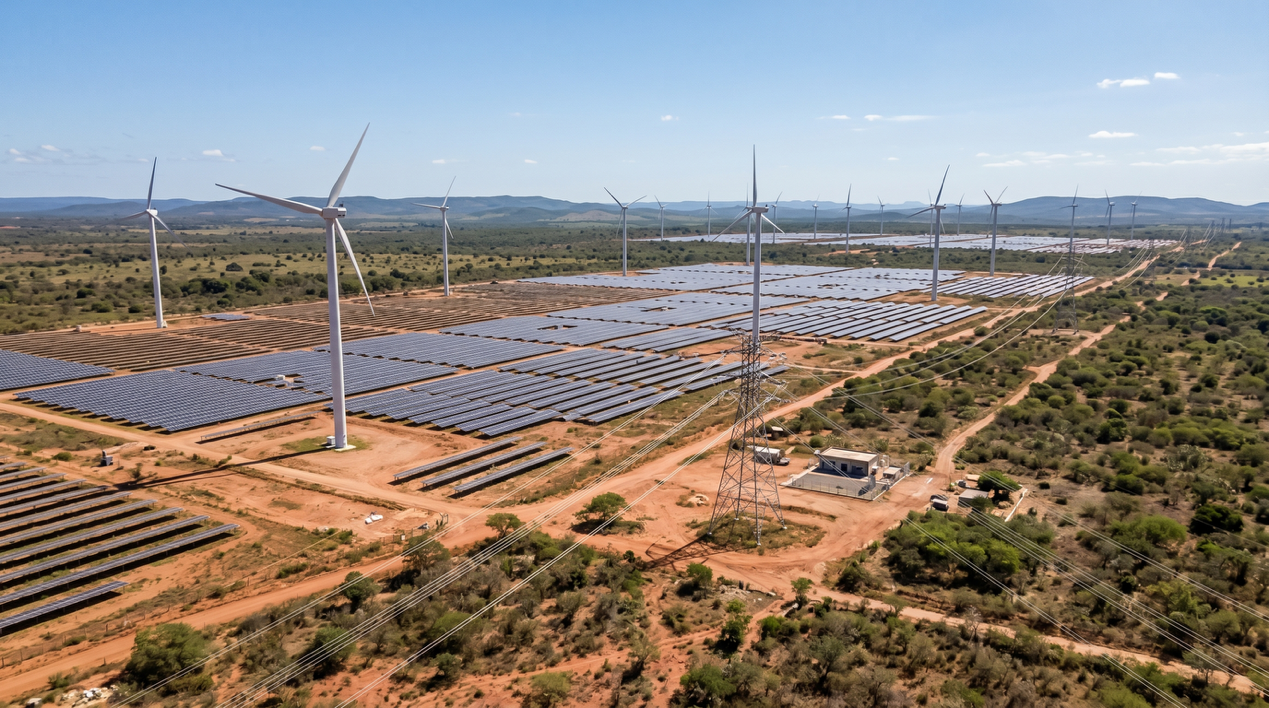
The root cause is structural: transmission infrastructure has not kept pace with renewable capacity additions. Wood Mackenzie estimates that approximately 8 GW of battery storage would be needed in Chile alone to reduce curtailment by 40%, saving around $500 million per year in system operating costs. Chile already has 1 GW of operational storage, 571 MW in testing, and 3.9 GW under construction as of mid-2025.³
For developers evaluating why solar plants are increasingly adding battery storage in Latin America, the answer is quantifiable: curtailment directly erodes project revenue, and BESS provides a commercially viable mechanism to shift generation to higher-value hours.
What Is a Hybrid Solar + Storage Plant?
Contents
- What Is a Hybrid Solar + Storage Plant?
- Can C&I Businesses Reduce Energy Costs with Solar + Storage?
- Payback Period and Financial Viability of BESS in Brazil and Latin America
- Regulatory Landscape for Battery Storage in Brazil
- Sungrow’s Position in the Latin American Solar + Storage Market
- Summary
- References
A hybrid solar-plus-storage plant co-locates photovoltaic (PV) generation and BESS at the same grid connection point. This configuration enables curtailment mitigation, peak shifting, grid stabilization, and participation in ancillary services markets.
In Brazil, the regulatory framework provides a concrete incentive: ANEEL’s Technical Note No. 03/2026 allows hybrid projects combining renewable generation with battery systems to contract grid capacity (Montante de Uso do Sistema, or MUST) up to 20% below total installed capacity.⁸ In Chile, the Renewable Energy Storage and Electromobility Act of 2022 enables BESS operators to receive capacity payments for injecting power during peak demand periods.³
Representative hybrid and standalone storage projects in Latin America include Sungrow’s BESS del Desierto in Chile (200 MW / 800 MWh, commissioned April 2025, partnered with Atlas Renewable Energy), the Aurora project with Zelestra (1 GWh BESS + 220 MW PV, signed 2025), and an 841 MW utility-scale PV plant in Brazil.⁹ Sungrow’s utility-scale product range includes the 1+X 2.0 Modular Inverter, a scalable system configurable from 800 kW to 9.6 MW with IP66 protection for Latin American operating conditions.
Can C&I Businesses Reduce Energy Costs with Solar + Storage?
Commercial and industrial (C&I) electricity consumers in Brazil and Latin America can reduce energy costs through three primary mechanisms: peak shaving (discharging stored solar energy during high-tariff hours), demand charge reduction (lowering peak demand readings), and backup power (avoiding production losses during grid outages).
Brazil’s C&I electricity environment creates favorable conditions for solar-plus-storage. Tariffs in São Paulo hover near BRL 0.90 per kWh, and the C&I solar segment is expanding at 16.4% compound annual growth rate (CAGR) through 2031.¹⁰ Grid reliability remains a concern: some Brazilian regions experience up to 190 hours of power outages annually.¹¹ Under Law 15.269, C&I consumers will be permitted to migrate to the free electricity market beginning November 2027, further increasing opportunities for self-supply optimization.⁸
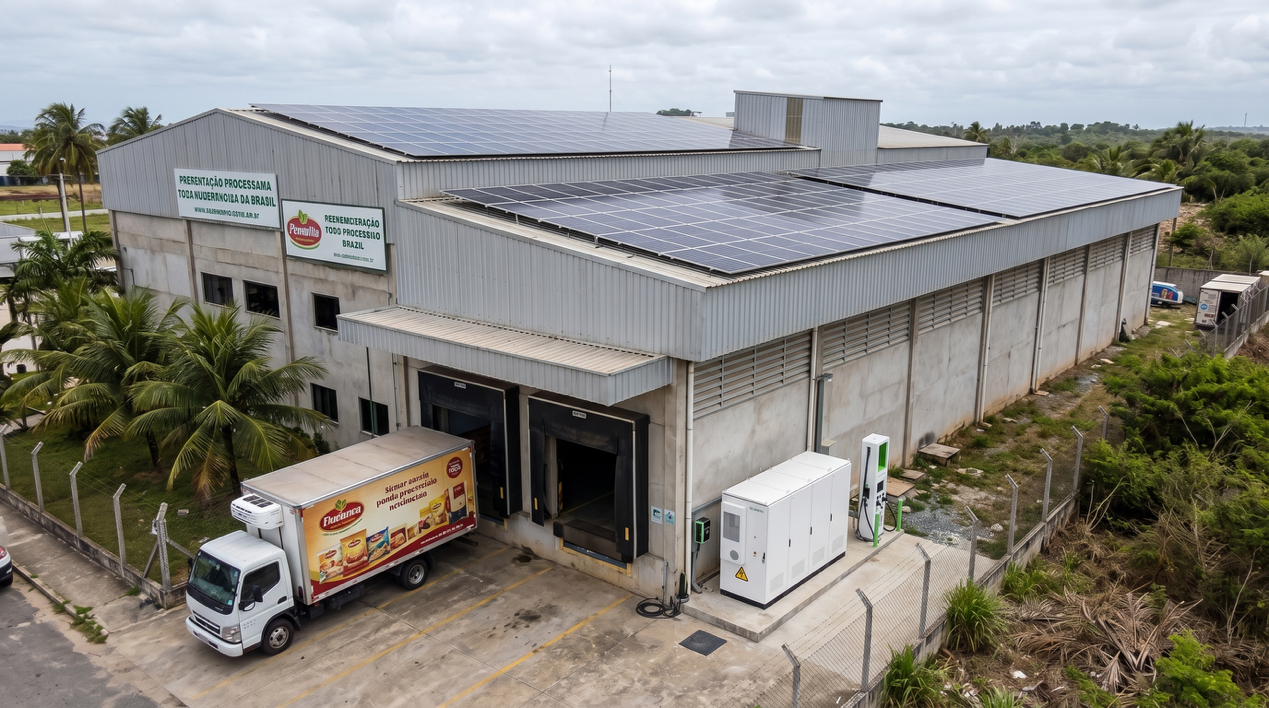
Sungrow’s C&I product portfolio for the Brazilian market includes the SG50CX-P2-LV string inverter, designed for Brazil’s three-phase 220 V grid standard and compliant with ANEEL’s free electricity billing criteria.⁹ The PowerKeeper C&I BESS offers a modular 12.5 kWh pack design, scalable to 1,000 kWh with up to 8 hours of storage duration. The company has deployed over 1,000 C&I energy storage projects globally as of late 2025.¹²
Payback Period and Financial Viability of BESS in Brazil and Latin America
Battery storage is approaching financial viability for C&I consumers in Brazil, particularly those with high peak-demand profiles. Solar-only systems in Brazil achieve payback periods of 3–8 years depending on region and system size. For C&I distributed systems between 500 kW and 5 MW in São Paulo, payback falls within 5 years.¹⁰
When BESS is added, research cited in Brazil’s Plano Decenal de Expansão de Energia (PDE) and university studies indicates that payback can reach 3–5 years for C&I users with high peak-time demand, assuming continued battery price declines.¹³ This trajectory is supported by global cost trends: utility-scale BESS costs declined 93% from 2010 to 2024, reaching approximately $192/kWh according to the International Renewable Energy Agency (IRENA).¹⁰ Current battery prices below $120/kWh enable 4-hour storage to firm solar output for evening peak demand.¹⁰
Investment projections further support the market’s direction. The Brazilian Energy Storage Association (ABSAE) estimates R$44 billion ($8.46 billion) in solar-plus-storage investments by 2030. Consulting firm Greener projects R$22.5 billion ($4.33 billion) in consumer-side storage investments alone during the same period.¹¹
In Chile, multiple revenue streams — capacity payments, ancillary services, and energy arbitrage — improve the financial case. Chile’s grid operator, the Coordinador Eléctrico Nacional, has confirmed that 2 GW of battery storage could save $500 million annually in system operating costs.³
Regulatory Landscape for Battery Storage in Brazil
Brazil enacted Law 15.269 in November 2025, formally recognizing electricity storage as an independent activity within the national electricity framework.⁸ The law reduced import tariffs on BESS and its components to zero and established storage alongside generation, transmission, distribution, and commercialization as regulated activities.
ANEEL has pursued a multi-phase regulatory roadmap through Public Consultation No. 39/2023. Phase 1 is complete; Phase 2 was opened in December 2024 with a stakeholder consultation period. ANEEL’s Technical Note No. 03/2026 introduced dual network tariffs for BESS, confirming that storage operators will not face double charges for both charging and discharging.⁸ Capacity reserve costs will be borne by generation agents rather than passed through to end-user tariffs.
A planned national storage auction will require minimum 30 MW capacity with 4 hours of daily discharge, under 10-year contracts starting July 2029.¹¹ Distributed generation with storage is already authorized under Law 14,300. Brazilian law imposes no foreign investment restrictions on the battery storage sector.¹²
The three-phase regulatory roadmap is expected to continue through 2028, addressing topics including storage-as-a-service, aggregator models, and system operation simulations.¹¹ Developers should monitor ANEEL’s regulatory agenda, as the framework remains under active development.
Sungrow’s Position in the Latin American Solar + Storage Market
Sungrow’s Latin American footprint provides a reference point for the region’s solar-plus-storage adoption. As of August 2025, the company has accumulated 25 GW in PV inverter orders and 10 GWh in ESS across the region.⁹ Products deployed in Brazil have been validated by the Operador Nacional do Sistema Elétrico (ONS), Brazil’s grid operator.⁹
Product adaptations for the Brazilian market include 220 V grid compatibility, C5 anti-corrosion protection, and compliance with the ABNT NBR 17193:2025 rapid shutdown standard. The company’s integrated PV + ESS + EV charging solution combines inverters, batteries, and electric vehicle chargers into a single system architecture for C&I applications.
Summary
| Topic | Data Point | Source |
|---|---|---|
| Chile curtailment (2024) | 6 TWh solar + wind curtailed | ACERA |
| Brazil solar curtailment (Aug 2025) | 20% of potential output | pv magazine / ONS |
| C&I solar payback, São Paulo | Within 5 years (500 kW–5 MW) | Mordor Intelligence |
| Solar + storage payback (high-demand C&I) | 3–5 years projected | PDE / university research |
| BESS cost decline (2010–2024) | 93%, to ~$192/kWh | IRENA |
| Brazil BESS investment forecast (by 2030) | R$44B / $8.46B | ABSAE |
| Brazil Law 15.269 | Storage recognized; BESS import tariffs = zero | Nov. 2025 |
| Sungrow LATAM orders | 25 GW PV + 10 GWh ESS | Intersolar SA 2025 |
References
- ACERA (Chilean Renewable Energy and Storage Association). Curtailment data reported in Energy-Storage.news, 12 Jan. 2026.
- pv magazine International. “Brazilian Solar Sector Faces Rising Curtailment, Grid Limits.” 12 Sep. 2025.
- pv magazine International. “Chile Moves on Storage to ‘Decarbonize the Night.'” 4 Sep. 2025. Data attributed to Coordinador Eléctrico Nacional.
- Strategic Energy Europe. “Brazil Advances Energy Storage Regulation and Confirms Dual Grid Tariffs for BESS.” 18 Feb. 2026. Referencing ANEEL Technical Note No. 03/2026 and Law 15.269.
- Sungrow Press Release. “Sungrow Powers Ahead with New Solar and Storage Solutions at Intersolar South America 2025.” PR Newswire, 29 Aug. 2025.
- Mordor Intelligence. “Brazil Solar Energy Market Size, Growth & 2031 Share.” Updated Jan. 2026.
- Energy Storage News (ess-news.com). “Spotlight on Brazil: A Market Ready for Takeoff.” 6 Aug. 2025. Citing Greener Strategic Energy Storage Study and ABSAE.
- pv magazine International. “Sungrow Unveils New Modular C&I Battery with Long-Duration Storage Capability.” 27 Nov. 2025.
- PVB.com. “Brazil Energy Storage Market 2026: Trends, Policies, and How to Buy.” 19 Nov. 2025. Citing PDE and university research.
- IRENA. Global battery storage cost data, as cited in Anern Store. “Battery Storage and Solar: Does ESS Shorten Payback Time?” 12 Aug. 2025.
- China Energy Storage Alliance (CNESA). “Brazil’s First Energy Storage Regulatory Framework to Be Introduced This Year.” 6 Jul. 2025.
- Financier Worldwide. “Battery Energy Storage Systems in Brazil: Current Regulatory and Investment Scenario.” 2025.