


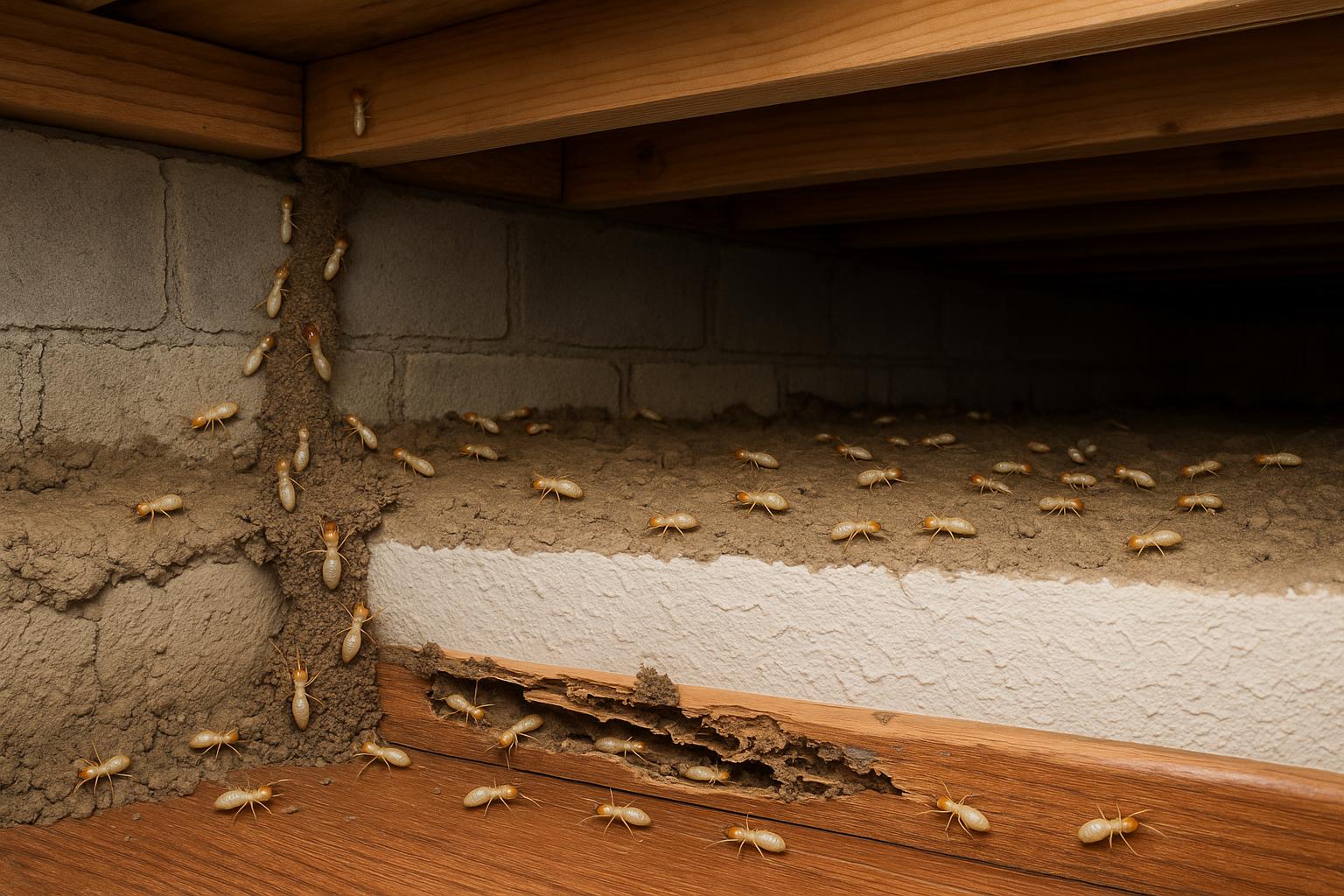
Termites are difficult to notice in the early stages because they rarely move through open spaces. They prefer dark, damp, and protected areas where they can feed, build tunnels, and expand without being disturbed. By the time a homeowner sees visible damage, the colony may have already travelled through several hidden parts of the property.
This is why early termite detection matters. A small sign on a skirting board, wall edge, or timber frame may only be the surface-level clue of a much larger issue behind the scenes. Understanding where termites commonly spread can help property owners act sooner and arrange termite treatment before the damage becomes more expensive to repair.
Why Termites Stay Hidden for So Long
Contents
- Why Termites Stay Hidden for So Long
- Inside Wall Cavities
- Under Floors and Subfloor Spaces
- Roof Voids and Ceiling Spaces
- Around Bathrooms, Kitchens, and Laundries
- Behind Skirting Boards and Door Frames
- Outdoor Timber and Garden Areas
- Inside Built-In Cupboards and Storage Areas
- Why Early Inspection Matters
- Conclusion
- FAQs
Termites need moisture, shelter, and access to timber or cellulose-based materials. They avoid light and dry conditions, so they often move behind walls, under floors, through soil, and inside timber structures. Their mud tubes help protect them as they travel from the nest to a food source.
Many homeowners expect termite damage to be obvious, but that is rarely the case. Paint may still look normal even when the timber beneath is weakened. A wall may sound slightly hollow, but there may be no visible holes. This hidden behaviour allows termites to keep feeding for months before the problem becomes clear.
A regular termite inspection is important because trained technicians know where to look. They check areas that are usually missed during normal home maintenance, especially where moisture and timber meet.
Inside Wall Cavities
Wall cavities are one of the most common places where termites spread unnoticed. Once termites enter through cracks, plumbing gaps, slab edges, or external walls, they can move behind plasterboard and reach timber framing without being seen.
The outside of the wall may look perfectly fine. In some cases, the first warning signs are bubbling paint, faint clicking sounds, soft plaster, or skirting boards that feel loose. By this stage, the termites may already be feeding on timber studs, wall plates, or nearby framing.
This is why visible wall damage should never be ignored. Even a small patch of soft timber or uneven paint can point to activity behind the surface.
Under Floors and Subfloor Spaces
Subfloor areas are another high-risk zone, especially in older homes or properties with poor ventilation. These spaces often have timber bearers, joists, and flooring supports that are close to soil or exposed to damp conditions.
Termites can travel from the soil into the subfloor and begin feeding on structural timber. Since homeowners rarely inspect under the floor, the activity can continue for a long time. Warning signs may include springy floorboards, uneven flooring, musty smells, or timber that sounds hollow when tapped.
Poor drainage, leaking pipes, and blocked vents can make subfloor areas even more attractive to termites. Fixing moisture issues is often an important part of long-term termite control.
Roof Voids and Ceiling Spaces
Many people associate termites with ground-level timber, but they can also spread into roof voids and ceiling spaces. Once termites move through wall cavities, they may reach roof timbers, ceiling battens, and other wooden structures.
Roof voids are usually dark, warm, and rarely checked. If there is a leak from damaged roofing, gutters, or plumbing, the added moisture can create ideal conditions for termite activity. Because damage in ceiling spaces is hard to spot from inside the living area, infestations may remain hidden until sagging, cracking, or staining appears.
A full termite inspection should include the roof void, where access is safe and possible. This helps confirm whether the infestation is limited to one area or has spread further through the property.
Around Bathrooms, Kitchens, and Laundries
Wet areas are major termite risk zones because termites rely on moisture to survive. Bathrooms, kitchens, and laundries often have pipework, wall penetrations, cabinetry, and timber framing close to water sources.
A small leak under a sink, behind a vanity, near a shower, or around laundry plumbing can create the damp conditions termites need. The problem is that these leaks are often hidden behind cupboards, tiles, or walls.
Signs may include swollen skirting boards, loose tiles, water stains, mould smells, or soft cabinetry. These issues do not always mean termites are present, but they should be checked because wet timber can quickly attract termite activity.
Behind Skirting Boards and Door Frames
Skirting boards, architraves, and door frames are common areas where termite damage first becomes visible. These timber features are often connected to wall framing, flooring, or nearby structural timber, making them easy access points for termites.
At first, the damage may look minor. A skirting board may feel soft, a door may begin sticking, or a frame may sound hollow when tapped. However, termites may already be moving behind the visible timber.
Homeowners sometimes repaint or patch these areas without checking the cause. This can allow the infestation to continue spreading. If timber feels weak or sounds hollow, it is better to arrange an inspection before repairs are made.
Outdoor Timber and Garden Areas
Termite activity often starts outside before moving into the home. Timber fences, retaining walls, garden edging, tree stumps, stored firewood, decks, and pergolas can all attract termites.
Garden beds placed against external walls can also create problems, especially when mulch or soil sits above the damp-proof course. This can give termites a concealed path into the building.
Outdoor termite activity does not always mean the home is infested, but it does increase the risk. If termites are found in fences, decking, or garden timber, the main building should also be checked. Early action and professional termite treatment can help stop the colony from spreading further.
These same outdoor conditions can also attract other pests, especially ants. Moist garden beds, cracks near external walls, food sources, and sheltered pathways can allow ant colonies to spread closer to the home. If ants are repeatedly appearing around outdoor walls, kitchens, or wet areas, professional Ant Pest Control may also be needed, along with regular termite checks.
Inside Built-In Cupboards and Storage Areas
Built-in wardrobes, linen cupboards, under-stair storage, and garage storage areas are often overlooked. These spaces may have limited airflow and can hide signs of termite activity behind stored boxes, shelving, or wall linings.
Termites may feed on timber framing, shelves, cardboard boxes, or paper-based materials. Because these areas are not inspected often, damage may go unnoticed until shelving becomes weak or wall surfaces start to change.
Keeping storage areas clear, dry, and easy to inspect can reduce the risk of hidden termite problems. It also makes it easier for technicians to check vulnerable spots during an inspection.
Why Early Inspection Matters
The longer termites remain hidden, the more damage they can cause. Early inspection helps locate activity before it spreads into major structural areas. It also helps identify moisture issues, entry points, and timber risks that may attract termites in the future.
A proper termite inspection gives property owners a clear understanding of the problem. If active termites are found, a technician can recommend suitable termite treatment based on the location, severity, and movement pattern of the colony.
Trying to treat visible termites without finding the source can lead to ongoing problems. Termites may simply move to another hidden area and continue feeding.
Conclusion
Termites often spread through hidden parts of a property long before they are detected. Wall cavities, subfloors, roof voids, wet areas, skirting boards, outdoor timber, and storage spaces can all provide safe pathways for termite activity.
The key to reducing long-term damage is not waiting for obvious signs. Regular inspections, moisture control, and early termite treatment can help protect the property before termites cause serious structural harm. If there are unusual changes in timber, damp areas, hollow sounds, or signs of outdoor termite activity, it is better to act early rather than wait for the damage to become visible.
FAQs
What are the first signs of termites in a home?
Early signs may include hollow-sounding timber, bubbling paint, soft skirting boards, stuck doors, mud tubes, discarded wings, and floorboards that feel uneven or springy. Some infestations show very few visible signs, which is why regular inspections are important.
Can termites spread inside walls?
Yes, termites commonly travel through wall cavities because these spaces are dark, protected, and connected to timber framing. They can cause damage behind plasterboard before anything becomes visible on the surface.
Are wet areas more likely to attract termites?
Yes, bathrooms, kitchens, laundries, and areas with plumbing leaks can attract termites because they provide moisture. Even a small hidden leak can create suitable conditions for termite activity.
Should outdoor termite activity be a concern?
Yes, termites found in fences, decks, retaining walls, garden beds, or tree stumps may be close enough to threaten the main building. The home should be inspected to check whether termites have moved inside.
Can termite-prone areas also attract ants?
Yes, some areas that attract termites can also create suitable conditions for ants, especially where there is moisture, garden growth, food waste, or small gaps around the home. Termite treatment and Ant Pest Control are different services, but both may be needed if multiple pest issues are present on the property.
How often should a property be checked for termites?
Most properties should have a termite inspection at least once a year. Homes with previous termite problems, moisture issues, subfloors, heavy gardens, or nearby bushland may need more frequent checks.