


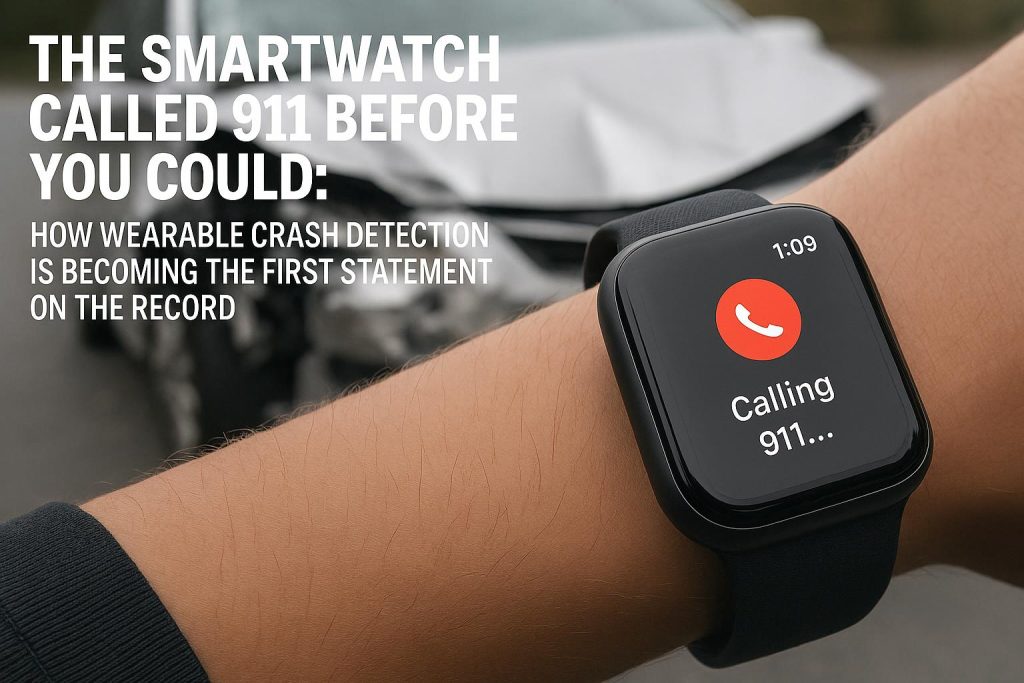
An iPhone or Apple Watch that senses a severe crash will sound an alarm for ten seconds, then place an automated 911 call thirty seconds later if the wearer doesn’t respond. That call goes out before anyone at the scene has caught their breath, let alone thought about what to say.
So the first version of your crash on the official record was made by a device on your wrist while you were still figuring out which way was up. Dispatchers log it, timestamp it, and eventually hand it to a claims adjuster or a defense lawyer. That single fact reshapes how a serious wreck gets investigated, and it’s worth understanding before you ever need to.
The 30-Second Countdown Is Now Evidence
Contents
Picture the first minute after a bad wreck. The watch registers the impact, buzzes, and starts counting. Nobody cancels it, because nobody’s in shape to. The call goes through.
On the dispatcher’s end, the device delivers a synthesized message and coordinates, working from a fixed script that reports a severe crash with a location and a search radius. That recording is preserved. So is the exact moment the countdown started, the moment the call connected, and the GPS trail leading up to it. None of it can be reshaped later by memory, adrenaline, or a well-meaning passenger telling the officer what they think they saw.
For a rider or driver, that cuts two ways. The automated call can get help there faster, but it also locks in a version of events you never consciously authored.
Why This Matters More on Two Wheels
Motorcyclists sit at the sharp end of this shift. Federal crash data puts the per-mile fatality rate for riders at nearly 27 times that of passenger car occupants. When the physics are that lopsided, response time is the whole ballgame.
Riders are also the group most likely to be alone at the scene, unable to speak, and surrounded by witnesses whose first instinct is to blame the bike. An automated call that fixes a time, a place, and an impact signature is genuinely useful when the only alternative is somebody else’s version of what happened. A motorcycle injury attorney building a case will often reach for that dispatch record first, because it’s the one piece of the story that predates every human account.
The Feature Can Get It Wrong
None of this works cleanly if the device is wrong, and the device is sometimes wrong. Early rollouts produced enough phantom 911 calls from ski lifts and roller coasters that Apple pushed software updates to calm the algorithm down. Public-safety agencies were candid about the strain, and a Government Technology piece captured dispatchers’ frustration with false alarms in resort areas, where a single afternoon could flood the queue.
The feature is reliable enough to matter, but the record it creates still has to be authenticated like any other piece of evidence. A defense lawyer can, and will, argue that a triggered call proves nothing about severity. That argument cuts both ways: an injured rider whose watch called for help still has to build the rest of the case, and a driver whose phone dialed 911 during a hard stop isn’t automatically at fault.
What You Actually Do With the Record
If a wearable dialed for help during your crash, the data is only useful if it survives long enough to be used. A few practical moves matter more than most people realize:
- Don’t wipe the device. Resetting a phone or watch after a serious wreck can erase the very logs your claim depends on. Leave it alone until someone tells you what to preserve.
- Screenshot the emergency call entry. The call history on the phone shows the timestamp and duration of the automated 911 attempt. Capture it before it scrolls off or gets overwritten.
- Request the PSAP recording early. Dispatch centers keep audio, but retention windows vary and some are short. A written preservation request in the first days after a crash is far cheaper than a subpoena three months later.
- Export health and motion data. Steps, heart rate, and workout logs from the days before and after the crash can corroborate, or flatly contradict, later claims about how you were moving.
- Assume the other side is looking too. Insurers now ask about wearables as a matter of course. Anything you post publicly about activity after the crash will be compared to what your watch actually recorded.
The First Witness Isn’t Human Anymore
Crash investigations used to begin with whoever could talk first at the scene. Now, on a growing share of serious wrecks, the earliest account comes from a device that made a phone call before anyone had a chance to. That record is imperfect, contestable, and occasionally wrong. It’s also permanent, timestamped, and increasingly hard to ignore.
The riders and drivers who come out ahead won’t be the ones who trust the technology blindly or the ones who resent it. They’ll be the ones who understand that the first statement on the record was made for them, and who make sure the rest of the story gets told with the same care.