


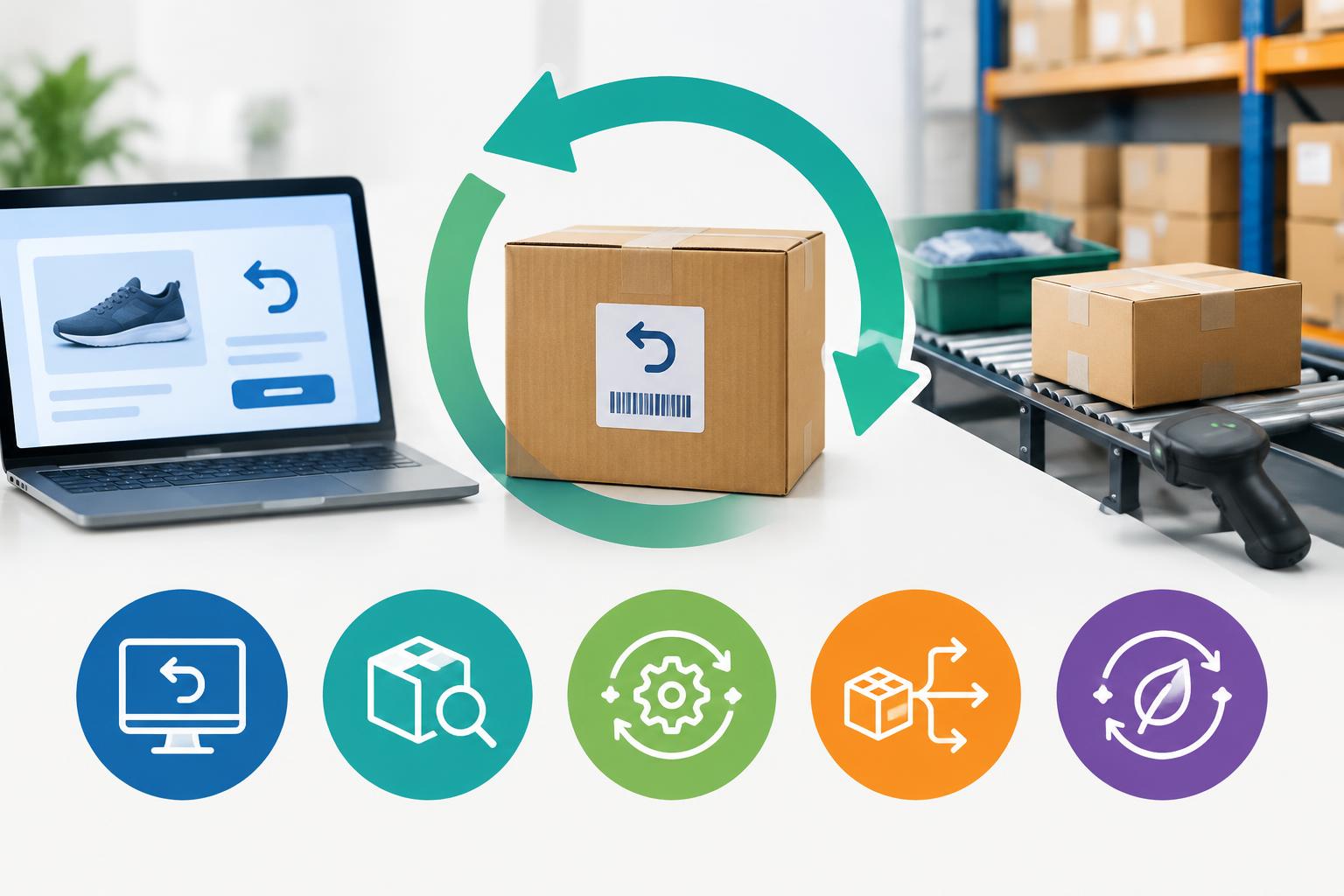
Ecommerce reverse logistics deals with what happens when products move in the opposite direction. This includes customer returns, exchanges, repairs, recycling, refurbishment, and the disposal of unwanted products. Implementing a well-managed reverse logistics process can reduce costs, improve customer satisfaction, and help ecommerce businesses recover value from returned products.
Top 5 Best Practices for Handling Reverse Logistics in Ecommerce
Here are some of the best practices businesses should consider when handling reverse logistics processes:
- Create a Clear and Simple Return Policy
Customers should easily understand which products can be returned, the acceptable return period, eligibility requirements, and who pays for return shipping. Online retailers should clearly communicate the steps customers need to follow when requesting a return. A simple policy can reduce unnecessary customer service enquiries and prevent confusion. Ecommerce businesses should also make their return policies easily accessible on product pages, checkout pages, and their websites.
- Inspect and Categorise Returned Products
Returned items reaching the warehouse should be inspected and categorised according to their condition. For example, products may be classified as unopened and ready for resale, opened but suitable for resale, requiring refurbishment, suitable for parts, or damaged beyond economical repair. Having a consistent inspection process helps businesses determine the best destination for each item. Products in excellent condition can return to inventory quickly, while damaged goods can be repaired, recycled, or disposed of responsibly.
- Partner with Outsourced Third-Party Logistics Providers
Managing returns internally may require additional warehouse space, employees, transportation, and technology. Partnering with an experienced third-party logistics provider can make reverse logistics more manageable for ecommerce businesses. Companies can work with outsourced providers such as Packageman to support activities including return transportation, warehousing, inventory handling and order fulfilment. An experienced logistics partner can provide infrastructure and operational expertise without requiring a business to build an entire reverse logistics network from scratch.
- Track Return Data and Identify Patterns
Returns can provide valuable information about an ecommerce business. Beyond processing returned products, ecommerce companies should also analyse the reasons behind them. They can track information such as return rates by product, common return reasons, damaged shipments, and products frequently described as different from their online descriptions. Using return data in this way can help businesses reduce future returns and improve their overall operations.
- Focus On Customer Communication and Sustainability
Customers want a return experience that is convenient and transparent. Providing timely updates about return approvals, shipping, inspections, and refunds can help maintain customer confidence. Businesses should also consider the environmental impact of reverse logistics. Returned products can be refurbished, resold, donated, or recycled instead of being sent directly to a landfill. Using recyclable packaging and consolidating return shipments can further reduce waste and transportation-related emissions.
Reverse logistics can become an important part of ecommerce operations and customer retention when managed properly. Establishing a clear returns policy, using technology, inspecting returned products, and partnering with third-party logistics providers like Packageman is a great way for ecommerce businesses to create a smoother returns experience while controlling costs and recovering value from returned inventory.