


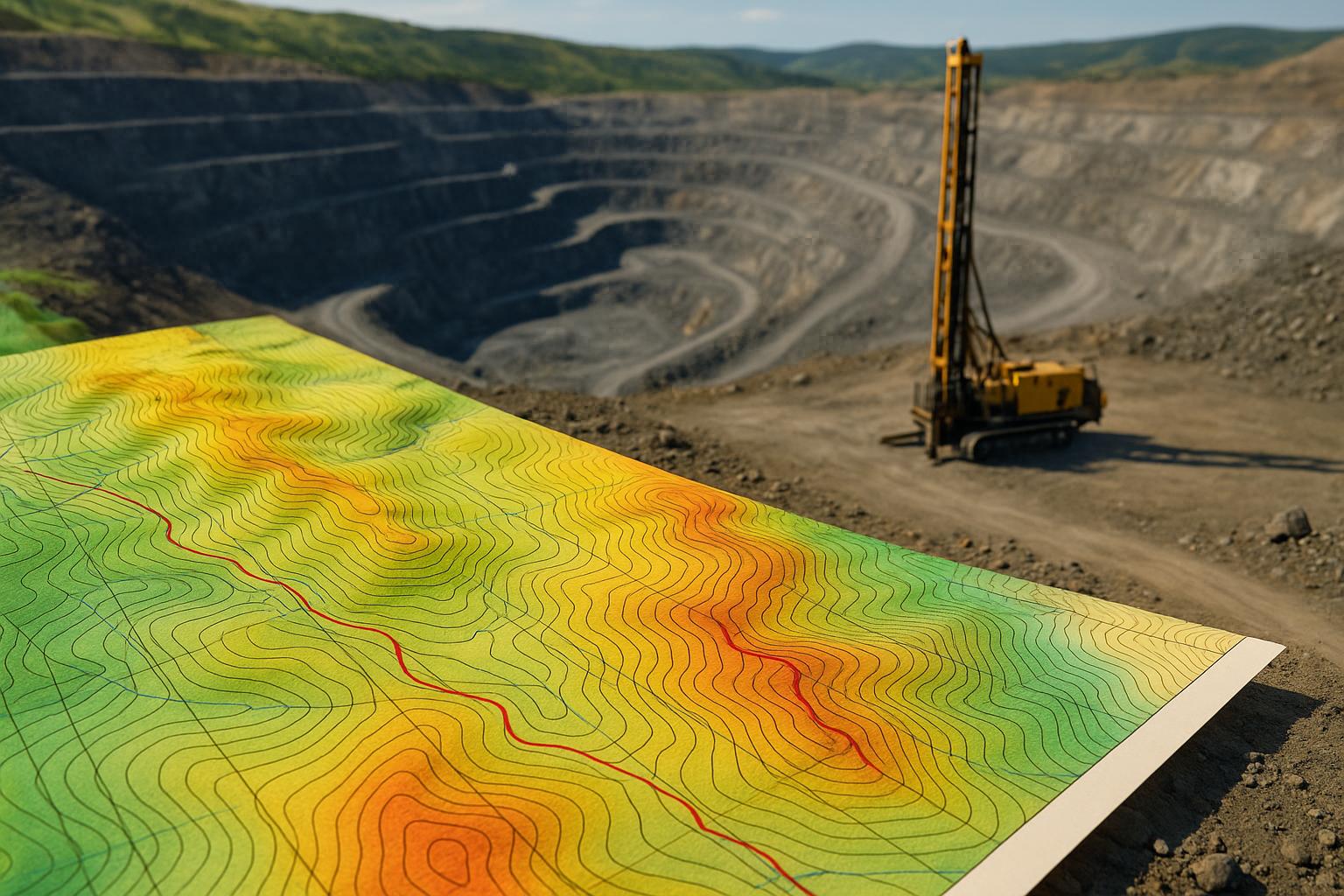
Every successful drill campaign begins with an accurate understanding of the ground surface. In rugged exploration areas, small terrain details such as slope breaks, narrow drainages, and uneven benches can influence where a drill pad can safely sit and how crews reach it. Survey-grade drone mapping gives exploration teams a detailed terrain model early in the planning process.
With reliable drone mapping services for topographic data, geology, geophysics, and drilling teams can review targets and site constraints on the same terrain model early in the planning process. Pad locations, access routes, and staging areas can be tested against real slopes and elevations before equipment mobilizes. A dependable terrain baseline keeps planning practical and reduces field adjustments once crews arrive onsite.
Accurate Terrain Baselines
Contents
High-density elevation models reveal slope angles, drainage paths, benches, and abrupt ground breaks across exploration ground. Drone mapping services collect thousands of elevation points per square meter, producing terrain surfaces that capture subtle changes often missed in older contour maps. Planners can review accurate grades before clearing, cutting, or staking begins on proposed drill pads and access corridors.
Using a precise terrain baseline keeps all project datasets tied to the same elevations and coordinates. Geological interpretations, geophysical grids, environmental notes, and proposed drill collars can sit on one consistent surface. Teams gain clearer distance checks, more reliable grade estimates, and fewer adjustments once crews start marking pads in the field during layout work.
Drill Site Selection
Detailed terrain models allow planners to screen potential drill pad sites against real ground limits. Slope percentages, bench width, and nearby drainage channels become visible at a scale useful for layout work. Locations that appear workable on generalized contours can be ruled out quickly when the true surface gradient becomes clear during early planning reviews onsite.
Viewing subsurface targets and terrain data together supports more practical collar placement. Pad positions can remain close to the intended azimuth and dip plan while still meeting grade limits for safe rig setup. Consistent elevation data also supports drainage control planning and reduces last-minute pad relocations during mobilization on active drill programs across rugged exploration ground.
Access And Logistics
Road and trail grades determine whether fuel trucks, water tanks, and a drill can move without delays on rugged properties. Detailed topographic mapping shows elevation changes, narrow saddles, creek crossings, and side-slope sections that limit turning radius or make a climb unsafe. When those constraints are visible early, access routes can be laid out on ground that supports equipment weight and keeps travel distances realistic for the shift.
Staging areas matter as much as the road line, since crews need flat space for laydown, refueling, and safe turning. A current terrain model helps pinpoint benches, old clearings, and ridgeline flats that can serve as practical hubs while staying close to pads. Pre-mapped corridors limit uncertainty during mobilization and support smoother coordination with landholders and regulators on access details.
Field Data Alignment
A single, accurate coordinate and elevation reference keeps separate field datasets from drifting apart. When soil sample grids, geophysical lines, and mapped outcrops sit on the same terrain model, teams can quickly confirm if features truly align or only appear aligned because of mismatched basemaps. That consistency reduces offset errors when crews stake stations, move between grids, and record locations in the field.
Data handling gets cleaner when every layer shares the same surface and projection settings across software and contractors. Collars plotted on the terrain model can be checked against slope, drainage, and planned access while geophysical anomalies are reviewed in the same view, which helps prioritize follow-up work. A shared spatial base makes it easier to spot gaps, resolve conflicts, and keep updates flowing through the project files.
Reliable Planning Confidence
Up-to-date topographic surfaces reduce the gap between what the map shows and what crews find on site. When the terrain layer captures real slopes, drainage lines, and breaks in ground, planners can set pad grades and road approaches with fewer assumptions. That means fewer surprises tied to soft ground, steep cut sections, or narrow benches that only become obvious once equipment is already mobilized.
Confidence improves because constraints are visible early and can be checked against safety and equipment limits before permits, contracts, and schedules are locked in. Clear terrain data helps confirm which pads are buildable, which access lines stay within grade, and where water control needs space, keeping decisions consistent across teams and contractors. A current model supports steadier day-to-day calls as the program adjusts.
Accurate topographic data sets the stage for smoother drill planning and field execution. When teams work from a reliable terrain model, pad locations can be reviewed against real slopes, access routes can follow workable grades, and staging areas can be chosen with confidence before equipment arrives. A shared surface model also keeps geology, geophysics, and drilling aligned on the same coordinates and elevations throughout the program. Fewer assumptions mean fewer surprises once crews reach the ground. Starting with dependable surface data gives teams a practical foundation for daily decisions and helps keep drilling programs moving efficiently from planning through mobilization and active fieldwork.