


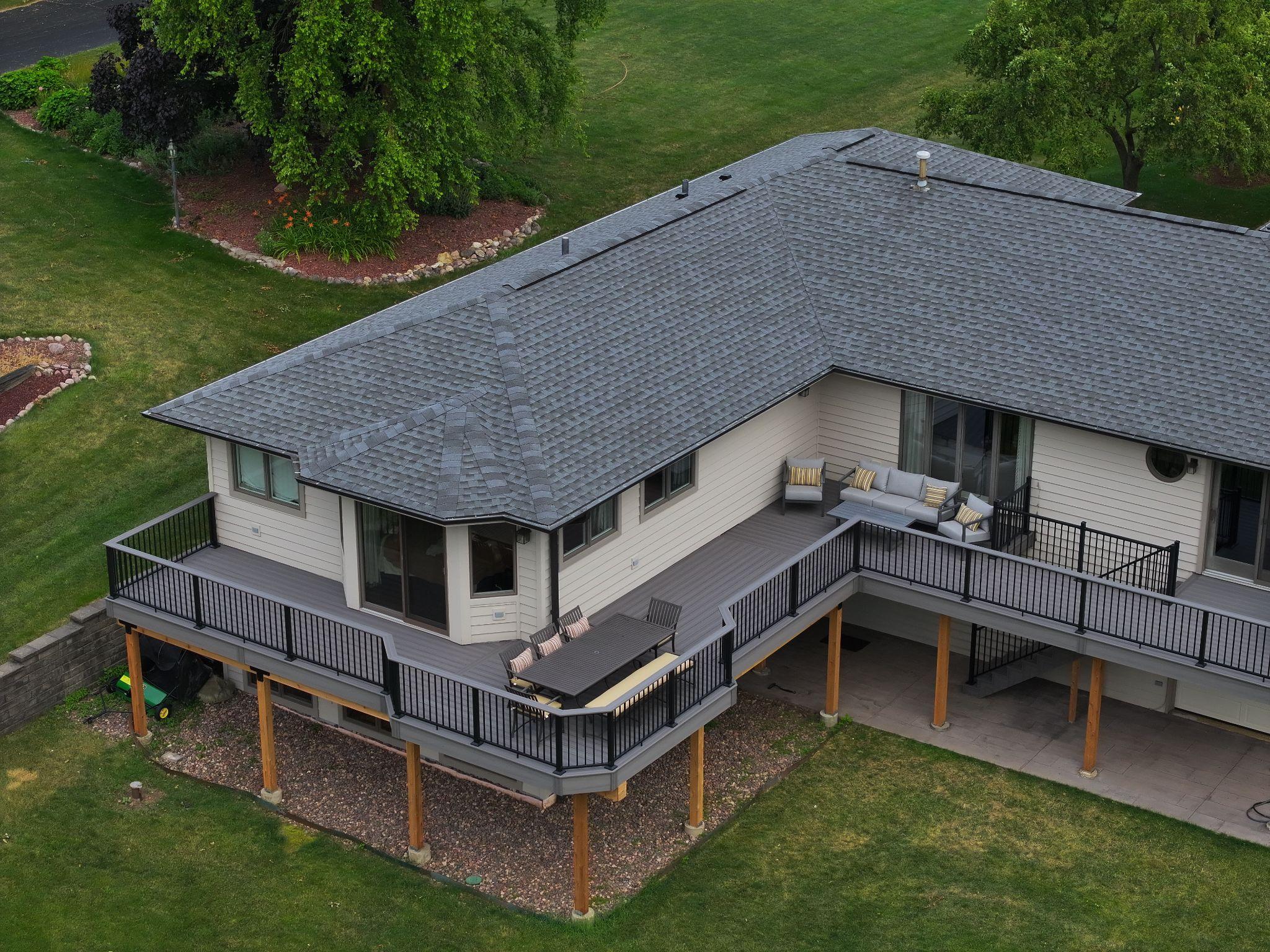
A deck can look perfect and still sink a sale. The boards are tight, the railing feels solid, nobody has fallen through in fifteen years. None of that is the problem. The problem shows up when a buyer’s team starts pulling records and there is no permit on file with the City of Naperville for a structure that clearly needed one.
This happens more than most homeowners expect, and it tends to happen at the worst possible moment: under contract, with a closing date set and movers booked. So it is worth understanding before you list, or before you buy a house with a deck whose history nobody can quite explain.
The deck passes the eye test. The paperwork is what fails.
Contents
In Naperville, a building permit is required for any elevated deck, and also for the replacement of structural or safety parts on an existing deck, including beams, joists, posts, stairs, and railings. That last part catches people. A homeowner who tore off a rotten railing and rebuilt it over a weekend may assume a repair does not count. The city’s rule treats that as work that needed a permit.
When the original build or a major repair skipped that step, the deck becomes unpermitted work. It can be built well. It can be built to code. But if the city has no record of it, then on paper the structure does not officially exist, and that gap is what a sale exposes.
How an unpermitted deck actually surfaces during a sale
There is no single inspector who walks the yard looking for permit fraud. Instead, three separate parts of a normal transaction tend to surface the issue on their own.
The buyer’s home inspector is usually first. Inspectors are trained to notice work that looks added on or altered: a ledger board attachment that does not match the rest of the framing, stairs that were clearly redone, a deck that is newer than the house. Most inspectors cannot confirm permit status, but they flag the structure, and that flag sends the buyer’s agent to the city’s permit records. Naperville keeps those records by address, and they are not hard to pull.
The appraiser and the lender create the second pressure point. Appraisers generally do not give credit for unpermitted improvements, which means the deck you spent twelve thousand dollars on may add nothing to the appraised value. If the buyer is using an FHA or VA loan, the appraiser works under stricter rules and can list the unpermitted work as a condition that has to be cleared before the loan closes. Conventional lenders are looser, but plenty of them still balk at lending against a house with an open question hanging over part of the structure. A deal that was financed and moving can stall right here.
The third piece is the part homeowners tend to forget, and it is the one with legal teeth.
Illinois makes you put it in writing
Under the Illinois Residential Real Property Disclosure Act (765 ILCS 77), a seller has to tell the buyer, in writing, about known material defects. A material defect is a condition that has a substantial adverse effect on value or that could affect the safety of future occupants. Known code or permit problems fall squarely inside that definition, and the standard disclosure form specifically reaches issues like unsafe conditions and code violations.
Two things about that law trip people up. First, you cannot sell your way around it by listing the house “as is.” An as-is sale tells the buyer you will not be making repairs. It does not erase your duty to disclose what you already know. Second, the 2022 amendments to the Act gave the disclosure real weight during the deal. The report now has to be handed over before the contract is signed, the seller has an ongoing duty to update it through closing, and a buyer who learns of a material defect after the contract was signed can walk away within five business days.
Hiding a known permit problem is not a gray area. If a buyer finds out later that you knew and stayed quiet, the Act exposes you to the buyer’s damages plus attorney’s fees. Disclosing it is the safe move. It also hands the buyer a reason to renegotiate, which is exactly why sellers would rather solve the problem before anyone is looking at it.
What it costs to fix in Naperville
Here is the good news and the catch in the same breath. The permit itself is cheap. Bringing an older deck up to today’s code is where the real money lives, and in Naperville that gap got wider this year.
The retroactive permit path
You can permit a deck after the fact. The city does not make you tear down a sound structure just because the paperwork was never filed. The process runs through Naperville’s Civic Access portal, the same way a new deck would, and it usually starts with a licensed contractor or a structural professional assessing what you actually have. You submit drawings of the existing deck, the city assigns a reviewer, and an inspector comes out. Some of the framing may need to be opened up so the inspector can see footings, the ledger connection, and the hardware. If everything checks out, the permit is issued and the deck is legal.
The Naperville deck permit fee starts around $132, which covers a clerical fee, the permit, and a minimum of two inspections. For a standard residential deck with clean drawings, the city’s own timeline runs about two to four weeks from submission to issuance. So far, none of that is expensive or slow.
The part that actually costs money: the 2024 code review
This is the detail almost nobody mentions, and it is specific to Naperville right now. On February 17, 2026, the City Council adopted the 2024 ICC building codes, and every permit submitted on or after April 1, 2026 is now reviewed against them.
A retroactive permit is a permit submitted now. So a deck that was perfectly fine under the code in 2012 gets judged against the 2024 rules when you go to legalize it. The newer code is more demanding in a few places that matter for older decks: how the ledger board attaches and flashes to the house, the load that guards and railings have to withstand, and lateral load anchors that tie the deck back to the structure. An older deck built before any of that was required can pass its original logic and still fail today’s review.
That is what turns a $132 permit into a real number. If the reviewer wants an updated ledger detail, new lateral anchors, or rebuilt railings that meet the current load test, you are paying a contractor to retrofit a finished deck. Industry sources that track this nationally put the all-in cost of legalizing unpermitted work anywhere from a few hundred dollars to several thousand, and the spread is almost entirely about how much correction the inspection forces. The permit fee is predictable. The corrections are not, until someone qualified looks at your specific deck.
When removal is the cheaper answer
Sometimes the math says do not bother. If a deck would need several thousand dollars of corrections to pass and it only adds a few thousand to the home’s value, legalizing it is throwing money at a structure that will never pay it back. Demolishing an unpermitted deck and restoring the area generally runs in the low thousands, often around a thousand to three thousand dollars depending on size and access. For a small, aging, or poorly built deck, removal can be the rational choice, especially if a buyer was never going to value it anyway.
For a well-built deck with real life left in it, the retroactive permit is almost always worth it. A clean permit record removes the disclosure problem, satisfies the appraiser and the lender, and takes away the buyer’s best bargaining chip. Real estate professionals tend to peg the discount buyers try to extract for unpermitted improvements at roughly ten to twenty percent of the affected value, which usually dwarfs the cost of just doing it right.
The decks that don’t need any of this
Before anyone panics, not every deck in Naperville needs a permit. The common exemption is a freestanding deck or platform that sits no more than 30 inches above grade and is not attached to the house. A low ground-level platform in the backyard, on its own footings, generally does not require a permit. The moment a deck is attached to the home or rises above that 30-inch line, it is back in permit territory. If you are not sure which side of the line your deck falls on, the City of Naperville’s deck, patio and shed permit page spells out what triggers a permit, and a quick call to the Development Services Center at 400 S. Eagle Street settles most questions.
If you’re selling (or buying) this year
If you are getting ready to list, pull your own permit history first. You can check the city’s records by address and find out, on your own timeline, whether the deck is on file. Finding the gap yourself is far better than having a buyer’s agent find it for you mid-deal. If there is no permit, get a licensed contractor to look at the deck and tell you honestly whether it would clear a 2024-code review or need work. Then you can decide, before you list, whether to legalize it, price it in, or remove it. Going to market with that already settled keeps control on your side of the table.
If you are the buyer, look at the deck the same way an inspector would. Ask whether there is a permit on file. A deck that is newer than the house, or one with obvious repairs, is worth a question. If the work was never permitted, you are the one who inherits the retroactive process and its cost, so factor that into your offer rather than discovering it after you own it.
The cleanest version of this whole story is the one where the deck was permitted the day it was built. That is the case for hiring a builder who treats the permit as part of the job instead of an optional step the homeowner can chase later. Wolf Spirit Deck, for example, pulls the Naperville permit before the first board goes down, which is the difference between a deck that helps you at resale and one that becomes a problem. The same rules and the same retroactive headaches apply a few towns over, so homeowners working with deck builders in La Grange and the other near-west suburbs run into the same permit reality, just under a different village’s letterhead.
A deck is supposed to make a house easier to enjoy and easier to sell. The permit is the small, boring piece of paper that keeps it on the right side of both.
Common questions
Does a deck repair really need a permit in Naperville?
If the repair touches structural or safety components, yes. Replacing beams, joists, posts, stairs, or railings on an existing deck requires a permit. Swapping a few surface boards is a different matter, but anything structural is in scope.
Can I just sell the house “as is” and skip the whole thing?
You can sell as is, but Illinois law still requires you to disclose a known permit or code problem in writing. As is means you will not fix it. It does not mean you can hide it. Staying quiet about something you know is what creates legal exposure.
How long does a retroactive deck permit take in Naperville?
For a straightforward residential deck with complete drawings, the city’s process runs roughly two to four weeks from submission to issuance. If the inspection turns up corrections that have to be made, add the time it takes a contractor to do that work.
Will an unpermitted deck stop a buyer from getting a mortgage?
It can. FHA and VA appraisals are the strictest and may require the issue to be resolved before closing. Conventional lenders vary, but an unresolved permit question can slow or complicate financing, which is its own reason to clear it before you list.