


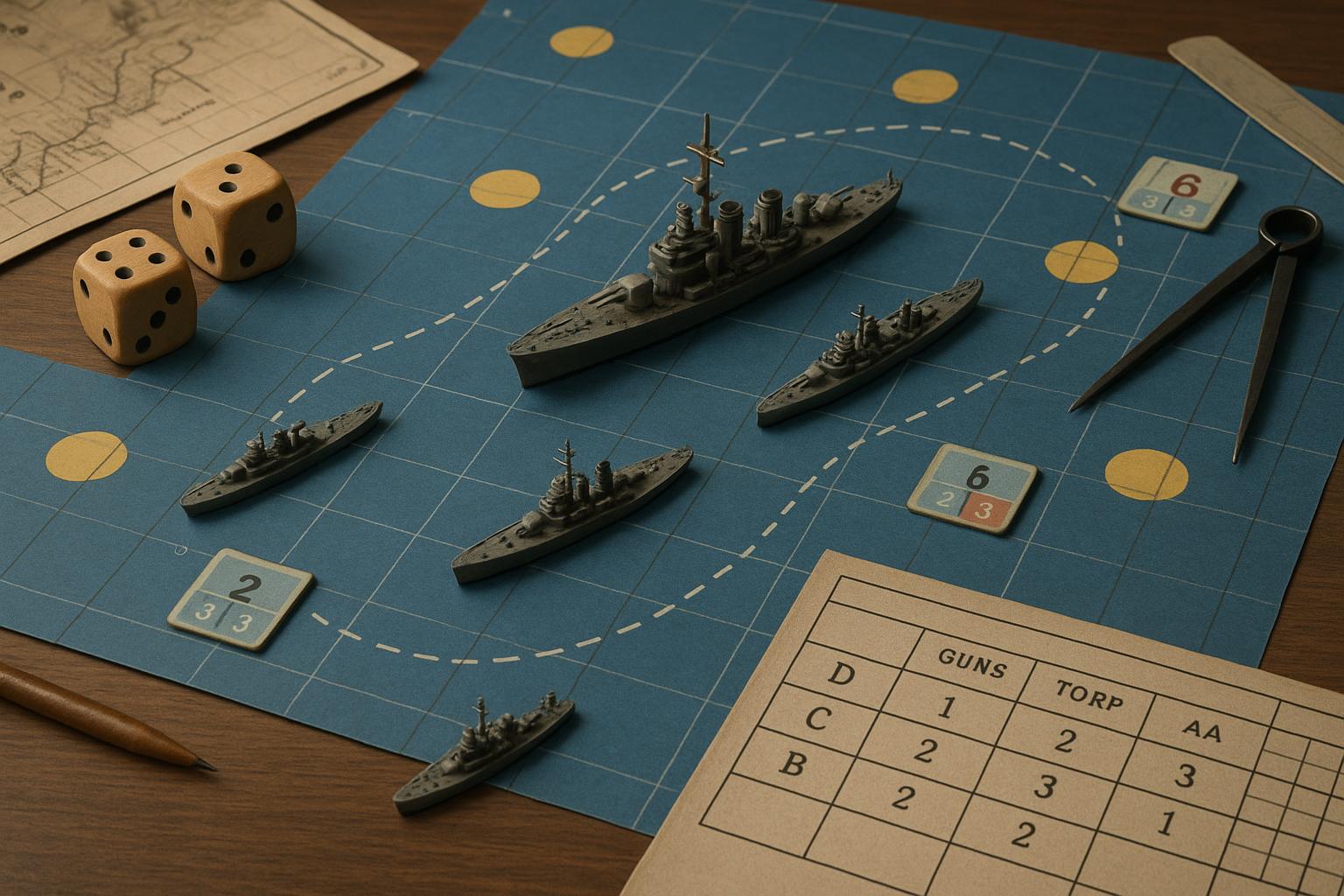
Naval strategy games ask players to think slowly, weigh risk, and honor the weight of history. These titles favor careful planning over quick reflexes. Fleets move at a measured pace, supply lines carry real consequences, and a single reckless order can undo hours of work. Anyone who enjoys studying tactics as much as claiming victory will find depth, tension, and lasting reward across the seven games below.
Contents
Patience works as a genuine mechanic in serious maritime simulations. Setting up a battle line demands foresight, because vessels turn gradually and gunnery favors commanders who read enemy movement early. Weather, fuel, and crew morale pile on friction that echoes the pressure of real command.
Players who crave authenticity often go looking for the best computer naval wargames, since these games accurately represent historical conditions with remarkable precision. Careful damage systems, era-correct ships, and layered campaigns let captains relive decisive fights. Realism of this kind makes every session a lesson in consequence, where restraint tends to beat aggression and knowledge of historical tactics guides each result.
Study and play blend together, which is why veterans stay hooked for years. Learning one of these games thoroughly feels closer to mastering a craft than clearing levels.
1. Fleet Command Simulations
Command games on a grand scale hand entire task forces to a single player. Orders spread outward, and consequences surface over long stretches of time. Victory depends on reading intelligence reports, anticipating enemy plans, and committing reserves at the right moment.
Managing Limited Resources
Ammunition, escorts, and repair capacity remain in short supply. Shrewd captains save their strength for the clashes that count instead of trading blows too early.
2. Age of Sail Tacticians
Wind direction governs everything during the cannon era. Ships win or lose their edge depending on how the sails catch each gust. Steering a frigate into a raking position can settle a duel before one broadside even fires.
Rigging models and crew fatigue make the period feel real. Talented players treat every tack as a measured gamble, weighing speed against exposure.
3. Submarine Warfare Games
Hunting beneath the surface rewards stealth and steady nerves. A commander shadows convoys for hours, following sonar contacts while watching oxygen and battery reserves. Fire too soon and the position gives itself away, so timing carries enormous weight.
Isolation of the deep comes through vividly in these simulations. Suspense grows as escorts circle overhead, demanding patient silence until the ideal firing solution finally opens up.
4. Grand Campaign Strategy
Certain titles span whole wars, guiding fleets through years of struggle. Production, research, and diplomacy sit alongside tactical combat. Choices build on one another, so a short-term loss can quietly serve a larger aim.
Reading the Larger Picture
Success calls for sight beyond the next skirmish. More than any lone naval duel, steering industry and manpower often counts.
Turn-based designs give commanders room to weigh each move. With no clock ticking down, players work out ranges, angles, and odds at their own pace. Such a format suits people who prize deliberate thought over frantic clicking.
A chesslike rhythm invites bold experiments. Testing daring formations costs little beyond a single lost match, which keeps skill climbing steadily.
6. Historical Battle Recreations
Recreations of famous engagements let enthusiasts test different outcomes. Might another approach have reshaped a legendary encounter? Players chase that question using authentic ship rosters and true period conditions.
Reading primary accounts sharpens results. Grasping why real admirals picked certain formations helps players sidestep the same historical errors.
Present-day settings include missiles, radar, and electronic warfare. Information speed replaces cannon range as the deciding factor. Even so, patience remains important, because one spotted launch can expose a whole fleet.
Balancing Technology and Instinct
Sensors supply the data, yet human judgment gives it meaning. Reading a crowded radar screen calmly is what separates survivors from casualties.
Conclusion
Naval wargames reward players who slow down and think the way historical commanders once did. Every title here values planning, discipline, and respect for the dangers of open water. Whether steering wooden frigates or missile cruisers, players learn that patience shapes victory far more than raw aggression. Strategy lovers hunting for depth and authenticity will find countless hours of thoughtful, rewarding command waiting in each of these games.