


AI is changing custom software development in ways that go beyond adding chatbots or recommendation features to applications. For SMEs and enterprises, AI can influence how software is planned, built, tested, deployed, and improved. As businesses look for more adaptable digital systems, understanding where AI creates real value and where it introduces new risks is becoming an important part of software development decisions.
1. Why AI is becoming part of custom software development
Contents
- 1. Why AI is becoming part of custom software development
- 2. How AI is changing the software development lifecycle
- 3. What AI enables custom software to do
- 4. What this means for SMEs and enterprises
- 5. Challenges businesses should consider
- 6. A practical approach to AI-powered custom software development
- 7. The evolving role of software development partners
Traditional software development has largely focused on translating defined business requirements into reliable digital systems. AI introduces another layer by helping teams analyze information, automate repetitive work, generate content or code, and support decisions. This does not replace the development process, but it can change how teams approach different stages of a project.
The change is also visible in the software itself. Instead of simply following predefined rules, some applications can now interpret natural language, identify patterns in data, make recommendations, or support more flexible workflows. For SMEs and enterprises, this creates opportunities to address business problems that were previously difficult or expensive to automate using traditional approaches alone.
2. How AI is changing the software development lifecycle
2.1 From requirements to architecture
AI can assist teams before development even begins. Developers, business analysts, and product teams can use AI to summarize requirements, organize customer feedback, identify recurring issues, and generate early documentation. It can also help teams explore technical approaches and identify potential considerations around architecture, databases, or integrations.
However, AI-generated suggestions still require human review. Business context, technical constraints, security requirements, and long-term product goals cannot be reliably determined from prompts alone.
2.2 AI-assisted development and testing
During development, AI coding tools can help generate code, complete repetitive tasks, explain unfamiliar code, suggest refactoring approaches, and assist with debugging. These capabilities can reduce the time developers spend on routine work, allowing them to focus more attention on system design and complex problems.
AI can also support quality assurance by generating test cases, analyzing logs, identifying unusual behavior, and helping detect potential defects. Generated code and AI-assisted test results should still go through appropriate engineering review, testing, and security validation before being used in production.
2.3 Maintenance and continuous improvement
AI can remain useful after software reaches production. Monitoring systems can use machine learning techniques to identify unusual patterns in application behavior, while AI-assisted tools can help teams investigate incidents and prioritize potential issues.
For businesses operating large or long-lived applications, this can be particularly useful. Software maintenance often involves repetitive analysis and large volumes of technical information, making it an area where AI assistance can complement experienced engineering teams.

3. What AI enables custom software to do
AI is also changing the capabilities that businesses expect from custom software. Instead of building applications that only record information or execute predefined processes, companies can develop systems that analyze data, understand user input, and support more dynamic workflows. 5 common applications include:
- Intelligent automation: Automating document processing, customer support, internal workflows, and repetitive operational tasks.
- Decision support: Analyzing business data, identifying patterns, generating recommendations, and supporting forecasting.
- Conversational interfaces: Allowing employees or customers to interact with software using natural language.
- Personalization: Adapting recommendations, content, or experiences based on available user data and defined business rules.
- AI agents: Enabling software to perform connected tasks across approved tools, APIs, and business systems within defined permissions and controls.
The appropriate approach depends on the problem. A simple rule-based workflow may be more reliable and cost-effective than an AI system, while a complex process involving unstructured information may benefit significantly from generative AI or an AI agent.
4. What this means for SMEs and enterprises
For SMEs, AI-assisted development can help teams with limited technical resources automate some repetitive development and operational tasks. It can also make capabilities such as intelligent search or automated customer support more accessible through existing AI technologies and platforms.
Enterprises face a different set of considerations. Large organizations often need to integrate AI with existing ERP, CRM, databases, and legacy applications while maintaining security, governance, and regulatory requirements. For them, AI adoption is often less about adding a single feature and more about integrating intelligent capabilities into an existing software ecosystem.

5. Challenges businesses should consider
AI does not automatically make a software project faster, cheaper, or better. Businesses need to consider several practical issues before introducing it into production systems:
- Data quality: Poor or incomplete data can limit the usefulness of AI outputs.
- Security and privacy: Sensitive business and customer information requires appropriate access controls, data handling practices, and security measures.
- Accuracy: AI systems can produce incorrect or inconsistent results and need suitable validation.
- Integration: AI capabilities must work reliably with existing applications, databases, and APIs.
- Cost and scalability: Model usage, infrastructure, monitoring, and maintenance can affect the long-term cost of an AI feature.
- Governance: Businesses may need clear rules covering access, human oversight, model evaluation, data usage, and acceptable AI use.
These considerations make product and engineering judgment particularly important. The goal should not be to use AI everywhere, but to identify where it solves a genuine business problem.
6. A practical approach to AI-powered custom software development
A sensible AI project usually starts with the business problem rather than the technology. Teams should define the desired outcome, understand available data, identify suitable use cases, and evaluate the risks before selecting a model or implementation approach.
From there, an MVP or controlled pilot can help validate whether the AI capability delivers meaningful value. Once validated, it can be integrated into the wider software architecture with appropriate security, monitoring, testing, evaluation, and human oversight. Continuous evaluation is also important because AI performance, user expectations, data, models, and business requirements can change over time.
7. The evolving role of software development partners
As AI becomes part of custom software, businesses increasingly need development partners that understand both engineering and product requirements. Building an AI feature is only one part of the challenge; making it secure, maintainable, scalable, and useful within a real business environment requires broader software expertise.
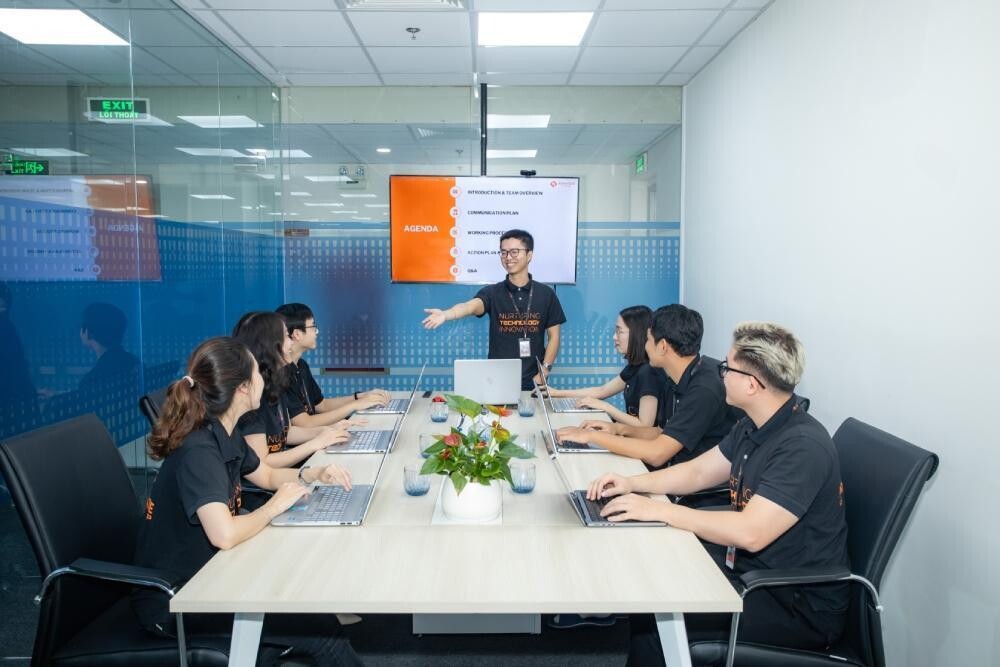
PowerGate Software, an AI-Powered software product studio, approaches software development across the product lifecycle, from product discovery and design to development, testing, and ongoing improvement. This broader approach can help businesses consider AI as part of the product and its workflows rather than as an isolated technical feature.
AI is reshaping custom software development by influencing both how applications are built and what they can accomplish. For SMEs and enterprises, the most practical path is to connect AI capabilities with clear business needs while maintaining attention to security, accuracy, integration, and long-term maintenance. With the right approach to custom software development, AI can become a useful part of building more responsive and capable business software.