



Flange size is the least glamorous part of pumping and the one most likely to be got wrong. A few millimetres either way changes how much milk comes out, how long a session takes and whether it hurts at all—yet most sizing charts are written for an average that does not exist, and the pump box rarely settles the question on its own. That is why getting it right is a measurement rather than a guess, and why it is the cheapest improvement most people ever make to their setup. This guide covers how to measure at home, what a poor fit feels like, and how to adjust as things change in the first weeks.
Measuring Before You Buy
Measuring Nipple Diameter at Home
Most people choose a breast pump without ever measuring themselves, then spend the first week wondering why every session is uncomfortable. Measure the nipple diameter rather than the areola, using a ruler or the printable gauge many manufacturers publish, and read it across the base where the nipple meets the breast. Do it an hour after a feed, when you are not engorged, and measure both sides separately, because they rarely match. Add two to four millimetres to reach the tunnel size you need, and write both numbers down. A photograph of the ruler held in place is easier than trying to hold a ruler and a mirror at the same time.
Why Sizing Charts Differ Between Brands
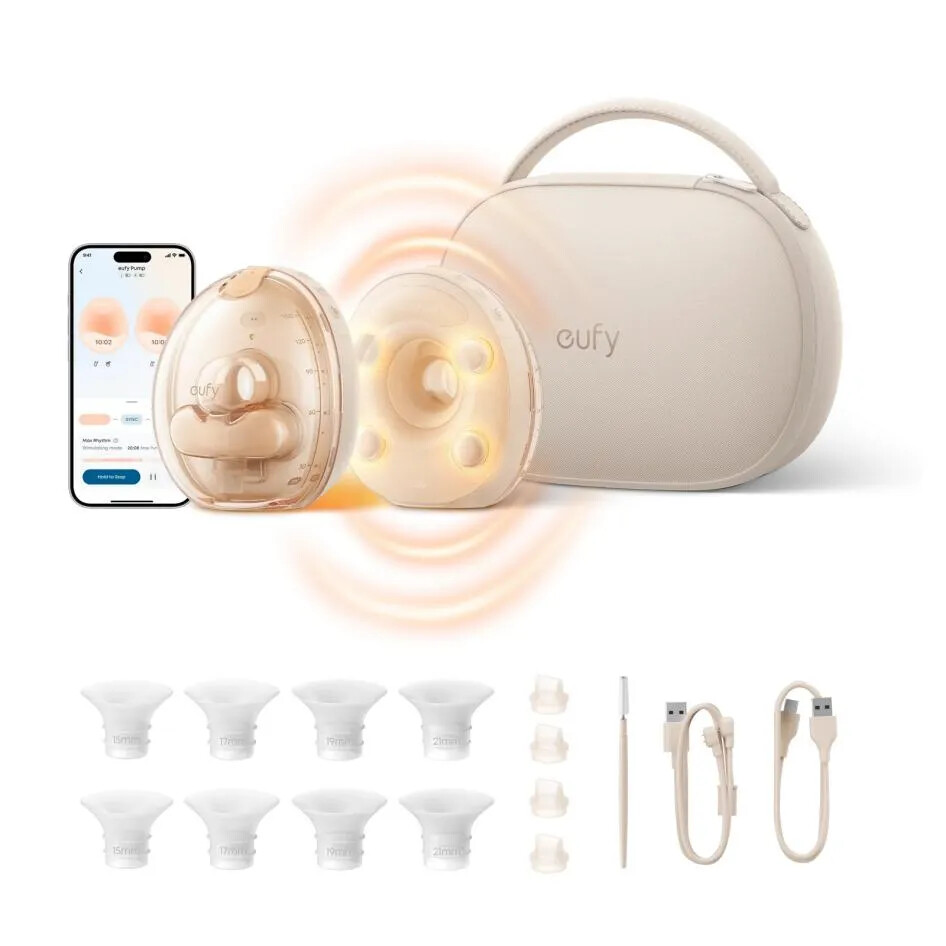
Sizing charts are not standardised, and two brands can label the same physical tunnel as 24 mm and 25 mm because they measure different parts of the flange. Some quote the tunnel opening, others the outer cone, and a few simply round to the sizes they already manufacture. That is why a 24 from one maker can feel tight while a 24 from another feels correct. Treat the chart as a starting point, and where returns are easy order one size either side and keep the one that works. A set that carries the range from the first week skips that trial and error: the eufy S2 Pro arrives with double-sealed silicone flanges covering 15 to 21 mm, and the seal holds as you move, so a shift does not break suction mid-session.
What a Wrong Fit Feels Like
Pain, Pinching and Poor Drainage
A wrong flange announces itself quickly. The tunnel pulls the areola in with the nipple, rubbing with every cycle, and leaves a pinching sensation at the base that lingers after the session has ended. Redness, blanching or a visible ring where the flange sat are all signs that the tunnel is too small. Too large is quieter and easier to miss: the areola is drawn in, air leaks around the edge, and suction falls away without obvious pain to explain. If a session hurts from the first minute, stop and check the size rather than pushing through. Take a break, reapply, and if the pinch returns the tunnel is too narrow. Acting on it the same day saves a week of sore skin.
Milk Left Behind and Falling Supply
Discomfort is the loud symptom; incomplete drainage is the quiet one. A flange that compresses the ducts leaves milk behind, so the breast never feels properly empty and sessions stretch longer without producing more. Over a week or two that imbalance tells the body to make less, which looks like a supply problem rather than a sizing problem. If output drops while the pump is working normally, measure again before buying anything else. A loss of a few tens of millilitres a day is easy to blame on tiredness, which is why it goes unnoticed. Ruling out the flange costs nothing and settles the question. The fix is often a smaller tunnel and nothing more.
Adjusting as Things Change
Changes in the First Weeks
Sizing is not a decision made once. Engorgement in the first fortnight makes everything measure larger, and the swelling of early supply can push a correct flange out of shape for a few days. As milk settles and feeds become more predictable, the tissue changes again, and a size that felt right on day four may feel wrong by week five. Re-measure if comfort changes, and do not throw away the larger flange; it will be useful again after a long gap between feeds. Night feeds change shape too, since a baby who sleeps six hours makes the first morning session nothing like the one at lunchtime. Size for the middle of an ordinary week, not the extremes.
Inserts, Spares and Second Flanges
Inserts and spares answer different questions. Silicone inserts let one flange shell cover a range of sizes, which is useful while things are still changing, and they add a cushion that many people find comfortable. Spares matter just as much: a flange in the wash is a session delayed, and a second set costs less than an hour of stress. Two in rotation means one can soak while the other works, so a six-in-the-morning session never waits on washing-up liquid. Keep the spare in the bag rather than the cupboard, since the day it is needed is the day nobody has time to search for it.
Conclusion
No one arrives at the right size by intuition, and no chart can replace a ruler. Measure both sides, add a few millimetres, and treat the first fitting as a draft rather than a verdict. If a session hurts or output falls, the flange is the first thing to check, before pumps, settings or supply. Two sizes in the drawer and one honest measurement will solve more problems than any upgrade to the motor. The flange is the cheapest part of the whole kit and the one that decides most of the experience.