


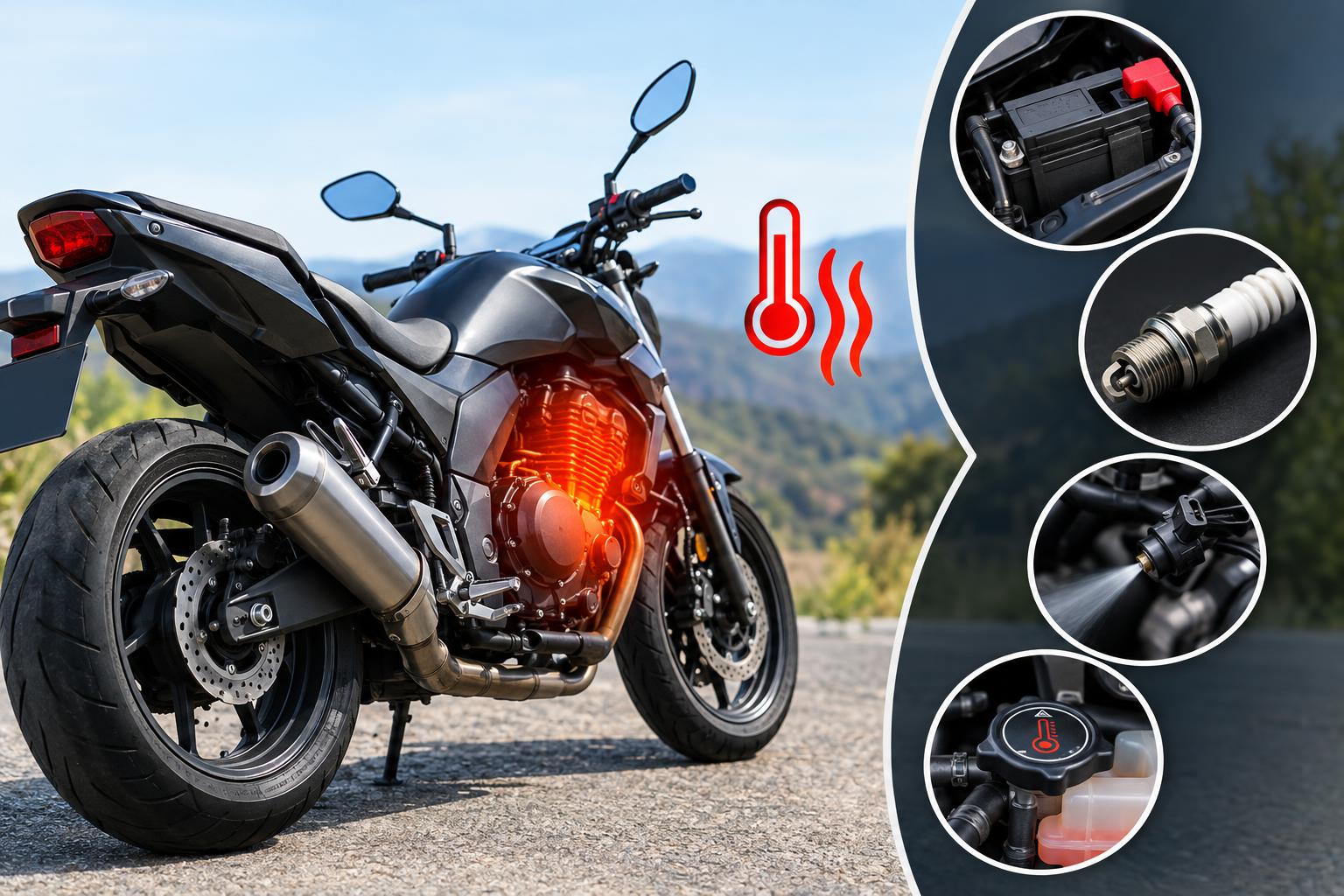
A motorcycle that starts normally when cold but refuses to restart after the engine is hot can be frustrating. The problem may appear after a fuel stop, a short break or slow riding in traffic. In many cases, heat affects an electrical, fuel or mechanical component that works normally at lower temperatures.
Rather than repeatedly pressing the starter, work through a few checks. Checking the basics first can help narrow down the issue and avoid unnecessary repairs. The way the motorcycle behaves when you press the starter can help narrow down the cause.
Tips to Troubleshoot a Motorcycle That Won’t Restart When Hot
Check Whether the Engine Cranks Normally
First, notice what happens when you press the starter button. If the engine turns slowly or you only hear a clicking sound, check the battery and starting system.
A weak battery may start the bike when the engine is cold but struggle when it is hot. Loose or dirty battery terminals, a faulty starter relay or a starter motor affected by heat can also cause slow cranking.
Make sure the battery terminals are clean and tight. If the problem continues, get the battery, charging system, and starter circuit checked.
Listen for the Fuel Pump
On a fuel-injected motorcycle, turn on the ignition and listen for a short buzzing sound from the fuel pump. If you do not hear the pump when the engine is hot, but it works again after the bike cools down, the fuel system may need to be checked.
A blocked fuel tank vent can also affect fuel flow. When pressure builds up inside the tank, the bike may have trouble restarting. If this happens often, have the fuel tank vent checked by a mechanic.
Check the Spark Plug and Ignition System
If the engine cranks at normal speed but does not start, ignition is another area to check. A worn or fouled spark plug can make starting more difficult. Excessive plug gap may also require more voltage for the spark to jump.
Heat can sometimes cause problems with the ignition coil, wiring, or sensors. A part may work normally when the engine is cold but stop working when it gets hot.
Check the spark plug as recommended in your motorcycle’s service schedule. If the problem continues, have the ignition system checked by a mechanic using proper diagnostic tools.
Consider Valve Clearance and Compression
Valve clearance can change as the engine heats up. If the clearance is not within the manufacturer’s recommended range, a valve may not close properly. This can lower engine compression and make the motorcycle harder to start when hot.
Checking and adjusting valve clearance requires the correct tools and specifications. It is usually best to have a mechanic do this job.
Other engine problems, such as worn piston rings or valves that do not seal properly, can also make the bike difficult to start.
Watch for Excessive Engine Heat
A hot-restart problem should not be confused with normal operating temperature. If the motorcycle is overheating, look for warning lights, unusually high temperature readings, coolant loss or a cooling fan that is not operating as expected.
Continuing to ride an overheating motorcycle may lead to further damage. Allow the engine to cool and have the cooling system checked.
Avoid Repeated Long Cranking
Avoid holding the starter button for too long, as this can put extra strain on the battery and starter motor. Follow the starting instructions in your motorcycle’s handbook and wait a few seconds between attempts.
If the motorcycle starts again after cooling down, note how long you had to wait. Sharing this information with a mechanic can help them identify the problem more easily.
Conclusion
If your motorcycle restarts easily when cold but struggles once the engine is hot, avoid assuming that one component is automatically responsible. Battery condition, fuel delivery, ignition performance, valve clearance and cooling system operation can all influence hot starting. A systematic inspection is usually the most effective approach.
Routine maintenance also plays an important role in keeping the engine operating as intended. For lubrication, Castrol engine oil can be an option where its viscosity grade and performance specifications match those recommended for your motorcycle.