


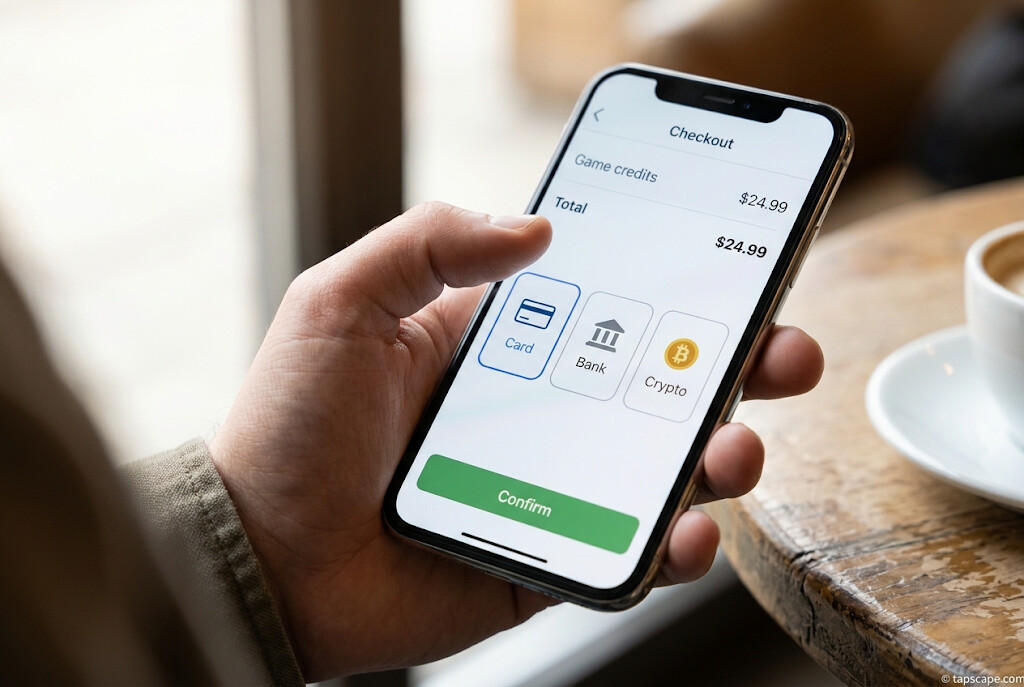
A monthly app subscription, a skin in a mobile game and a new laptop all end at the same checkout with the same row of buttons. They don’t suit the same button.
Every method gives up something. Cards are easy and come with a dispute process. Bank transfers are cheap for the shop and slow. Crypto is quick and final. Wallets mostly add speed on top of a card. Once you know what each one costs you, the choice takes a few seconds.
Match the method to the purchase
Start with what you are buying, not with what is already in your wallet. A recurring charge, a one-tap game item and a big order each call for something different.
Subscriptions. Use a card or a wallet. You can cancel, you can dispute a charge you don’t recognise, and the shop can retry a failed payment without chasing you.
One-off in-app and game purchases. A wallet is the easy pick. One tap, no card number typed into yet another form.
Account top-ups on crypto platforms. Different story. If you deposit at a crypto casino, the deposit is a transfer from your own wallet. You cover the network fee, the balance appears once the network confirms the transaction, and nothing can be reversed afterwards. That last part decides how careful you need to be.
Large orders. Bank transfer. Shops like it for big purchases because it avoids card fees. Allow a day or two for the money to arrive, and don’t count on the order shipping until it does. Double-check the account number before you confirm, because you are the one typing it in.
A quick check before you hit pay:
- Read the refund policy first. Some shops send money back only to the original payment method.
- Find out who covers the fee: you, the shop or the network.
- With crypto, match the coin and the network on both ends, then send a small test amount.
- Keep the receipt or transaction ID until the item shows up in your account.
What each method costs and how fast it moves
Cards work almost everywhere and settle within a day or two. The shop pays for that, typically 1.5–3.5% of the sale, and you may feel it in prices or a surcharge at checkout.
Bank transfers skip the card fee. The price is time. A transfer usually takes 1–3 business days to settle, while a card payment takes 24–48 hours.
Wallets such as Apple Pay or Google Pay are a faster way to use a card you already have. The card underneath still does the work, so fees and protections stay the same.
Crypto skips banks and card networks. A stablecoin transfer can land in minutes, on a Sunday or a bank holiday, and the fee depends on the network you choose. Some networks are cheap, some aren’t. Pick the wrong one and the money may never arrive.
Price swings matter too. The price of a coin like Bitcoin can shift while you are still deciding whether to pay. Stablecoins are tied to a currency such as the dollar, so the amount you send is the amount that counts. For everyday purchases that makes them the calmer option.
When something goes wrong
This is where the methods really differ.
A card gives you a way back. If a shop never delivers, you can ask your bank to reverse the payment through a chargeback. It takes paperwork and patience, but the route exists.
Bank transfers see fewer disputes overall. They are also the slowest option, so a mistake takes longer to show up.
Crypto payments generally can’t be reversed. There are no chargebacks, and a refund means the merchant has to send the money back by hand. If you typed a wrong address, there is nobody to call.
None of this makes crypto a bad choice. It makes it a choice for people who check details before sending. If you can’t picture yourself comparing a wallet address character by character, stay with a card.
A simple rule
Card or wallet for anything you might want to undo. Bank transfer for big, planned orders. Crypto when you accept that a payment is final and you know which network you are on.