


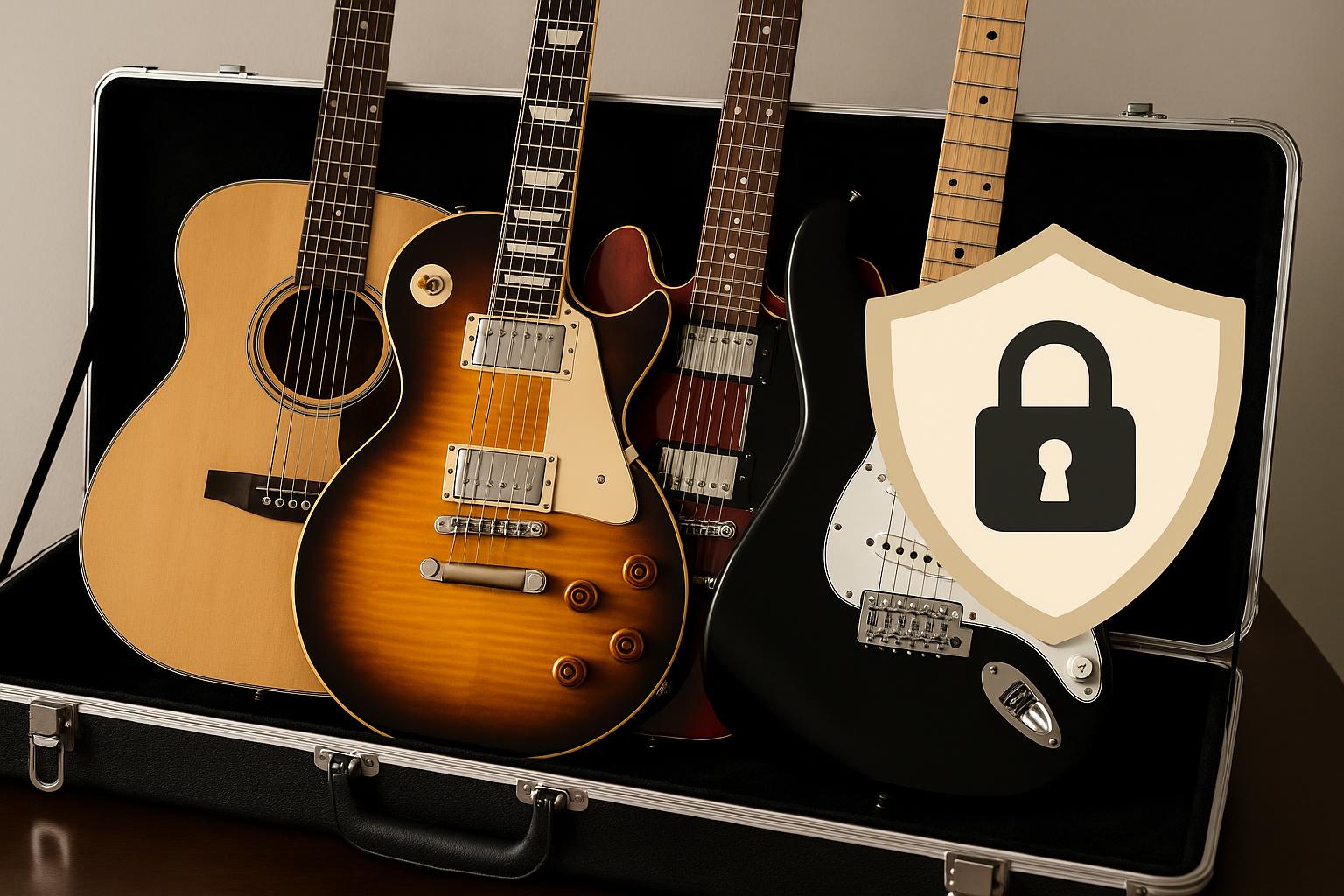
A guitar collection can represent years of careful buying, trading, and preservation. Several instruments may carry substantial financial and personal importance, particularly rare, vintage, or custom-built models. Standard household protection may not reflect their replacement cost, changing market value, or storage requirements. Insurance becomes especially important once instruments become valuable, numerous, or financially significant. A careful policy review helps owners identify gaps before theft, fire, water damage, or accidental loss causes lasting harm.
Why a Guitar Collection May Need Separate Protection
Contents
- Why a Guitar Collection May Need Separate Protection
- Homeowner Policies Can Have Limits
- Collection Value Requires Accurate Records
- Replacement Cost Is Not Always Purchase Price
- Storage Conditions Affect Risk
- Travel and Performance Need Attention
- Collectors Should Check Professional Use
- Appraisals Support High-Value Instruments
- Premiums Depend on More Than Price
- Conclusion
Questions often arise after several instruments enter a household. A standard home contract may list musical equipment as personal property, but special limits, deductibles, and exclusions can reduce payouts after theft or damage. Collectors therefore ask, do I need insurance for my guitar collection, before assuming existing protection reflects current values, storage conditions, travel, or paid performance. A policy review can expose gaps while records remain available.
Homeowner Policies Can Have Limits
Home insurance commonly protects personal belongings against listed risks, subject to contract terms. Musical instruments may face separate limits, especially after theft, flood, or accidental damage. Business property and items kept outside the residence may receive narrower protection. Owners should examine deductibles, exclusions, theft conditions, off-site provisions, and settlement language before relying on a general household contract.
Collection Value Requires Accurate Records
A detailed inventory gives both parties a reliable starting point during valuation or claim review. Each entry should identify the maker, model, serial number, production year, condition, purchase date, and paid amount. Current photographs should show the body, neck, headstock, hardware, and existing marks. Receipts, appraisals, repair invoices, and sale listings can strengthen ownership evidence when original documents have disappeared.
Replacement Cost Is Not Always Purchase Price
Market prices change with scarcity, demand, condition, and collector interest. A guitar purchased for $3,000 may cost considerably more to replace several years later. Vintage instruments can also carry premiums that depreciation formulas miss. Owners should determine whether a contract pays actual cash value, agreed value, or replacement cost. Each method produces a different result after a covered loss.
Storage Conditions Affect Risk
Temperature swings, excess moisture, direct sunlight, and weak support can damage wood, finishes, electronics, and necks. Insurance does not correct poor care or unsafe storage. Hard cases, stable humidity, raised shelving, dependable locks, and working smoke detectors reduce preventable harm. A secure room also limits exposure to household accidents, visitors, pets, and unauthorized access.
Travel and Performance Need Attention
An instrument may leave home for rehearsals, concerts, lessons, studios, or repairs. Some contracts restrict protection during transportation or exclude equipment used for paid work. Checked baggage creates additional handling risks, while vehicle storage introduces heat, theft, and impact concerns. Owners should confirm geographic limits, transit provisions, temporary storage rules, and protection for equipment left inside vehicles.
Collectors Should Check Professional Use
Musicians who earn income from performances, teaching, recording, or session work may need different protection. Household policies can exclude business property or restrict payment for commercial losses. Separate musical instrument insurance may address professional use, along with amplifiers, cases, pedals, and other related equipment. Accurate information about income-producing activity helps prevent disputes during claim evaluation.
Appraisals Support High-Value Instruments
An appraisal can document condition, authenticity, provenance, and current market value. This evidence matters for rare, modified, signed, or historically important guitars. A qualified specialist should explain the valuation method and provide a dated report. Updated assessments may help after major price changes, restoration work, or acquisitions that materially increase the collection’s total value.
Premiums Depend on More Than Price
Insurance cost may reflect total value, location, security measures, claim history, storage, travel, and professional use. A higher deductible can lower the premium, although the owner pays more after a covered event. Combining every instrument under one estimate may conceal important differences. A written comparison of limits, exclusions, deductibles, valuation methods, and eligibility requirements supports sound decision-making.
Conclusion
A guitar collection deserves an insurance review once its combined value, rarity, or use exceeds ordinary household assumptions. Owners can begin by listing each instrument, gathering proof of ownership, checking contract limits, and requesting written answers about travel and professional activity. Proper storage remains essential, even with protection in place. Careful preparation gives collectors greater confidence that their policy can respond fairly after an unexpected loss.