


Table of Contents
1. The Foundation of Safety and Progression
2. Landing Surfaces and the Science of Impact Absorption
3. Balance Beams for Home and Studio Training
4. The Role of Training Bars in Developing Upper Body Strength
5. Vaulting and Power Development Tools
6. Specialized Shapes and Skill Trainers
7. Longevity and Maintenance of Professional Gear
8. Integrating Equipment into a Holistic Training Plan
9. Elevating the Home Practice Environment
The Foundation of Safety and Progression
Contents
- The Foundation of Safety and Progression
- Landing Surfaces and the Science of Impact Absorption
- Balance Beams for Home and Studio Training
- The Role of Training Bars in Developing Upper Body Strength
- Vaulting and Power Development Tools
- Specialized Shapes and Skill Trainers
- Longevity and Maintenance of Professional Gear
- Integrating Equipment into a Holistic Training Plan
- Elevating the Home Practice Environment
Selecting gymnastics equipment is a significant commitment that bridges the gap between a recreational hobby and a serious athletic pursuit. For parents and coaches, the priority remains centered on safety, durability, and the specific developmental needs of the athlete. Whether a gymnast is just beginning to explore forward rolls or is perfecting a complex series of tumbling passes, the quality of the gear under their feet dictates their confidence and their physical longevity in the sport.
High quality equipment acts as a silent coach. It provides the necessary feedback for the athlete to adjust their form while offering a protective margin for error. When considering From Mats to Beams: Choosing the Right Training Equipment for Your Gymnast, the primary goal is to mirror the standards found in professional competitive environments. Choosing Elite Gymnastics equipment ensures that the transition from a home practice space to a sanctioned competition floor is seamless and safe.
Landing Surfaces and the Science of Impact Absorption
The most critical investment for any gymnast is the landing surface. Gymnastics is a high impact sport that places repetitive stress on the ankles, knees, and spine. Not all foam is created equal, and understanding the density and composition of mats is essential for injury prevention.
1. Folding Panel Mats: These are the workhorses of any gym. Typically made of high density cross linked polyethylene foam, they provide a firm surface for tumbling while being thin enough to maintain stability. They should be at least two inches thick for standard home use.
2. Crash Pads and Pit Mats: For athletes practicing new aerial skills or dismounts, a thicker landing zone is required. These mats utilize softer polyurethane foam to displace energy over a larger surface area, significantly reducing the force of impact.
3. Air Tracks and Inflatable Mats: Modern technology has introduced pressurized air surfaces that allow for higher repetitions with less strain on the joints. These are excellent for power development and learning the mechanics of a flip without the harshness of a hard floor.
When selecting a mat, consider the compression deflection rating. A mat that is too soft will bottom out, causing the gymnast to hit the hard floor beneath. Conversely, a mat that is too hard will not absorb enough shock. Finding the middle ground is key to long term athletic health.
Balance Beams for Home and Studio Training
The balance beam is often the most intimidating piece of equipment for a developing gymnast. Moving from the floor to a raised surface requires a psychological shift as much as a physical one. To facilitate this transition, equipment should be introduced in stages.
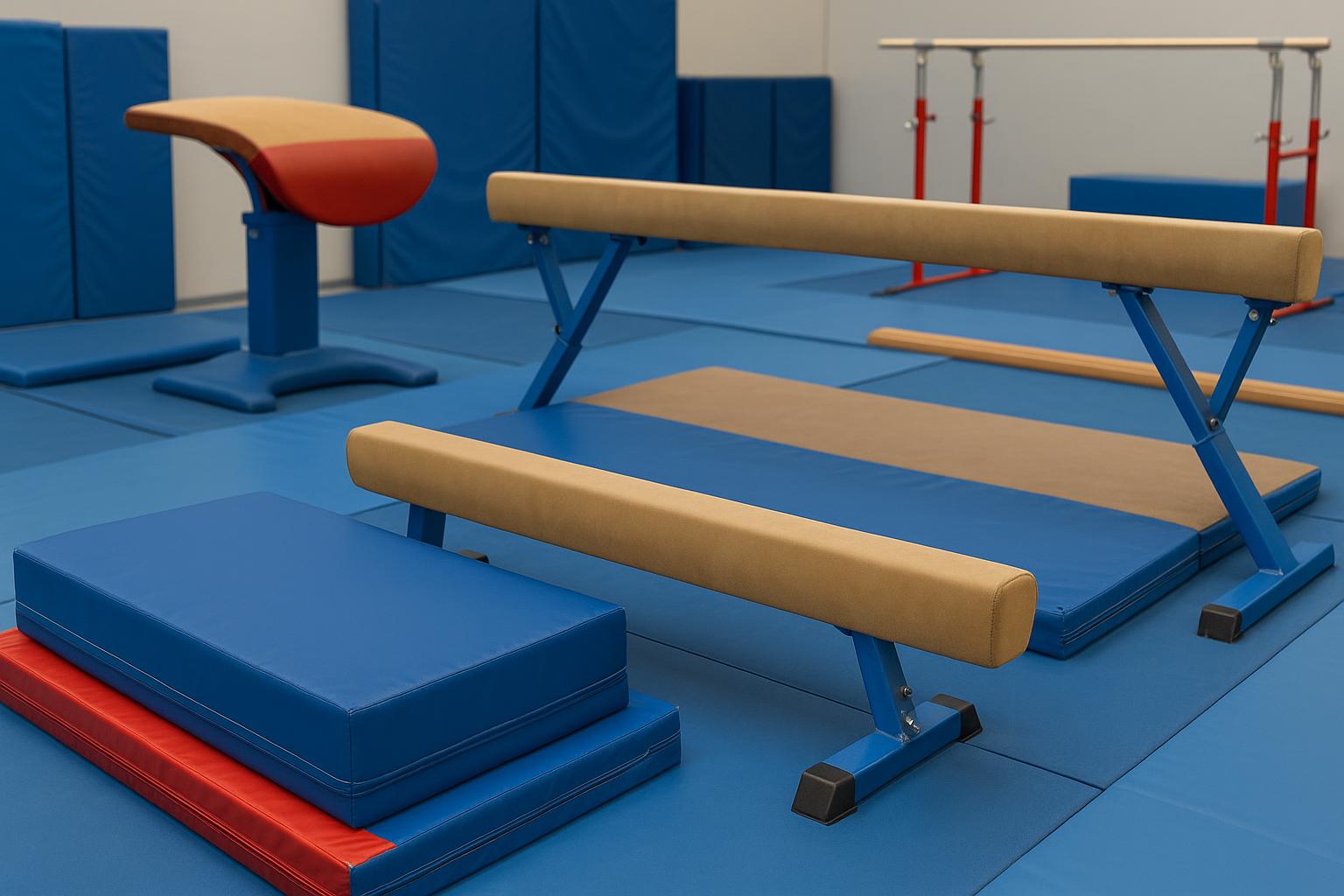
1. Floor Beams: These sit directly on the ground or are only a few inches high. They allow the gymnast to practice foot placement and turns without the fear of falling. Many floor beams feature the same synthetic suede covering found on competition beams to provide the necessary grip.
2. Low Profile Training Beams: These are usually twelve to eighteen inches off the ground. They are high enough to require a proper mount and dismount but low enough to remain safe for unspotted practice.
3. Competition Height Beams: These are for advanced athletes who have mastered their spatial awareness. High quality beams from Elite Gymnastics feature internal padding and a steel or wood core that prevents bowing or shaking during high impact landings.
The texture of the beam is also vital. A beam that is too slippery can lead to dangerous falls, while one that is too rough can cause skin abrasions. Look for heavy duty synthetic suede that mimics the friction of professional competition standards.
The Role of Training Bars in Developing Upper Body Strength
Bar work requires immense grip strength and core stability. For home use, horizontal bars must be sturdy enough to prevent wobbling, which can lead to a loss of rhythm or a dangerous fall.
1. Kip Bars: Designed for younger or lighter gymnasts, these are perfect for practicing basic swings, kips, and casts. They usually feature a wood or fiberglass rail.
2. Junior Training Bars: These often include a wider base and additional bracing. They are essential for gymnasts who are starting to perform more aggressive movements that generate significant lateral force.
3. Multi Purpose Stations: Some setups allow for the attachment of rings or climbing ropes, which are excellent for building the functional strength required to excel on the uneven bars or high bar.
Stability is the most important factor when choosing a bar. If the equipment moves or slides during a giant or a clear hip circle, the gymnast will lose confidence. Always check the weight limit and the footprint of the bar to ensure it fits the space and the athlete.
Vaulting and Power Development Tools
Vaulting is about explosive power and precise timing. While a full vault table is rarely practical for a home setting, the components that lead to a successful vault can be practiced with the right tools.
1. Springboards and Power Steps: A high quality springboard helps a gymnast understand how to convert horizontal velocity into vertical lift. For younger athletes, foam springboards offer a safer way to learn the punch technique.
2. Vault Blocks: These modular foam blocks can be stacked to different heights. They allow gymnasts to practice handspring entries and blocking techniques in a controlled environment.
3. Run Up Strips: Having a dedicated, non slip surface for the approach is crucial. It ensures the gymnast can reach maximum speed without the risk of slipping on a hardwood or carpeted floor.
Using professional grade Elite Gymnastics vaulting trainers allows an athlete to focus on their body tension and shoulder block without worrying about the stability of the equipment.
Specialized Shapes and Skill Trainers
Beyond the standard apparatuses, specialized foam shapes play a massive role in skill acquisition. These tools break down complex movements into manageable parts.
1. Octagons and Barrels: These are used to teach back handsprings and front handsprings. They provide the necessary support for the gymnast to feel the arch and hollow positions of the move.
2. Incline Mats or Cheese Mats: These are perhaps the most versatile tools in a gym. They use gravity to help a gymnast complete a roll or a walkover, making them indispensable for beginners.
3. Back Handspring Trainers: These are uniquely shaped to roll with the gymnast, providing support through the entire arc of the skill and returning to the starting position automatically.
These shapes allow for high repetition training, which is the only way to build the muscle memory required for advanced gymnastics. By using these aids, gymnasts can perfect their form before attempting the skill on a flat surface.
Longevity and Maintenance of Professional Gear
Investing in gymnastics equipment is an investment in the athlete's future. To ensure the gear lasts for years, proper maintenance is required.
1. Cleaning: Suede beams should be brushed regularly to maintain their nap and grip. Vinyl mats should be wiped down with non toxic disinfectants to prevent the buildup of bacteria and sweat.
2. Storage: Foam equipment should be stored in a climate controlled environment. Extreme heat can cause foam to break down and lose its resiliency, while extreme cold can make it brittle.
3. Inspection: Regularly check the bolts on bars and the integrity of the seams on mats. Any sign of wear should be addressed immediately to prevent accidents.
Choosing reputable brands like Elite Gymnastics means you are starting with materials designed to withstand the rigors of daily training. High density foams and heavy duty vinyl covers are standard in professional grade equipment, ensuring that the gear grows with the gymnast.
Integrating Equipment into a Holistic Training Plan
Equipment is only as effective as the training program it supports. A well rounded home or studio setup should encourage a balance of strength, flexibility, and skill work.
1. Strength Zone: Dedicate an area for conditioning. This might include a small mat, some light weights, and resistance bands.
2. Flexibility Zone: Use mats and blocks to facilitate deep stretching and oversplits.
3. Skill Zone: This is where the beams, bars, and specialized shapes are located.
By organizing the space effectively, the gymnast can move through a structured workout that mimics a professional practice session. This discipline is what separates casual participants from competitive athletes.
Elevating the Home Practice Environment
Creating a space for a gymnast is about more than just buying gear; it is about fostering an environment of excellence. The right equipment gives an athlete the freedom to fail safely, which is a prerequisite for eventual success. When a gymnast feels supported by their environment, they are more likely to take the calculated risks necessary to learn new skills.
The transition from mats to beams represents a significant milestone in an athlete's journey. By selecting the right training equipment for your gymnast, you are providing them with the tools to build strength, coordination, and resilience. Whether they are training on an Elite Gymnastics beam or practicing their first cartwheel on a folding mat, the quality of their equipment will be a defining factor in their athletic development. Focus on quality, prioritize safety, and watch as your gymnast reaches new heights with confidence and grace.