


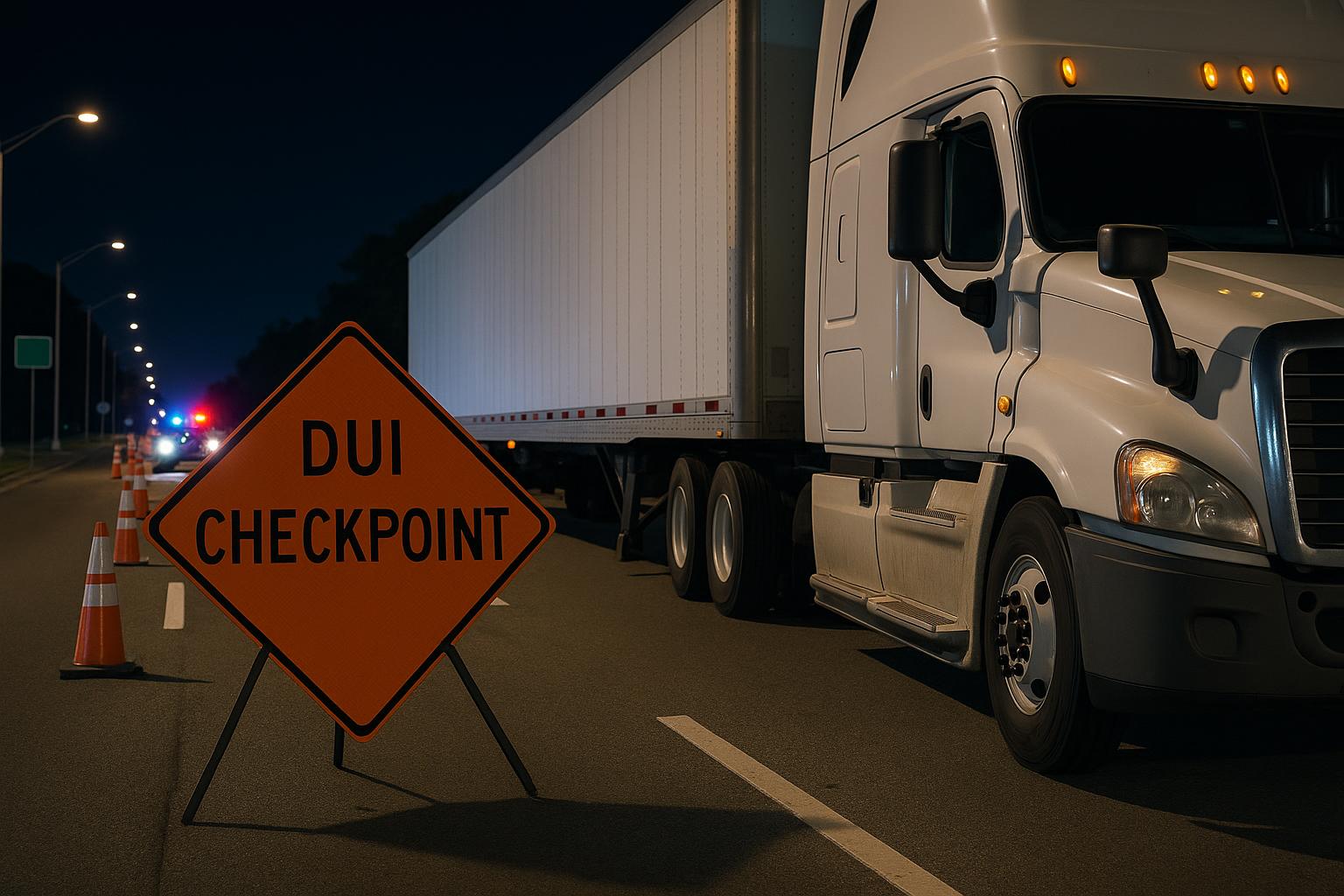
Commercial drivers in Florida operate under stricter safety expectations because of the size and risk associated with their vehicles. DUI checkpoints are used across the state to identify impaired drivers and promote road safety. These checkpoints apply equally to commercial drivers, but the standards and consequences are more demanding due to the responsibilities tied to holding a commercial driver’s license.
In Florida, sobriety checkpoints must follow specific procedures to remain lawful and consistent. Understanding DUI checkpoint laws in Florida is important for commercial drivers because these rules define how stops are conducted and what officers are permitted to do. Drivers are expected to cooperate with lawful instructions, but they also retain certain rights during these interactions.
Key Differences For Commercial Drivers
Contents
Lower BAC Threshold
Commercial drivers are held to a stricter blood alcohol concentration limit of 0.04% while operating a commercial vehicle. This reduced threshold means that even a small amount of alcohol can lead to a violation. A DUI offense, whether it occurs on duty or off duty, can still affect a commercial driver’s ability to maintain their license and continue working.
Enhanced Penalties
Penalties for commercial drivers tend to be more severe than those for standard drivers. A suspension can immediately impact employment, as many positions require an active commercial license. Repeat offenses can lead to longer disqualification periods, and employers may also take additional action based on internal policies.
Increased Scrutiny At Checkpoints
During a DUI checkpoint, commercial drivers may face closer inspection compared to other motorists. Officers may review documentation more carefully, including logbooks and compliance records. Vehicles may also be directed to secondary inspection areas, where further checks are conducted to ensure all regulations are being followed.
What To Expect At A DUI Checkpoint
Standard Procedures
DUI checkpoints in Florida follow a structured pattern to ensure fairness. Vehicles are typically stopped based on a predetermined system rather than random selection. Officers usually request a driver’s license, registration, and may ask brief questions to assess awareness and sobriety.
Rights And Responsibilities
Commercial drivers must provide valid identification and comply with lawful requests during a checkpoint stop. While basic cooperation is required, drivers are not obligated to answer every question beyond identification. Maintaining a calm and respectful approach helps keep the interaction efficient and professional.
Possible Outcomes
If no signs of impairment are observed, drivers are allowed to continue without delay. However, if an officer detects possible impairment, further testing, such as field sobriety evaluations, may be requested. Additional steps may follow if there is sufficient cause to proceed.
At this stage, it becomes clear that DUI checkpoint laws in Florida are designed to balance enforcement with driver protections. Commercial drivers must understand both their obligations and their rights to handle these situations properly.
Practical Tips For Commercial Drivers
Acting quickly after a legal issue helps protect both driving privileges and career stability. Commercial drivers should look for attorneys with experience in DUI and commercial vehicle regulations, as these cases involve stricter rules. Checking credentials, past case experience, and client reviews can help narrow down reliable options.
Clear communication should guide the decision. Choose an attorney who explains the process in simple terms and provides realistic expectations. Early consultation allows more time to review details, prepare a defense, and handle deadlines properly, which supports a more controlled and organized legal process.