


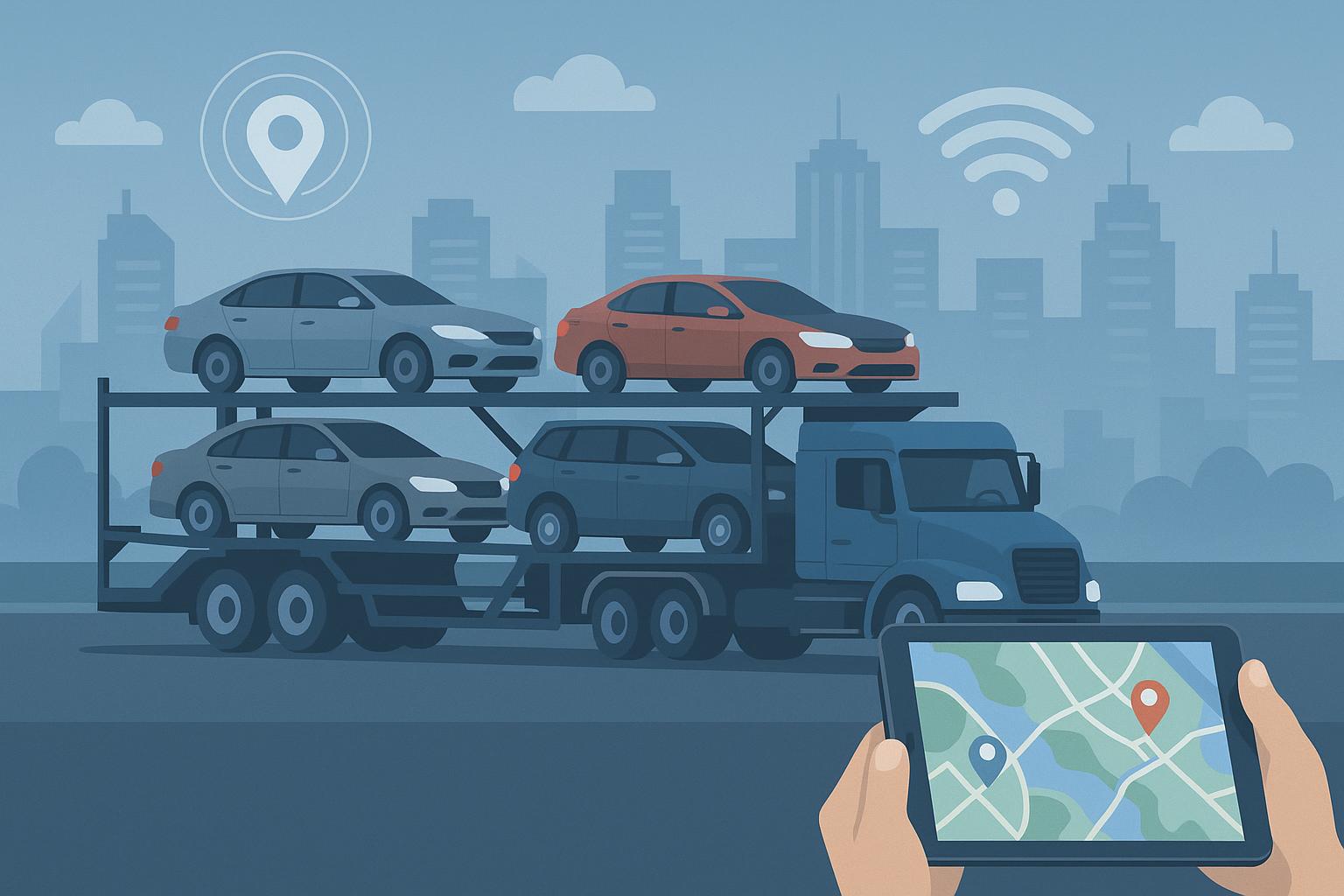
Ask someone to picture the auto transport industry and they’ll probably imagine something out of the 1990s: a guy with a clipboard, a flatbed truck, and a handshake deal. That image hasn’t been accurate for a while. Behind the scenes, auto shipping has quietly become one of the more data-driven corners of logistics — and most of the technology doing the heavy lifting is invisible to the person just trying to get their car from Ohio to Arizona.
Here’s what’s actually changed.
Real-Time GPS Tracking Replaced the “Trust Me” Model
Contents
For most of the industry’s history, once your car was on a carrier, it was effectively a black box until it showed up. You’d call for updates, get a rough estimate, and wait. GPS-integrated fleet tracking changed that fundamentally. Modern carriers can share a live location feed, giving customers the same kind of tracking experience they’d expect from a package delivery, not a decades-old freight model.
This isn’t just a convenience feature — it’s a liability and accountability tool. Carriers can prove exactly where a vehicle was at any point in the route, which matters when disputes come up around delays or damage claims. It’s turned what used to be an opaque process into something closer to auditable.
Dispatch Software Solved a Genuinely Hard Optimization Problem
Matching available carrier capacity to shipping demand across all 50 states, in both directions, with fluctuating fuel costs and seasonal demand spikes, is a legitimately complex routing problem — closer to airline logistics than most people assume. Dispatch and load-matching platforms now handle this algorithmically, matching a car headed from Texas to California with a carrier that already has space on that route, rather than sending an empty truck.
The practical effect is fewer “deadhead” miles (a carrier driving empty), which brings costs down and shortens pickup windows. It’s the same logic that improved trucking and freight broadly, applied to a niche that was slower to digitize.
Instant Quoting Replaced the Multi-Day Phone Tag
Getting an auto transport quote used to mean calling multiple brokers, describing your vehicle and route, and waiting for callbacks — sometimes over several days. Pricing algorithms that factor in distance, vehicle type, route demand, and current fuel costs now generate quotes in the time it takes to fill out a web form. Companies like Mile Auto Transport build this directly into their booking flow, which has effectively compressed a multi-day sales process into a couple of minutes.
This matters more than it might sound like. Faster quoting means people comparison-shop more easily, which has pushed pricing transparency across the whole industry — a pattern that shows up whenever a slow, relationship-based industry gets a digital front end.
Digital Inspection Reports Are Replacing the Paper Checklist
Vehicle condition reports at pickup and drop-off used to mean a paper form and a handshake. Now it’s increasingly photo- and video-based digital inspection, timestamped and geotagged, creating a much cleaner record if there’s ever a dispute about pre-existing damage. This is a small change on paper, but it’s one of the more consequential ones for customer trust — it replaces “he said, she said” with an actual evidence trail. It’s especially relevant for door-to-door car shipping, where the vehicle changes hands directly between the owner and a driver rather than passing through a depot with its own staff and paperwork.
What This Means Going Forward
None of this is flashy technology — there’s no AI headline moment here, just steady digitization of a process that used to run on phone calls and paper. But it’s a useful reminder that “boring” industries are often where digitization has the most room to run. Logistics, freight, and transport sat untouched by consumer-facing tech for a long time precisely because the improvements aren’t visible to most people — they show up as a faster quote, a live tracking link, or a cleaner damage claim rather than a new app to download.
The auto transport industry is a decent case study in what happens when that kind of quiet infrastructure work finally catches up: not a disruption story, just an industry getting measurably more efficient, one unglamorous system at a time.