


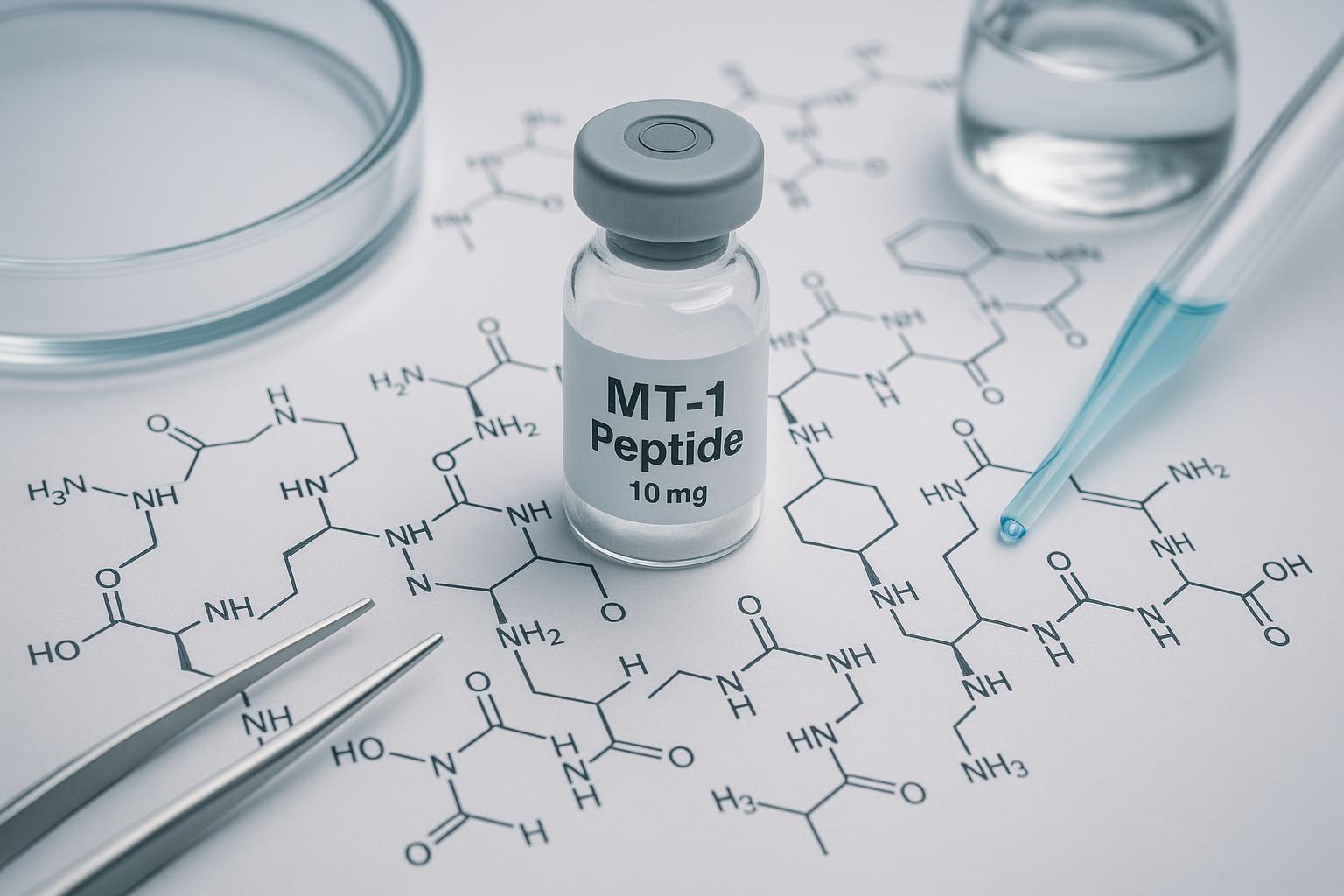
Evaluating an experimental peptide involves multiple stages of scientific investigation. Researchers do not simply examine whether a compound produces a particular biological response. They also study its identity, stability, formulation, molecular interactions, and reproducibility.
MT-1 provides an example of how these different research questions can come together.
Compound Identity
Contents
The first step is establishing what the research compound actually is.
Scientists may examine molecular structure, sequence information, chemical characteristics, and analytical data.
Accurate identification is essential because research conclusions depend on knowing exactly which compound is being studied.
Purity and Analytical Testing
Purity is another important consideration.
Analytical techniques can be used to identify impurities, degradation products, or variations between batches.
For research purposes, documented analytical testing helps scientists understand the material they are working with and improve experimental reproducibility.
Stability
Peptides can be sensitive to environmental conditions.
Researchers may therefore study how temperature, pH, moisture, light, and storage conditions influence a peptide over time.
Stability testing can help determine whether a preparation maintains its expected characteristics under defined conditions.
Formulation
The formulation is also important, especially when MT-1 is presented in a nasal format.
An MT1 spray may contain the peptide alongside other formulation components that determine physical properties such as pH, viscosity, and stability.
Researchers should evaluate the complete preparation rather than considering only the active peptide.
Nasal Delivery Research
The nasal cavity has unique physiological characteristics, including mucus production and mucociliary clearance.
Researchers studying an MT1 nasal formulation may therefore investigate how the preparation interacts with this environment.
The research questions can include residence time, formulation stability, and other characteristics relevant to the delivery system.
Evidence and Experimental Models
Researchers also consider the model used to evaluate the compound.
In-vitro experiments, animal studies, and human clinical studies answer different questions.
A result from one model cannot automatically be transferred to another.
This distinction is especially important for experimental peptides that have limited clinical evidence.
Reviewing an MT-1 Research Product
Researchers interested in available formulations can review the Nasal Spray to see how MT-1 fits within a wider range of nasal research products.
For specific information about the formulation, the MT-1 Nasal Spray product page provides product-level details.
Why Research Context Matters
Online discussions about peptides can sometimes combine scientific research with commercial or cosmetic claims.
Researchers should separate those categories carefully.
The strongest conclusions come from peer-reviewed evidence, appropriate experimental controls, analytical data, and reproducible methodology.
Conclusion
When researchers evaluate MT-1 peptide, they consider far more than biological activity alone.
Compound identity, purity, stability, formulation, delivery characteristics, and experimental design all contribute to the overall research picture.
A careful evaluation of these factors helps researchers understand both what is currently known about MT-1 and which questions still require further investigation.