


The internet in Iran has never been more limited than it is at the moment. The internet traffic in Iran has decreased by almost 98% since the war started due to a countrywide blackout and has been declared one of the worst internet restrictions that has ever occurred.
For researchers, journalists, businesses, and diaspora communities interested in accessing and/or monitoring Persian websites, the state of affairs has made accessing Iranian IPs more crucial than ever.
This guide discusses the way Iran’s proxy servers operate and the area they have the greatest impact on in 2026.
What Are Iran Proxy Servers
Contents
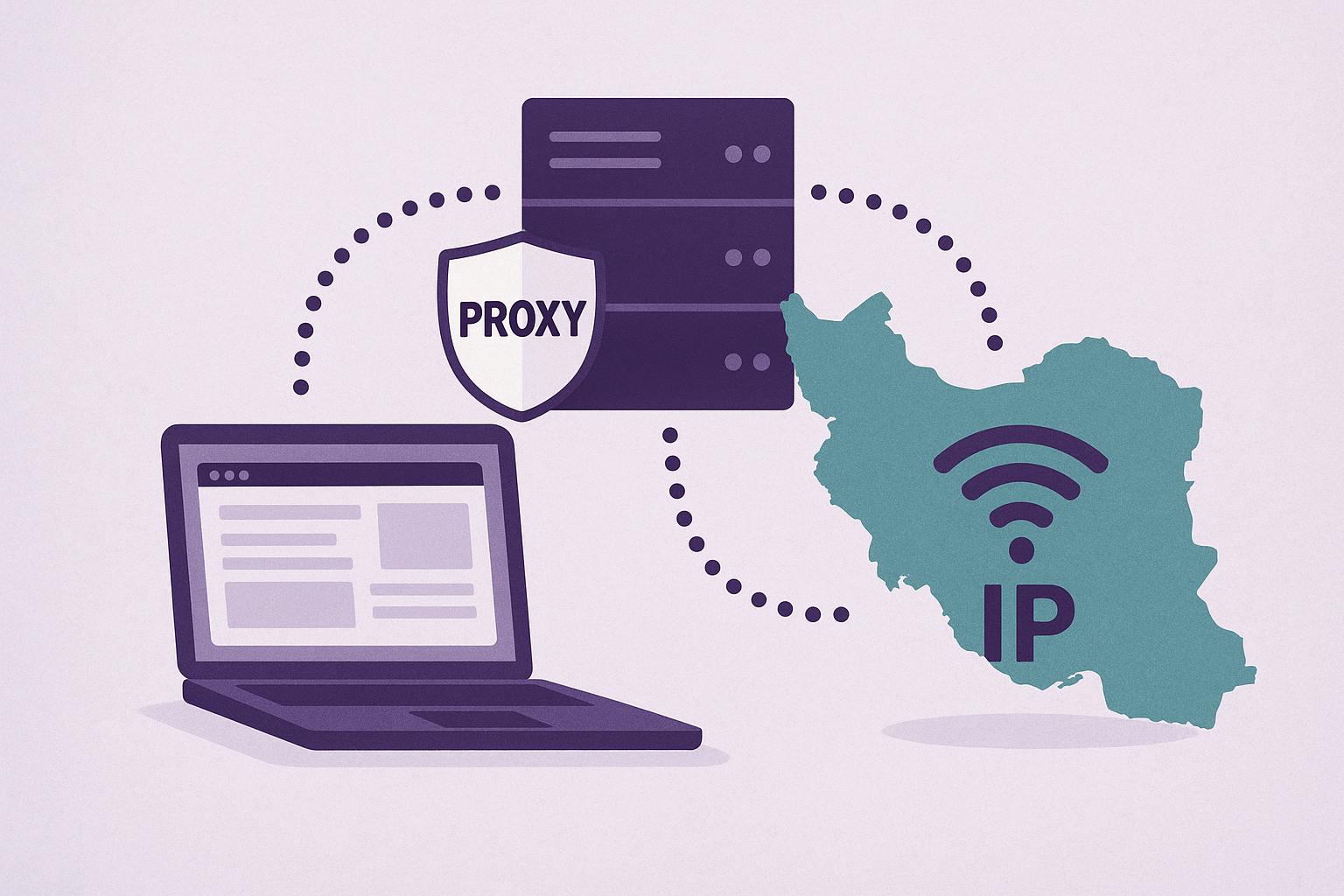
An Iran proxy server is a server located in Iran that uses an Iranian IP address to direct your internet traffic. Internet websites and platforms see the proxy IP instead of your actual IP, and this makes it look like you are browsing within the country.
To any person who attempts to visit the Persian web platforms, track what is being shown locally, or gather information in the region, only a local Iranian IP will help to see what is really being shown to users within Iran.
Without it, you are blocked or get generic results that do not represent the local experience.
Why Local Iranian IP Access Matters
Using the Persian websites without the local Iranian IP will provide you with an incomplete and sometimes inaccurate view of the websites. This is why it is important to have local access.
- Geo-blocked sites: There are numerous sites and services in Iran that are restricted in the country. A local IP is the only way in.
- Relevant local information: Prices, news, search results and platform content are all location-specific. Local Iranian IPs will display to you what is actually seen by the users within the country.
- Accuracy of the market research: When businesses and researchers gather data in Iran, they require local IPs in order to receive a response that is based on the actual local market and not an international version.
- Journalism and monitoring: Journalists and analysts who monitor internet access, censorship of content, and access to the platform within Iran require local IPs to do so correctly.
- Diaspora access: Diasporic Iranians use local Iranian proxies to access local sites, local news, and services that are unavailable outside the country.
Using Iran Proxies to Access Persian Web Platforms
Iran has a very specific digital ecosystem that is mostly disconnected from the global web. This is where local Iranian IPs will prove the difference.
Local E-Commerce Platforms
Websites such as Digikala and Torob are the Iranian version of Amazon. To track the prices, availability and market trends in these sites, a local IP is needed to get the right results.
Persian News and Media
Local news channels offer news that is specific to Iranian viewers. Local IP will allow you to see what people within the country are actually reading and watching.
Regional Social Networks
The Iranian social sites that are present on the Iranian internet network can only be accessed via local IPs in their entirety.
Search Engine Results
The results of the search depend mostly on location. A local IP returns accurate regional results for SEO research and content monitoring.
Streaming and Entertainment
Iranian streaming sites such as Filimo and Namava are limited to Iranian audiences. Local proxies are the only way to access their full content libraries from outside the country.
Data Collection and Market Research in Iran
Iran is an underexplored market for businesses and researchers. Without appropriate infrastructure, local data is difficult to gather, and local Iranian IP is the place to begin.
Price Monitoring
The price of Iranian e-commerce platforms is updated on a regular basis. To gather proper local pricing information, it is necessary to use IPs that display the results that are actually seen by a real Iranian user, and not the version that is geo-blocked or redirected.
Competitor Research
Companies that are already in the Iranian market or planning to enter the market must monitor the activities of the local competitors. Local Iranian IPs can be used to access product listings, pricing strategies and promotion activity.
SEO and Content Monitoring
Following the ranking of Iranian search results, the performance of the keywords, and knowing what local audiences are exposed to, all need the use of geo-targeted Iranian IPs.
Sentiment and Trend Analysis
The review sites, social media, and forums in the Persian language hold important market indications. A scale-based access and data collection would need proxies that would withstand local platform limitations.
Benefits of Iranian IP Addresses
Access to a local Iranian IP exposes opportunities that are not available with a foreign address.
- Current data: Local IPs are those that provide accurate data, based on what the actual users within Iran are seeing and not blocked sites, redirects, or generic global versions of the content.
- Continuous access to the platform: Geo-blocked Iranian platforms and services are made completely available. No workarounds, no biased entry.
- Consistent monitoring of markets: Local IPs are the only ones that can help monitor pricing, availability of products, and activity of competitors accurately on the local platforms. A good Persian proxy will ensure that monitoring is consistent and dependable.
- Higher quality of research: Journalists, analysts, and researchers will have a better insight into what is actually going on within the Iranian digital environment – what is available, how it is censored, and how the platforms behave.
- Stable session behavior: Iranian websites consider local IPs as trusted traffic. Fewer blocks, fewer CAPTCHA and more stable sessions than foreign addresses.
Thoughts
Iran’s internet has always been complicated. Having the right proxy setup is important for anyone who wants to keep an eye on local platforms, gather data from the area, or see what’s going on in the country’s online space.
Local Iranian IPs get around the restrictions, give correct results, and keep sessions stable on sites that normally block foreign traffic.
In case Iran is one of the markets you have to cover in 2026, you should start with your network infrastructure. Everything else depends on it.