


Cordless innovation brings automation to one of home ownership’s most time-consuming tasks
The smart home revolution continues expanding beyond thermostats and security cameras into unexpected territory: residential pool maintenance. Battery-powered robotic cleaners with intelligent navigation systems now represent the fastest-growing segment of automated home care technology, signaling a broader shift in how homeowners approach routine maintenance.
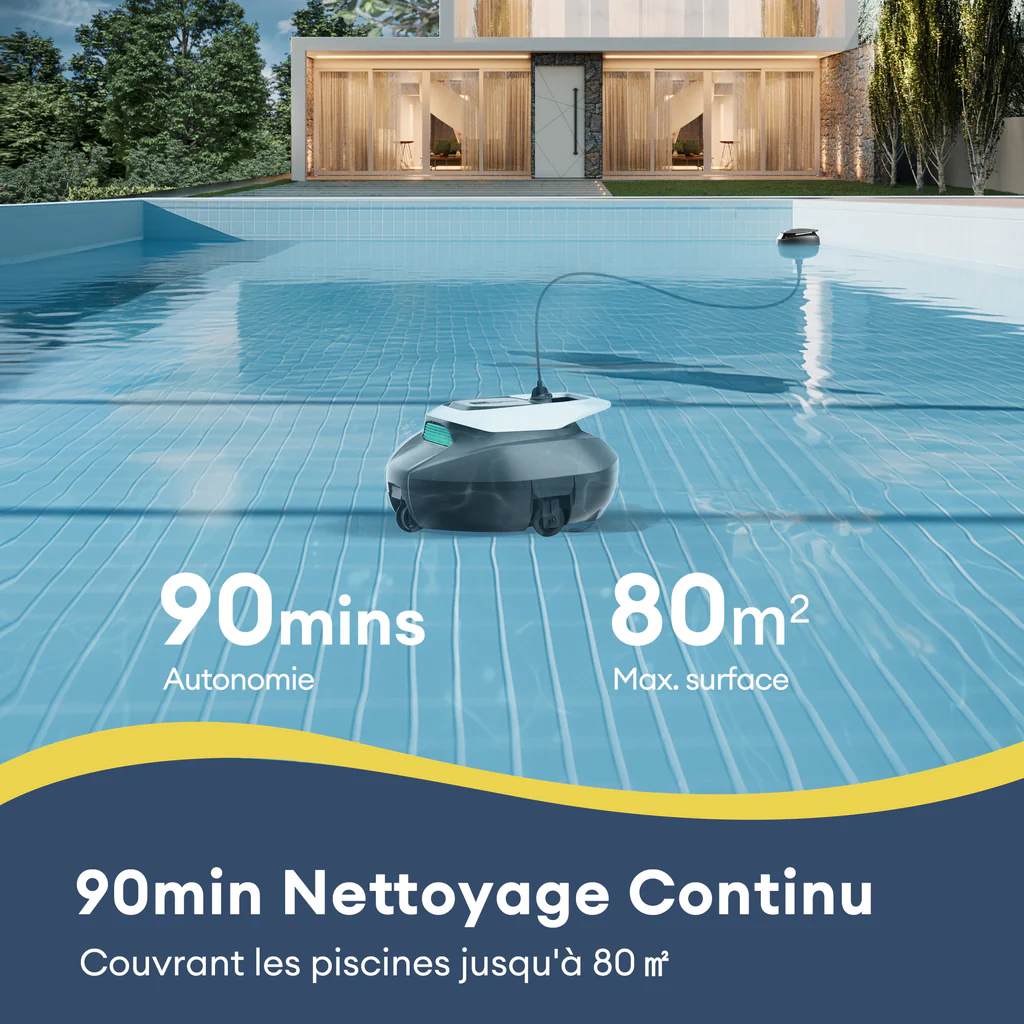
Traditional pool cleaning robots, tethered to long power cables, have existed for decades. But the latest generation of wireless devices eliminates the cable management headaches that plagued earlier systems while introducing smartphone-level computing power to solve spatial navigation challenges. The Ultenic Pooleco 10 exemplifies this evolution, packing lithium-ion battery technology and smart mapping algorithms into an 3.25kg package.
The technological leap mirrors broader trends in consumer robotics. Where first-generation devices followed random patterns, current models employ systematic navigation that learns pool layouts over multiple cleaning cycles. This approach—familiar from robotic vacuums—translates surprisingly well to underwater environments. Unlike floor cleaners that navigate visible obstacles, pool robots must account for varying depths, wall angles, and underwater currents while maintaining consistent suction power.
Battery management presents particular engineering challenges in this application. Water resistance requirements necessitate sealed enclosures that trap heat, while lithium-ion cells perform best within narrow temperature ranges. Successful wireless pool robots balance power delivery against thermal management, typically achieving 90-minute run times sufficient for residential pools up to 100㎡ feet.
The business case for wireless pool maintenance technology extends beyond consumer convenience. Property management companies overseeing multiple residential pools report labor cost reductions approaching 60% after deploying automated systems. The devices handle routine cleaning while staff focus on chemical balancing and equipment maintenance—tasks requiring human expertise.
Environmental considerations drive adoption as well. Modern pool robots reduce chemical usage by 30-40% through more frequent, thorough cleaning that prevents algae establishment. This efficiency aligns with growing consumer preference for eco-conscious home technology. Energy consumption per cleaning cycle remains minimal compared to continuous filtration systems, further supporting sustainability claims.
Market data suggests this technology is reaching mainstream acceptance. Industry analysts project cordless pool robots will capture 65% of the residential pool cleaning market by 2027, up from roughly 15% in 2023. Price reductions driven by battery cost declines and manufacturing scale have positioned these devices competitively against traditional systems.
For consumers evaluating options, the technology has matured beyond early-adopter territory. Reliability improvements mean current models typically deliver 3-5 years of service with minimal maintenance—primarily filter cleaning and occasional battery replacement. The user experience has simplified to “drop in water, press start”—interaction patterns that mirror successful consumer IoT devices.
Integration possibilities remain largely untapped. While current devices operate as standalone units, future iterations could coordinate with pool chemistry sensors, integrate with smart home platforms, or optimize cleaning schedules based on usage patterns detected through other connected devices. These potential developments suggest pool maintenance is becoming another data point in the connected home ecosystem.
The transformation of pool cleaning from manual labor to automated task completion represents more than incremental improvement—it’s another example of how thoughtfully applied technology redefines established routines. As consumer robotics continue maturing, expect similar innovation in other areas where repetitive physical tasks meet engineering opportunity.