


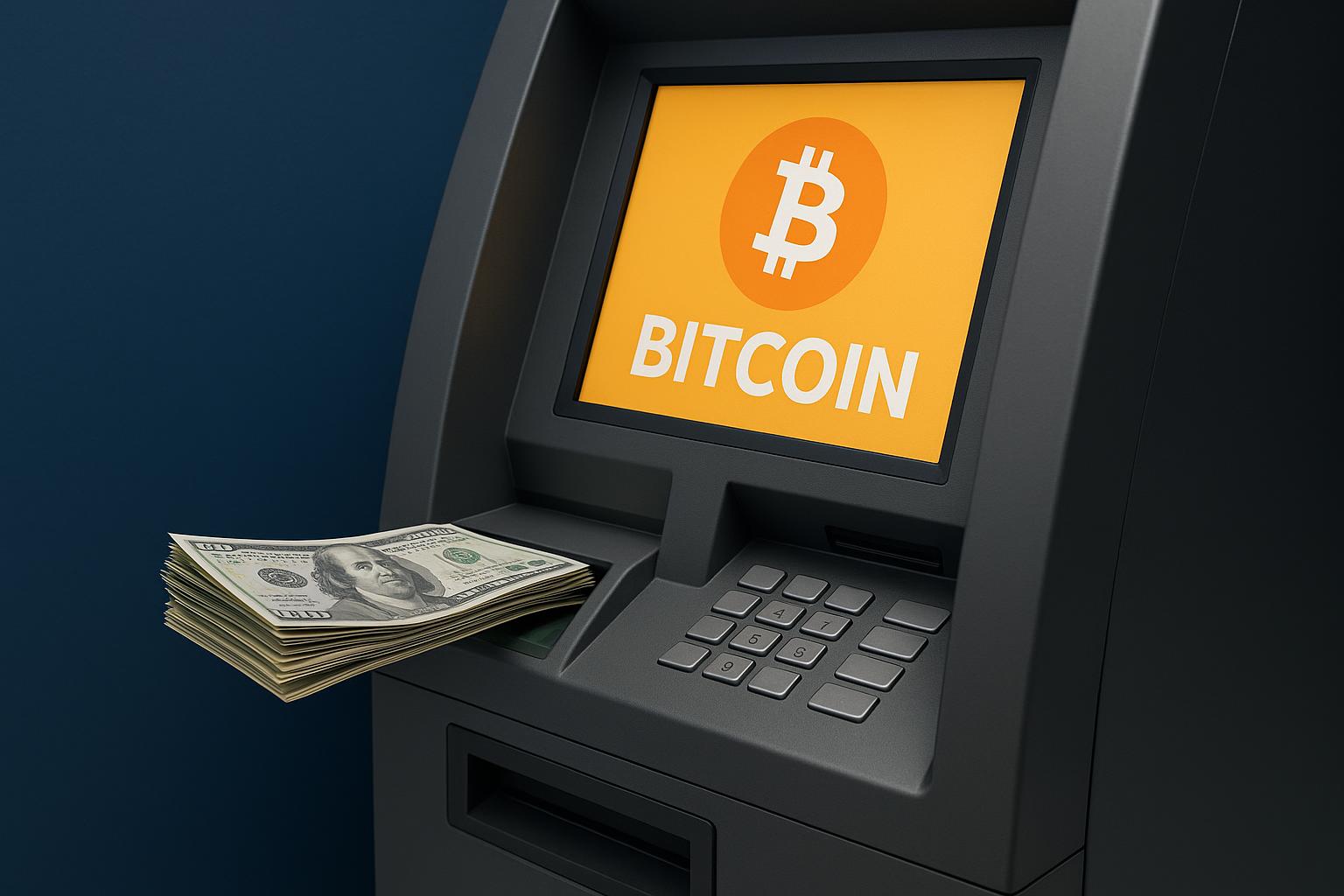
Picture this: you’re standing inside a convenience store at 9:42 p.m.
A soda cooler hums in the background. Someone is debating snack flavors two aisles over. And there—between the lottery terminal and the soda fountain—is a glowing machine asking you to scan a wallet QR code.
You insert a $20 bill.
A few taps later… your phone buzzes. Cryptocurrency received.
It feels almost suspiciously easy. Like there should’ve been a bank teller, paperwork, maybe a slightly skeptical manager somewhere in the process.
But there wasn’t. Just a Bitcoin machine ATM, a network connection, and a surprisingly sophisticated stack of financial infrastructure working behind the scenes.
Simple on the surface. Surprisingly complex underneath.
Let’s unpack what actually happens in those few quiet minutes.
The Machine Isn’t Just a Machine
Contents
- The Machine Isn’t Just a Machine
- Compliance: The Slightly Annoying (But Necessary) Step
- The Real Magic: Turning Cash Into Cryptocurrency
- The Blockchain Step (Where the Internet Votes)
- Liquidity: The Secret Ingredient Nobody Sees
- Why These Machines Keep Appearing Everywhere
- Final Thought: A Two-Minute Transaction With a Massive Backbone
First things first: this isn’t your typical bank ATM.
Yes, it has familiar hardware—bill validators, barcode scanners, touchscreens. The physical experience is intentionally familiar because nobody wants to learn an entirely new ritual just to insert cash.
But the moment you scan a wallet QR code, the machine stops behaving like a banking terminal and starts acting like a gateway to blockchain infrastructure.
Here’s the quick sequence:
- The QR code provides your wallet address
- The machine records the intended destination
- The system prepares a blockchain transaction
Meanwhile, the bill validator is doing its own detective work. Optical sensors. Magnetic verification. Counterfeit detection.
Cash gets approved. The system moves to the next phase.
Under the hood, encrypted hardware modules package the transaction data and prepare it for network communication. Think armored courier—just digital.
Compliance: The Slightly Annoying (But Necessary) Step
At some point, the machine might ask for a phone number or ID verification.
Cue the internal monologue:
Really? For twenty bucks?
But there’s a reason.
Cryptocurrency services operate within financial regulations aimed at preventing fraud and money laundering. Agencies like the Financial Crimes Enforcement Network outline identification requirements and monitoring practices for crypto-related financial services.
Translation: the machine needs to know you’re a real person making a legitimate transaction.
It’s not about slowing you down. It’s about keeping the system usable without turning it into the Wild West.
The Real Magic: Turning Cash Into Cryptocurrency
This is where things get interesting.
Once your identity (if required) and cash are verified, the machine connects to backend services responsible for exchange pricing and liquidity.
In plain English: the system checks the current market price of Bitcoin and calculates how much cryptocurrency your deposit buys.
Then it builds a blockchain transaction.
If you want to explore the process in more detail, guides explaining how a Bitcoin machine ATM works walk through the entire infrastructure stack behind these machines.
But the short version?
Your cash triggers a digital asset transfer request that gets broadcast to the blockchain network.
From the user’s perspective, it’s instant.
From the network’s perspective, it’s a transaction entering the global ledger.
The Blockchain Step (Where the Internet Votes)
Now the blockchain takes over.
Instead of a bank verifying the transfer, thousands of independent computers across the network confirm the transaction.
These participants—miners or validators—bundle transactions into blocks and add them to the distributed ledger.
Once confirmed, the cryptocurrency officially lands in your wallet.
Sometimes this takes seconds. Sometimes a few minutes.
Either way, the system replaces traditional financial clearinghouses with a global verification network.
Academic researchers from institutions like MIT have described this distributed ledger model as one of the most significant structural changes in digital finance.
Big claim. Hard to argue with.
Liquidity: The Secret Ingredient Nobody Sees
Here’s something many people assume incorrectly.
Bitcoin ATMs don’t create cryptocurrency.
They source it.
Behind the machine is a liquidity system connected to exchanges or reserves of digital assets. When you insert cash, the backend allocates Bitcoin from available supply and sends it to your wallet address.
In other words, the machine acts as a bridge between two financial environments:
- Physical cash
- Digital cryptocurrency markets
It’s a translator between worlds.
Why These Machines Keep Appearing Everywhere
Ten years ago, seeing a crypto ATM felt like spotting a sci-fi prop.
Now they show up in gas stations, grocery stores, and shopping malls.
Why?
Accessibility.
Not everyone enters cryptocurrency through investment apps or trading platforms. Some people start the old-fashioned way—with cash.
That accessibility matters. Financial researchers and institutions like the World Bank often discuss alternative financial access points as tools for broader economic participation.
And a simple machine that converts bills into digital assets? That’s about as accessible as it gets.
Final Thought: A Two-Minute Transaction With a Massive Backbone
Using a Bitcoin ATM feels simple.
Scan a code. Insert cash. Wait a moment. Done.
But behind that quick exchange sits an entire ecosystem:
- Financial compliance systems
- Real-time exchange pricing
- Liquidity providers
- Hardware security modules
- Blockchain validation networks
All quietly coordinating while someone nearby debates between barbecue chips and sour cream & onion.
The transaction takes two minutes.
The infrastructure powering it spans the globe.