


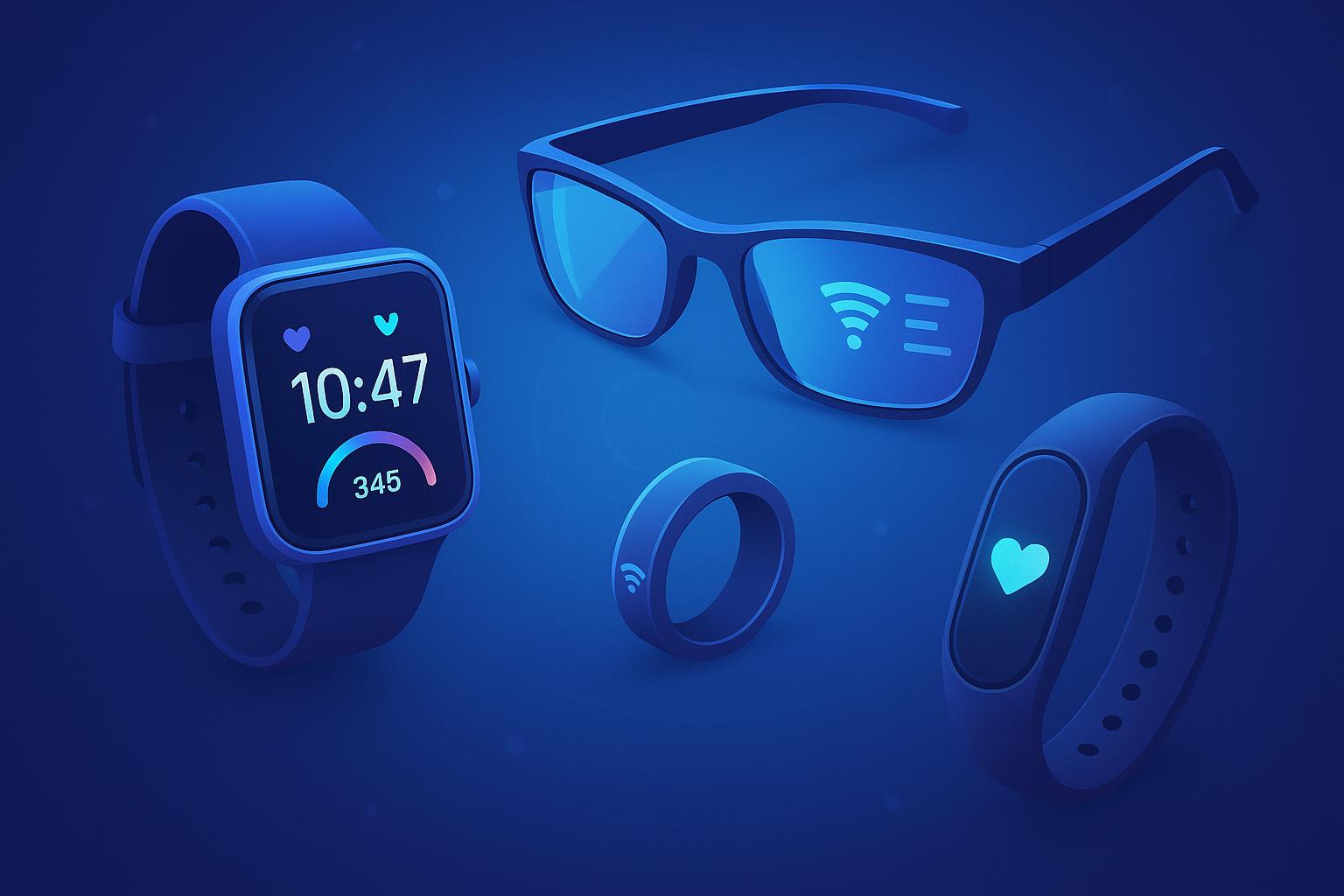
The first wave of consumer wearables was almost entirely about fitness. Step counts, calorie burn, sleep tracking — these features got people interested, but they also had a ceiling. Once you knew your daily step average, there was only so much you could do with that data.
Today’s devices are a different story. Wearables have evolved from passive data collectors into devices that actively work in your interest throughout the day — which is why more people are keeping them on around the clock, not just during workouts. Here’s a look at where wearable tech stands right now and where it’s headed.
Health Monitoring Is Getting More Sophisticated
Contents
- Health Monitoring Is Getting More Sophisticated
- Audio Glasses Are Replacing Earbuds for Everyday Use
- Wearable Cameras Are Making It Easier to Capture the Moments That Matter
- Smart Devices Are Changing Workplace Culture
- Smart Rings Are Making Health Tracking Frictionless
- Haptic Wearables Are Bringing Touch-Based Feedback Into Daily Life
- Smart Fashion Is Joining the Category
- The Bottom Line
Health monitoring is where wearable tech has its biggest potential impact, and the technology is advancing quickly. Continuous glucose monitoring is a compelling example. What once required frequent finger pricks is now possible with a small sensor worn on the body, giving people with diabetes real-time data on their blood sugar levels.
The next frontier is early detection. Researchers and device makers are working toward wearables that can flag potential health issues before symptoms appear. We’re not fully there yet, but the direction is clear — and the clinical world is beginning to take wearable data seriously as a complement to traditional care.
Audio Glasses Are Replacing Earbuds for Everyday Use
Smart glasses have been “almost ready” for years, but the category has genuinely matured. The most important change is that they actually look like regular glasses now. Early attempts at wearable eyewear were bulky and conspicuous — the kind of thing that made people stop and stare. The latest generation blends in, and that changes everything.
Glasses with audio are one of the most practical developments in this space. Instead of blocking out the world with earbuds, you get open-ear audio built into the frame — so you can take calls, follow directions, or stream music while staying aware of your surroundings. For commuters, cyclists, and anyone who spends time outdoors, that’s a genuine improvement over juggling earbuds and a phone at once.
The social dynamic is different too. You’re still present in a conversation — not visibly plugged in, not asking someone to repeat themselves. Open-ear audio keeps you connected to both your device and the world around you, something traditional earbuds have never quite managed.
Wearable Cameras Are Making It Easier to Capture the Moments That Matter
Most people have missed a moment because pulling out a phone took too long or felt awkward. Wearable cameras remove that friction by placing the camera where you need it most: on your body, hands-free, and ready to capture life as it unfolds. Whether you’re celebrating at a friend’s wedding, exploring a new city, or documenting the small moments of everyday life, you can record without interrupting the experience.
The first-person perspective is also something a handheld device can’t fully replicate. Recording glasses are a powerful example of this approach. By placing the camera at eye level, they capture moments from your natural viewpoint while allowing you to stay present and engaged.
Smart Devices Are Changing Workplace Culture
Consumer use cases get most of the attention, but workplace applications for wearable tech are growing steadily. In industries like manufacturing, warehousing, and logistics, smart glasses with heads-up display functionality are already in use — workers can pull up instructions, schematics, or inventory data without stepping away from the task at hand.
For office and remote workers, the changes are subtler but still meaningful. Wearables that sync with your calendar, track focus and energy levels, and deliver timely nudges are quietly becoming part of how people structure their workdays. Some organizations are also using aggregated, anonymized, opt-in wearable data to identify burnout risk and build more effective wellness programs.
Smart Rings Are Making Health Tracking Frictionless
Not everyone wants a screen on their wrist, and the smart ring category is gaining real momentum as a result. Devices like the Oura Ring and Samsung Galaxy Ring sit discreetly on your finger and track many of the same metrics as a smartwatch — sleep stages, heart rate, body temperature, readiness scores — without any display, notifications, or nightly battery anxiety.
For people who find smartwatches too bulky or too distracting, rings hit a sweet spot. They’re easy to forget you’re wearing, which actually makes them better for sleep tracking — you’re simply more likely to keep them on. Expect this category to grow significantly as sensors get smaller and more accurate.
Haptic Wearables Are Bringing Touch-Based Feedback Into Daily Life
One emerging area that doesn’t get nearly enough attention is haptic wearables — devices that communicate through touch rather than sound or visuals.
Navigation wristbands, for example, can guide you through a city using subtle vibration patterns — a buzz on the left means turn left, a different pulse signals you’ve arrived. No looking at your phone, no audio cues pulling you out of a conversation. Researchers are also developing haptic vests and sleeves for rehabilitation, helping patients relearn movement patterns after strokes or injuries by delivering tactile feedback directly to the body.
For people who are deaf or hard of hearing, haptic tech opens up an entirely new layer of wearable utility — translating audio cues, alarms, and even music into physical sensation.
Smart Fashion Is Joining the Category
Wearable tech isn’t limited to devices you strap on — it’s increasingly built into clothing itself. Heated jackets have been around for a few years, but the latest generation is a meaningful step forward. You can control heat zones through a smartphone app, set timers, and check battery levels in real time. Some models use carbon fiber heating panels that distribute warmth more evenly than traditional wire-based systems, and they’re light enough that you’d never know the element was there.
The Bottom Line
Wearable technology is no longer a novelty category. It’s a practical part of how a growing number of people manage their health, stay connected, and get things done. The devices are better designed, more capable, and more deeply integrated into the platforms people already use.
The most successful wearables going forward won’t be the ones with the most features. They’ll be the ones that fit naturally into your life without demanding constant attention — and actually deliver something useful when it counts.