


Growth Leaves Footprints
Contents
- Growth Leaves Footprints
- Rethinking What Growth Actually Means
- The Circular Economy Changes the Equation
- Innovation Drives Sustainable Progress
- Governments Shape the Direction of Growth
- Consumers Influence the Future of Sustainability
- Long Term Thinking Creates Stability
- Building a Future Where Growth and Responsibility Coexist
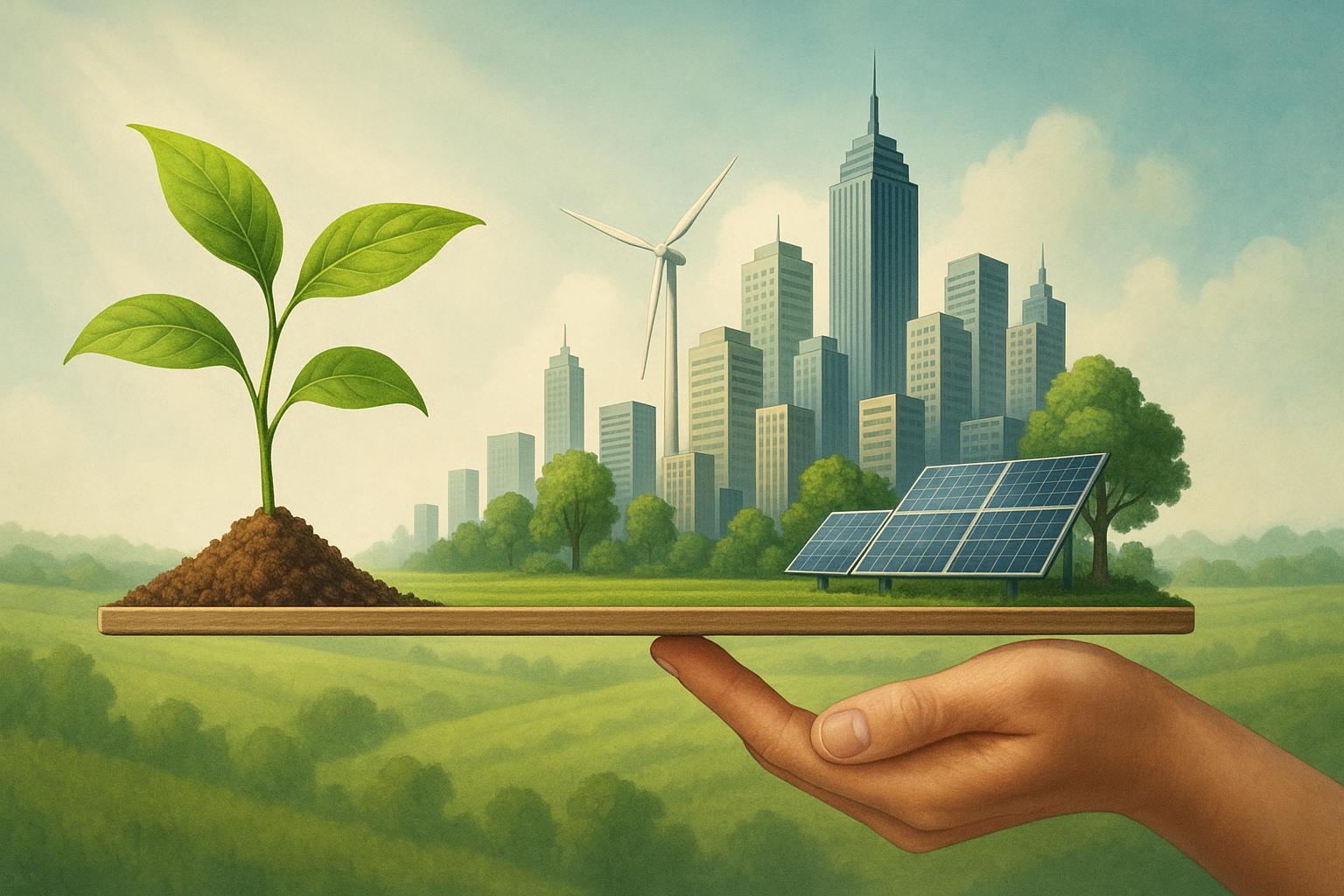
Economic growth is often measured in numbers such as production levels, job creation, and expanding markets. These metrics help illustrate progress, but they rarely show the full picture. Every new factory, product line, or transportation network also leaves a footprint on the natural world.
Recognizing this connection between growth and environmental impact is becoming more important for businesses and governments alike. Expansion no longer exists in isolation from environmental considerations. Instead, the challenge lies in finding ways to support economic development while protecting the natural systems that make that development possible.
Interestingly, conversations about environmental responsibility sometimes mirror discussions about financial sustainability. Just as individuals might explore solutions such as a debt relief program to regain balance in their personal finances, societies must also find ways to restore balance between economic activity and environmental resources.
When this balance becomes part of long term planning, growth begins to look very different.
Rethinking What Growth Actually Means
For many decades, growth was viewed primarily as an increase in production and consumption. The more goods produced and sold, the stronger the economy appeared.
Today, many economists and environmental researchers suggest a broader definition. Growth can also represent improvements in efficiency, innovation, and resource management.
Instead of focusing only on producing more, organizations are beginning to focus on producing smarter. This shift recognizes that long term prosperity depends on maintaining the ecosystems that support agriculture, energy production, and industrial activity.
Research summarized by the United Nations Environment Programme on sustainable economic development emphasizes that responsible resource management allows economies to grow without exhausting natural systems.
In this model, growth is measured not only by output but also by how effectively resources are used.
The Circular Economy Changes the Equation
One of the most promising ideas for balancing growth with environmental responsibility is the concept of a circular economy.
Traditional economic systems often follow a linear pattern. Resources are extracted, products are manufactured, and eventually those products become waste. This approach places continuous pressure on natural resources.
A circular economy works differently. Instead of treating materials as disposable, it treats them as valuable assets that can be reused, repaired, or recycled repeatedly.
Businesses implementing circular models design products that last longer and can be repurposed when their original use ends. Materials are recovered and reintegrated into new production cycles rather than discarded.
Organizations studying sustainable innovation have identified circular systems as a key strategy for reducing environmental impact while maintaining economic activity. The Ellen MacArthur Foundation’s research on circular economy principles highlights how this approach can create new economic opportunities while reducing waste.
By keeping materials in use for longer periods, businesses can support growth without continually increasing resource extraction.
Innovation Drives Sustainable Progress
Environmental responsibility does not necessarily limit economic expansion. In many cases, it encourages innovation.
Companies searching for ways to reduce energy consumption or waste often develop new technologies and processes that improve efficiency. These innovations can lead to cost savings, competitive advantages, and entirely new industries.
Renewable energy technologies provide a clear example. Investments in solar, wind, and energy storage systems have created new markets while reducing reliance on fossil fuels.
Similarly, advances in sustainable materials, efficient manufacturing techniques, and smart logistics systems allow companies to operate with smaller environmental footprints.
Innovation thrives when businesses view environmental responsibility not as a restriction but as a design challenge.
This perspective encourages creative solutions that support both economic performance and environmental protection.
Governments Shape the Direction of Growth
While businesses play an important role in sustainable development, government policies often shape the broader environment in which companies operate.
Regulations, incentives, and infrastructure investments can encourage industries to adopt more sustainable practices. Policies that support renewable energy, resource efficiency, and responsible land use help guide economic activity toward environmentally balanced outcomes.
Governments also play a role in funding research and supporting early stage technologies that might not yet be commercially viable.
These initiatives help accelerate the transition toward industries that combine economic productivity with environmental responsibility.
When public policy and private innovation move in the same direction, progress becomes more achievable.
Consumers Influence the Future of Sustainability
Another important factor in balancing growth and environmental responsibility is consumer behavior. Individuals influence markets through their purchasing decisions, often encouraging companies to adopt more responsible practices.
As consumers become more aware of environmental issues, many seek products that reflect sustainable values. This demand encourages companies to invest in environmentally friendly production methods and transparent supply chains.
Businesses that respond to these preferences often discover that sustainability can strengthen customer loyalty and brand reputation.
Consumer awareness therefore becomes a powerful driver of change within the broader economic system.
Long Term Thinking Creates Stability
Perhaps the most important element in balancing growth with environmental responsibility is time perspective. Short term decision making often prioritizes immediate gains without considering long term consequences.
Sustainable strategies require a longer horizon. Investments in renewable energy, circular production models, and efficient infrastructure may take years to deliver full economic benefits.
However, these investments often create greater stability over time. Economies that preserve natural resources and protect environmental systems are better prepared to sustain growth in the future.
Long term thinking encourages businesses and governments to evaluate not only what is profitable today but also what will remain viable decades from now.
Building a Future Where Growth and Responsibility Coexist
Balancing economic growth with environmental responsibility is not about choosing between prosperity and protection. Instead, it involves designing systems that allow both to exist together.
Through circular economic models, technological innovation, supportive government policies, and evolving consumer expectations, societies are gradually redefining how progress is measured.
Growth no longer needs to come at the expense of natural resources. With thoughtful planning and collaboration, economic development can occur in ways that preserve the environment for future generations.
When businesses, governments, and communities embrace this balanced approach, growth becomes not just a measure of success but a reflection of responsible stewardship of the planet.